
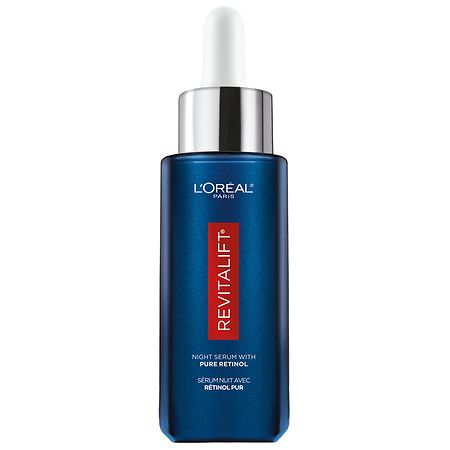
L Oreal Paris Revitalift Derm Intensives Night Serum 0.3% Pure Retinol 1 fl oz
Analysis updated August 2026 · How Scout scores
At a glance
Summary
This serum contains beneficial ingredients like glycerin, sodium hyaluronate, and retinol, which are known for their moisturizing and anti-aging properties. However, the presence of denatured alcohol as a top ingredient is concerning due to its potential to dry and irritate the skin. Additionally, the inclusion of PEG compounds and synthetic polymers indicates a moderate level of processing, which affects the overall safety profile.
Key ingredients 23
RetinolVery Good
Retinol is a form of Vitamin A that is widely used in skincare for its anti-aging benefits. It helps to promote cell turnover and improve skin texture and tone. It is considered highly effective for reducing the appearance of fine lines and wrinkles.
Risks
Retinol can cause irritation, redness, and peeling, especially when first introduced to the skin.
Benefits
It helps to improve skin texture, reduce signs of aging, and promote a more youthful appearance.
GlycerinGood
Glycerin is a humectant that attracts moisture to the skin, helping to keep it hydrated. It is widely used in skincare products for its moisturizing properties. It is considered safe and beneficial for most skin types.
Risks
There are minimal risks associated with glycerin, though it may cause irritation in very sensitive individuals.
Benefits
Glycerin helps to maintain skin hydration and improve skin barrier function.
Glycine Soja Oil/Soybean OilGood
Soybean oil is a natural oil rich in fatty acids and antioxidants, which can help nourish and protect the skin. It is often used in skincare for its emollient properties. It is generally well-tolerated by most skin types.
Risks
There is a low risk of allergic reactions, particularly in individuals with soy allergies.
Benefits
Soybean oil helps to moisturize the skin and provides antioxidant protection.
Sodium HyaluronateGood
Sodium hyaluronate is a form of hyaluronic acid that is highly effective in retaining moisture in the skin. It is known for its ability to hydrate and plump the skin, reducing the appearance of fine lines. It is considered safe and beneficial for all skin types.
Risks
There are minimal risks associated with sodium hyaluronate, though it may cause irritation in very sensitive individuals.
Benefits
It provides intense hydration and helps to improve skin elasticity and texture.
TocopherolGood
Tocopherol, or Vitamin E, is an antioxidant that helps to protect the skin from free radical damage. It is widely used in skincare for its moisturizing and anti-aging benefits. It is considered safe and beneficial for most skin types.
Risks
There are minimal risks associated with tocopherol, though it may cause irritation in very sensitive individuals.
Benefits
It helps to protect the skin from environmental damage and improve skin hydration.
Aqua/WaterNeutral
Aqua, or water, is a common solvent used in cosmetics to dissolve other ingredients. It is essential for the formulation but does not provide direct skin benefits. It is generally considered safe and non-irritating.
Risks
There are no significant risks associated with water in cosmetic formulations.
Benefits
Water helps to hydrate the skin by providing moisture.
Isononyl IsononanoateNeutral
Isononyl isononanoate is an emollient that helps to soften and smooth the skin. It is commonly used in cosmetics for its lightweight texture and non-greasy feel. It is considered safe for use in skincare products.
Risks
There are minimal risks associated with this ingredient, though it may cause mild irritation in sensitive individuals.
Benefits
It provides a silky feel to the skin and helps to improve the texture of cosmetic formulations.
Pentylene GlycolNeutral
Pentylene glycol is a synthetic humectant and solvent that helps to retain moisture in the skin. It is often used to enhance the texture and stability of cosmetic products. It is generally considered safe and non-irritating.
Risks
There are minimal risks associated with pentylene glycol, though it may cause irritation in very sensitive skin.
Benefits
It helps to improve skin hydration and enhances the penetration of other active ingredients.
Dicaprylyl EtherNeutral
Dicaprylyl ether is an emollient that provides a lightweight, non-greasy feel to skincare products. It is used to improve the spreadability of formulations. It is considered safe for use in cosmetics.
Risks
There are minimal risks associated with this ingredient, though it may cause mild irritation in sensitive individuals.
Benefits
It helps to improve the texture and application of cosmetic products.
PEG-6 Caprylic/Capric GlyceridesNeutral
PEG-6 caprylic/capric glycerides are used as emulsifiers and surfactants in cosmetics. They help to stabilize formulations and improve texture. They are generally considered safe for use in skincare products.
Risks
There is a low risk of irritation, particularly in individuals with sensitive skin.
Benefits
They help to improve the consistency and stability of cosmetic formulations.
PPG-6-Decyltetradeceth-30Neutral
PPG-6-Decyltetradeceth-30 is a surfactant and emulsifier used to improve the texture and stability of cosmetic products. It helps to blend oil and water-based ingredients. It is generally considered safe for use in cosmetics.
Risks
There is a low risk of skin irritation, particularly in sensitive individuals.
Benefits
It helps to create a smooth and stable formulation in skincare products.
Dicaprylyl CarbonateNeutral
Dicaprylyl carbonate is an emollient that provides a silky, non-greasy feel to skincare products. It is used to enhance the spreadability and texture of formulations. It is considered safe for use in cosmetics.
Risks
There are minimal risks associated with this ingredient, though it may cause mild irritation in sensitive individuals.
Benefits
It helps to improve the texture and application of cosmetic products.
Glyceryl IsostearateNeutral
Glyceryl isostearate is an emulsifier that helps to blend oil and water-based ingredients in cosmetics. It is used to improve the texture and stability of formulations. It is generally considered safe for use in skincare products.
Risks
There is a low risk of skin irritation, particularly in sensitive individuals.
Benefits
It helps to create a smooth and stable formulation in skincare products.
Ammonium Polyacryloyldimethyl TaurateNeutral
Ammonium polyacryloyldimethyl taurate is a thickening agent used to improve the texture and stability of cosmetic formulations. It helps to create a smooth and uniform product. It is generally considered safe for use in skincare products.
Risks
There are minimal risks associated with this ingredient, though it may cause mild irritation in sensitive individuals.
Benefits
It helps to improve the consistency and application of cosmetic products.
Caprylyl GlycolNeutral
Caprylyl glycol is a humectant and skin conditioning agent used in cosmetics to improve moisture retention. It also has antimicrobial properties that help to preserve the product. It is generally considered safe for use in skincare products.
Risks
There are minimal risks associated with caprylyl glycol, though it may cause irritation in very sensitive skin.
Benefits
It helps to maintain skin hydration and improve the shelf life of cosmetic products.
Citric AcidNeutral
Citric acid is used in cosmetics to adjust the pH level and as an exfoliant. It helps to improve skin texture by promoting cell turnover. It is generally considered safe for use in skincare products.
Risks
In high concentrations, citric acid can cause skin irritation and sensitivity.
Benefits
It helps to exfoliate the skin and improve the effectiveness of other active ingredients.
Trisodium Ethylenediamine DisuccinateNeutral
Trisodium ethylenediamine disuccinate is a chelating agent used in cosmetics to improve product stability. It helps to bind metal ions and prevent them from affecting the product's performance. It is considered safe for use in skincare products.
Risks
There are minimal risks associated with this ingredient, though it may cause mild irritation in sensitive individuals.
Benefits
It helps to enhance the stability and shelf life of cosmetic formulations.
Xanthan GumNeutral
Xanthan gum is a natural thickening agent used to improve the texture and stability of cosmetic products. It helps to create a smooth and uniform formulation. It is generally considered safe for use in skincare products.
Risks
There are minimal risks associated with xanthan gum, though it may cause mild irritation in sensitive individuals.
Benefits
It helps to improve the consistency and application of cosmetic products.
Butylene GlycolNeutral
Butylene glycol is a humectant and solvent used in cosmetics to improve moisture retention and enhance product texture. It is effective in enhancing the absorption of other ingredients. It is generally recognized as safe for use in skincare.
Risks
In rare cases, it may cause skin irritation or allergic reactions, particularly in sensitive individuals.
Benefits
It helps to maintain skin hydration and improve the efficacy of active ingredients.
Pentaerythrityl Tetra-Di-T-Butyl HydroxyhydrocinnamateNeutral
Pentaerythrityl tetra-di-t-butyl hydroxyhydrocinnamate is an antioxidant used to stabilize cosmetic formulations and prevent oxidation. It helps to extend the shelf life of products. It is generally considered safe for use in skincare products.
Risks
There are minimal risks associated with this ingredient, though it may cause mild irritation in sensitive individuals.
Benefits
It helps to protect the product from degradation and maintain its effectiveness.
Propylene GlycolBad
Processed additive flagged under Scout's ingredient doctrine.
Risks
In rare cases, it may cause skin irritation or allergic reactions, particularly in sensitive individuals.
Benefits
It helps to maintain skin hydration and improve the efficacy of active ingredients.
PhenoxyethanolBad
Processed additive flagged under Scout's ingredient doctrine.
Risks
In high concentrations, phenoxyethanol can cause skin irritation and sensitivity.
Benefits
It helps to preserve the product and prevent contamination.
Alcohol Denat.Very Bad
Denatured alcohol is used in cosmetics as a solvent and to help products dry quickly. However, it can be drying and irritating to the skin, especially in high concentrations. It may disrupt the skin's natural barrier over time.
Risks
Prolonged use of products with high alcohol content can lead to skin dryness and irritation.
Benefits
It can help active ingredients penetrate the skin more effectively and provides a quick-drying finish.
Get the full breakdown in the Scout appTake Scout shopping
Scan any product to see lab results, healthy alternatives, and your personalized analysis.
Download on theApp Store GET IT ONGoogle Play