
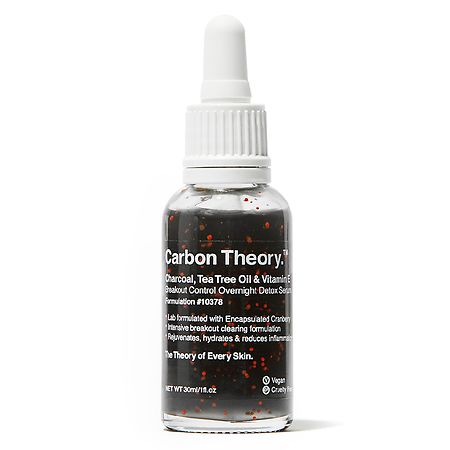

Carbon Theory Charcoal Tea Tree Oil and Vitamin E Overnight Detox Serum
Analysis updated October 2026 · How Scout scores
At a glance
Summary
This serum contains a variety of beneficial ingredients such as sodium hyaluronate, tea tree oil, and charcoal powder, which are known for their hydrating, antimicrobial, and detoxifying properties. The presence of natural extracts like sugar cane and citrus fruits further enhances its skin-brightening and exfoliating effects. However, the inclusion of phenoxyethanol, a preservative that can cause irritation, slightly impacts the overall ingredient safety.
Key ingredients 34
Melaleuca Alternifolia (Tea Tree) Leaf OilVery Good
Tea Tree Oil is known for its antimicrobial and anti-inflammatory properties. It helps treat acne and soothe irritated skin. It is highly beneficial for oily and acne-prone skin.
Risks
May cause irritation in sensitive skin types.
Benefits
Treats acne and reduces inflammation.
TocopherolVery Good
Tocopherol, also known as Vitamin E, is a powerful antioxidant. It helps protect the skin from environmental damage and improve moisture retention. It is highly beneficial for maintaining healthy skin.
Benefits
Provides antioxidant protection and improves skin hydration.
Vaccinium Myrtillus Fruit ExtractGood
This extract is rich in antioxidants and helps protect the skin from environmental damage. It is known for its anti-inflammatory properties. It can improve skin tone and texture.
Risks
Rarely, it may cause allergic reactions in sensitive individuals.
Benefits
Provides antioxidant protection and soothes the skin.
Saccharum Officinarum (Sugar Cane) ExtractGood
Sugar Cane Extract is rich in glycolic acid, which helps exfoliate the skin. It promotes cell turnover and improves skin texture. It is beneficial for brightening the skin.
Risks
May cause irritation in sensitive skin types.
Benefits
Exfoliates the skin and promotes a brighter complexion.
Sodium HyaluronateGood
Sodium Hyaluronate is a powerful humectant that attracts and retains moisture in the skin. It helps plump the skin and reduce the appearance of fine lines. It is highly beneficial for maintaining skin hydration.
Benefits
Deeply hydrates the skin and improves elasticity.
Citrus Aurantium Dulcis (Orange) Fruit ExtractGood
Orange Fruit Extract is rich in vitamin C and antioxidants. It helps brighten the skin and protect against environmental damage. It is beneficial for improving skin tone and texture.
Risks
May cause irritation in sensitive skin types.
Benefits
Brightens the skin and provides antioxidant protection.
Citrus Limon (Lemon) Fruit ExtractGood
Lemon Fruit Extract is known for its astringent and brightening properties. It helps improve skin tone and texture. It is beneficial for oily and acne-prone skin.
Risks
May cause irritation and photosensitivity in some individuals.
Benefits
Brightens the skin and helps control oil production.
Acer Saccharum (Sugar Maple) ExtractGood
Sugar Maple Extract is rich in natural alpha hydroxy acids (AHAs). It helps exfoliate the skin and improve texture. It is beneficial for promoting a brighter complexion.
Risks
May cause irritation in sensitive skin types.
Benefits
Exfoliates the skin and promotes a brighter complexion.
Charcoal PowderGood
Charcoal Powder is known for its detoxifying and purifying properties. It helps absorb excess oil and impurities from the skin. It is beneficial for oily and acne-prone skin.
Risks
May cause dryness in some skin types.
Benefits
Detoxifies the skin and absorbs excess oil.
Vaccinium Macrocarpon (Cranberry) Fruit PowderGood
Cranberry Fruit Powder is rich in antioxidants and vitamins. It helps protect the skin from environmental damage and improve skin tone. It is beneficial for maintaining healthy skin.
Risks
May cause irritation in sensitive skin types.
Benefits
Provides antioxidant protection and improves skin tone.
Citrus Limon (Lemon) Peel OilGood
Lemon Peel Oil is known for its astringent and brightening properties. It helps improve skin tone and texture. It is beneficial for oily and acne-prone skin.
Risks
May cause irritation and photosensitivity in some individuals.
Benefits
Brightens the skin and helps control oil production.
CI 77491 (Iron Oxides)Good
Beneficial ingredient — whole-food or functional value in this product class.
Benefits
Provides color and pigmentation to the product.
Aqua (Water)Neutral
Water is a common solvent used in cosmetic formulations. It helps dissolve other ingredients and provides a base for the serum. It does not have any direct benefits or risks.
Benefits
Provides a medium for other ingredients to be delivered to the skin.
PropanediolNeutral
Propanediol is used as a solvent and skin-conditioning agent. It helps improve the texture and feel of the product. It is generally considered safe for use in cosmetics.
Risks
May cause mild irritation in sensitive individuals.
Benefits
Improves skin hydration and enhances the absorption of other ingredients.
Polyacrylate Crosspolymer-6Neutral
This ingredient is used as a thickening agent and stabilizer in cosmetic formulations. It helps improve the texture and consistency of the product. It is generally considered safe for use in cosmetics.
Benefits
Enhances product texture and stability.
Polysorbate 20Neutral
Polysorbate 20 is an emulsifier that helps blend oil and water-based ingredients. It is commonly used in cosmetics to improve product consistency. It is generally regarded as safe for use.
Risks
May cause mild irritation in some individuals.
Benefits
Improves product texture and helps stabilize formulations.
Heptyl GlucosideNeutral
Heptyl Glucoside is a mild surfactant and emulsifier used in cosmetics. It helps improve the texture and spreadability of the product. It is considered safe for use in cosmetics.
Benefits
Enhances product texture and helps blend ingredients.
MannitolNeutral
Mannitol is a sugar alcohol used as a humectant and skin-conditioning agent. It helps retain moisture in the skin. It is generally considered safe for use in cosmetics.
Benefits
Helps maintain skin hydration and improves texture.
Microcrystalline CelluloseNeutral
Microcrystalline Cellulose is used as a bulking agent and stabilizer in cosmetics. It helps improve the texture and consistency of the product. It is considered safe for use in cosmetics.
Benefits
Enhances product texture and stability.
Xanthan GumNeutral
Xanthan Gum is used as a thickening agent and stabilizer in cosmetics. It helps improve the texture and consistency of the product. It is considered safe for use in cosmetics.
Benefits
Enhances product texture and stability.
Hydroxypropyl Guar Hydroxypropyltrimonium ChlorideNeutral
This ingredient is used as a conditioning agent and thickener in cosmetics. It helps improve the texture and feel of the product. It is generally considered safe for use in cosmetics.
Benefits
Enhances product texture and provides conditioning benefits.
EthylhexylglycerinNeutral
Ethylhexylglycerin is used as a preservative and skin-conditioning agent. It helps improve the shelf life of the product and enhances skin feel. It is generally considered safe for use in cosmetics.
Risks
May cause mild irritation in sensitive individuals.
Benefits
Extends product shelf life and improves skin feel.
Hydroxypropyl MethylcelluloseNeutral
This ingredient is used as a thickening agent and film-former in cosmetics. It helps improve the texture and consistency of the product. It is considered safe for use in cosmetics.
Benefits
Enhances product texture and stability.
Lactic AcidNeutral
Standard formulation ingredient — neither beneficial nor harmful at typical use.
Risks
May cause irritation in sensitive skin types.
Benefits
Exfoliates the skin and promotes a brighter complexion.
AlginNeutral
Algin is used as a thickening and stabilizing agent in cosmetics. It helps improve the texture and consistency of the product. It is considered safe for use in cosmetics.
Benefits
Enhances product texture and stability.
Magnesium HydroxideNeutral
Magnesium Hydroxide is used as a pH adjuster and absorbent in cosmetics. It helps improve the texture and feel of the product. It is generally considered safe for use in cosmetics.
Benefits
Improves product texture and helps control oil.
Polyglycerin-10Neutral
Polyglycerin-10 is used as an emulsifier and skin-conditioning agent in cosmetics. It helps improve the texture and feel of the product. It is considered safe for use in cosmetics.
Benefits
Enhances product texture and provides conditioning benefits.
Polyglyceryl-10 MyristateNeutral
This ingredient is used as an emulsifier and skin-conditioning agent in cosmetics. It helps improve the texture and feel of the product. It is considered safe for use in cosmetics.
Benefits
Enhances product texture and provides conditioning benefits.
Polyglyceryl-10 StearateNeutral
This ingredient is used as an emulsifier and skin-conditioning agent in cosmetics. It helps improve the texture and feel of the product. It is considered safe for use in cosmetics.
Benefits
Enhances product texture and provides conditioning benefits.
Tricalcium PhosphateNeutral
Tricalcium Phosphate is used as an anti-caking agent and pH adjuster in cosmetics. It helps improve the texture and stability of the product. It is considered safe for use in cosmetics.
Benefits
Enhances product texture and stability.
Sodium DehydroacetateNeutral
Sodium Dehydroacetate is used as a preservative in cosmetics. It helps prevent microbial growth and extend product shelf life. It is generally considered safe for use in cosmetics.
Risks
May cause mild irritation in sensitive individuals.
Benefits
Prevents microbial contamination and extends product shelf life.
Citric AcidNeutral
Citric Acid is used as a pH adjuster and exfoliant in cosmetics. It helps improve the texture and stability of the product. It is generally considered safe for use in cosmetics.
Risks
May cause irritation in sensitive skin types.
Benefits
Improves product stability and provides mild exfoliation.
PhenoxyethanolBad
Phenoxyethanol is a preservative used to prevent microbial growth in cosmetics. It is effective but can cause irritation in some individuals. It is considered a moderate risk ingredient.
Risks
Potential skin irritant and may cause allergic reactions.
Benefits
Prevents microbial contamination and extends product shelf life.
LimoneneBad
Processed additive flagged under Scout's ingredient doctrine.
Risks
May cause irritation or allergic reactions in sensitive individuals.
Benefits
Provides a pleasant citrus scent to the product.
Get the full breakdown in the Scout appTake Scout shopping
Scan any product to see lab results, healthy alternatives, and your personalized analysis.
Download on theApp Store GET IT ONGoogle PlayAmazon pricing & content
Amazon price as of . Product prices and availability are accurate as of the date/time indicated and are subject to change. Any price and availability information displayed on Amazon.com at the time of purchase will apply to the purchase of this product.
CERTAIN CONTENT THAT APPEARS ON THIS SITE COMES FROM AMAZON. THIS CONTENT IS PROVIDED “AS IS” AND IS SUBJECT TO CHANGE OR REMOVAL AT ANY TIME.