
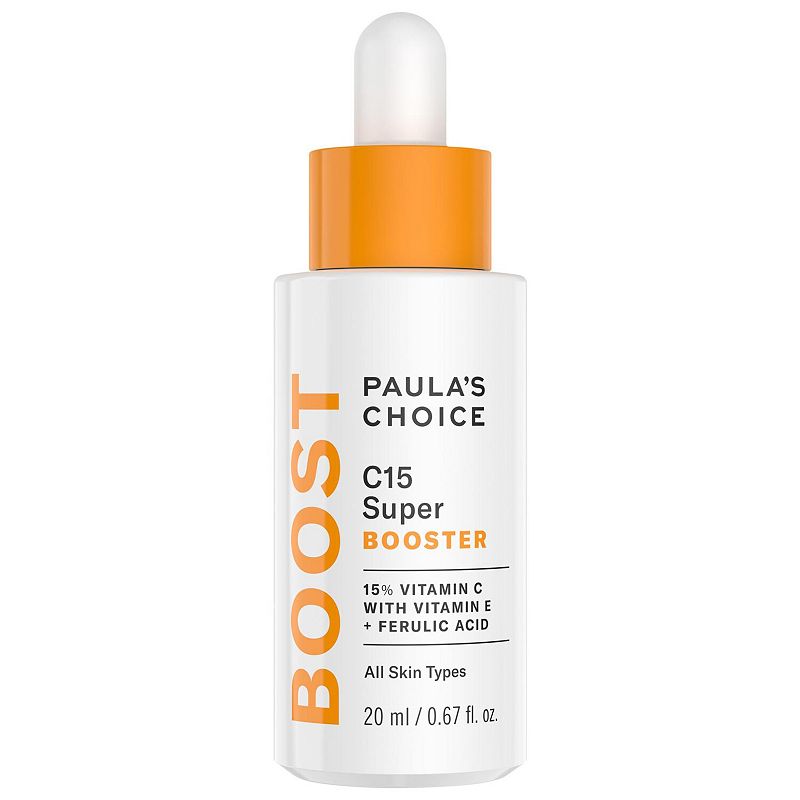


Paula's Choice C15 Super Booster Vitamin C Treatment
Paula's ChoiceAnalysis updated August 2026 · How Scout scores
At a glance
Summary
This serum contains a high concentration of beneficial ingredients such as Vitamin C, peptides, and hyaluronic acid, which are known for their antioxidant and moisturizing properties. The formula is minimally processed and includes natural compounds like bisabolol and ferulic acid, enhancing its skin-protective qualities. However, the presence of phenoxyethanol as a preservative slightly detracts from its overall safety profile.
Key ingredients 25
Tridecapeptide-1Very Good
Tridecapeptide-1 is a peptide that can help improve skin elasticity and firmness. It is used in anti-aging formulations for its potential to stimulate collagen production.
Risks
Peptides are generally well-tolerated, but there is a slight risk of irritation in sensitive skin.
Benefits
It supports skin repair and reduces the appearance of fine lines and wrinkles.
Palmitoyl Tripeptide-5Very Good
Palmitoyl Tripeptide-5 is a synthetic peptide that mimics the body's natural communication mechanisms to boost collagen production. It is effective in reducing the signs of aging.
Risks
It is generally safe, with a low risk of irritation.
Benefits
It enhances skin firmness and elasticity, reducing the appearance of wrinkles.
ErgothioneineVery Good
Ergothioneine is an amino acid with antioxidant properties, protecting the skin from oxidative stress. It helps in maintaining skin health and vitality.
Risks
There are no significant risks associated with its use in cosmetics.
Benefits
It provides protection against environmental damage and supports skin rejuvenation.
BisabololVery Good
Bisabolol is a natural compound derived from chamomile that has soothing and anti-inflammatory properties. It is used to calm irritated skin.
Risks
It is generally safe, with a very low risk of allergic reactions.
Benefits
It reduces redness and irritation, promoting a more even skin tone.
Ferulic AcidVery Good
Ferulic Acid is a powerful antioxidant that enhances the stability and efficacy of other antioxidants like Vitamin C. It helps protect the skin from environmental damage.
Risks
It is generally safe, with a low risk of irritation.
Benefits
It boosts the effectiveness of other antioxidants and provides anti-aging benefits.
Oryza Sativa (Rice) Bran ExtractVery Good
Rice Bran Extract is rich in antioxidants, vitamins, and minerals that nourish and protect the skin. It is known for its soothing and anti-inflammatory properties.
Risks
There are minimal risks, though it may cause mild irritation in very sensitive skin.
Benefits
It improves skin texture and provides a natural glow.
TocopherolVery Good
Tocopherol, or Vitamin E, is a potent antioxidant that helps protect the skin from free radical damage. It is widely used for its moisturizing and healing properties.
Risks
It is generally safe, with a very low risk of irritation.
Benefits
It enhances skin barrier function and provides anti-aging benefits.
PanthenolVery Good
Panthenol, also known as Provitamin B5, is a humectant that attracts and retains moisture in the skin. It is known for its soothing and healing properties.
Risks
It is generally safe, with a very low risk of irritation.
Benefits
It enhances skin hydration, reduces inflammation, and promotes healing.
Ascorbic AcidGood
Ascorbic Acid, also known as Vitamin C, is a potent antioxidant that helps protect the skin from free radical damage. It is known for its brightening effects and ability to improve skin texture.
Risks
In high concentrations, it may cause irritation or redness in sensitive skin.
Benefits
It boosts collagen production, reduces signs of aging, and enhances skin radiance.
GlycerinGood
Glycerin is a humectant that attracts moisture to the skin, helping to keep it hydrated. It is widely used in skincare for its moisturizing properties.
Risks
There are minimal risks, though it can be sticky in high concentrations.
Benefits
It improves skin barrier function and provides long-lasting hydration.
Sodium HyaluronateGood
Sodium Hyaluronate is a form of hyaluronic acid that is easily absorbed by the skin. It is known for its excellent moisture-retaining properties.
Risks
It is generally safe, with a very low risk of irritation.
Benefits
It provides intense hydration, plumping the skin and reducing the appearance of fine lines.
WaterNeutral
Water is a common solvent used in cosmetic formulations. It helps dissolve other ingredients and provides a base for the product. It is generally considered safe and non-irritating.
Risks
There are no significant risks associated with water in cosmetics.
Benefits
Water helps in hydrating the skin and acts as a carrier for other beneficial ingredients.
EthoxydiglycolNeutral
Ethoxydiglycol is a solvent used to improve the texture and absorption of skincare products. It helps in the even distribution of active ingredients.
Risks
It may cause mild irritation in very sensitive skin.
Benefits
It enhances the penetration of active ingredients, improving their efficacy.
PPG-26-Buteth-26Neutral
PPG-26-Buteth-26 is an emollient and surfactant that helps improve the texture of cosmetic products. It is used to enhance the spreadability of formulations.
Risks
There is a low risk of irritation, primarily in sensitive individuals.
Benefits
It provides a smooth application and helps maintain skin softness.
MannitolNeutral
Mannitol is a sugar alcohol used as a humectant and skin conditioning agent. It helps retain moisture in the skin.
Risks
There are minimal risks associated with its use in cosmetics.
Benefits
It aids in skin hydration and improves the texture of formulations.
Pentylene GlycolNeutral
Pentylene Glycol is a synthetic humectant and solvent that helps retain moisture in the skin. It also enhances the stability of formulations.
Risks
There is a low risk of irritation, particularly in sensitive skin.
Benefits
It improves skin hydration and enhances the efficacy of active ingredients.
PEG-40 Hydrogenated Castor OilNeutral
PEG-40 Hydrogenated Castor Oil is an emulsifier and surfactant that helps blend oil and water-based ingredients. It improves the texture and spreadability of products.
Risks
There is a potential risk of contamination with impurities during manufacturing.
Benefits
It enhances the consistency and application of cosmetic formulations.
Sodium GluconateNeutral
Sodium Gluconate is a chelating agent that helps stabilize cosmetic formulations by binding metal ions. It is used to improve product shelf life.
Risks
There are minimal risks associated with its use in cosmetics.
Benefits
It enhances the stability and effectiveness of skincare products.
Decylene GlycolNeutral
Decylene Glycol is a synthetic ingredient used as a skin conditioning agent and antimicrobial. It helps maintain product integrity.
Risks
There is a low risk of irritation, especially in sensitive skin.
Benefits
It provides antimicrobial benefits, helping to preserve the product.
Polyacrylate Crosspolymer-6Neutral
Polyacrylate Crosspolymer-6 is a thickening agent used to improve the texture and consistency of cosmetic products. It helps stabilize formulations.
Risks
There is a low risk of irritation, primarily in sensitive individuals.
Benefits
It provides a smooth application and enhances product stability.
1,2-HexanediolNeutral
1,2-Hexanediol is a synthetic preservative and humectant that helps retain moisture in the skin. It is used to enhance the shelf life of products.
Risks
There is a low risk of irritation, particularly in sensitive skin.
Benefits
It improves skin hydration and helps preserve the product.
Sodium PhytateNeutral
Sodium Phytate is a chelating agent that helps stabilize cosmetic formulations by binding metal ions. It is used to improve product shelf life.
Risks
There are minimal risks associated with its use in cosmetics.
Benefits
It enhances the stability and effectiveness of skincare products.
Sodium HydroxideNeutral
Sodium Hydroxide is used to adjust the pH of cosmetic formulations. It is a strong base that helps maintain product stability.
Risks
In high concentrations, it can be irritating, but it is typically used in very low amounts.
Benefits
It ensures the product maintains an optimal pH for skin compatibility.
Citric AcidNeutral
Citric Acid is used to adjust the pH of cosmetic formulations and as an antioxidant. It helps maintain product stability and efficacy.
Risks
In high concentrations, it may cause irritation, but it is generally used in safe amounts.
Benefits
It enhances product stability and provides mild exfoliation benefits.
PhenoxyethanolBad
Phenoxyethanol is a preservative used to prevent microbial growth in cosmetics. It is effective in extending product shelf life.
Risks
It can cause irritation and allergic reactions in some individuals, particularly in high concentrations.
Benefits
It helps maintain product integrity by preventing contamination.
Get the full breakdown in the Scout appTake Scout shopping
Scan any product to see lab results, healthy alternatives, and your personalized analysis.
Download on theApp Store GET IT ONGoogle PlayAmazon pricing & content
Amazon price as of . Product prices and availability are accurate as of the date/time indicated and are subject to change. Any price and availability information displayed on Amazon.com at the time of purchase will apply to the purchase of this product.
CERTAIN CONTENT THAT APPEARS ON THIS SITE COMES FROM AMAZON. THIS CONTENT IS PROVIDED “AS IS” AND IS SUBJECT TO CHANGE OR REMOVAL AT ANY TIME.