

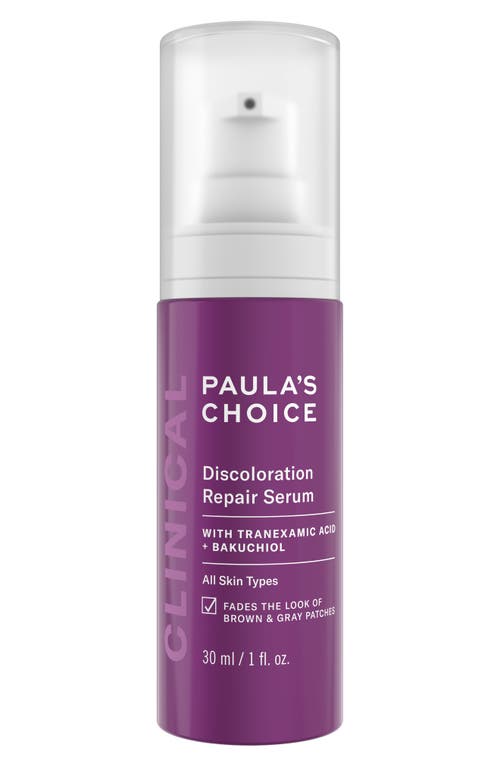


Paula's Choice Skin-Smoothing Retinol Body Treatment at Nordstrom
Paula's ChoiceAnalysis updated October 2026 · How Scout scores
At a glance
Summary
This product contains a variety of beneficial ingredients such as shea butter, retinol, and grape seed oil, which are known for their moisturizing and anti-aging properties. The presence of phenoxyethanol as a preservative is a minor concern due to its potential for irritation, but it is generally considered safe in low concentrations. Overall, the formulation is well-balanced with natural oils and skin actives, contributing to a favorable ingredient profile.
Key ingredients 31
Butyrospermum Parkii (Shea) ButterVery Good
Shea Butter is a natural fat extracted from the nuts of the shea tree. It is highly moisturizing and helps to soothe and protect the skin. It is well-tolerated and beneficial for dry skin.
Risks
Rarely, may cause allergic reactions in individuals with nut allergies.
Benefits
Deeply moisturizes and nourishes the skin.
RetinolVery Good
Retinol is a form of Vitamin A that promotes cell turnover and collagen production. It helps to reduce the appearance of fine lines and improve skin texture. It is a well-researched and effective anti-aging ingredient.
Risks
May cause irritation and sensitivity, especially in high concentrations.
Benefits
Improves skin texture and reduces signs of aging.
Beeswax (Cera Alba)Very Good
Beeswax is a natural wax produced by honeybees. It acts as an emollient and thickener, providing a protective barrier on the skin. It is well-tolerated and beneficial for dry skin.
Risks
Rarely, may cause allergic reactions in individuals with bee allergies.
Benefits
Provides a protective barrier and moisturizes the skin.
GlycerinGood
Glycerin is a humectant that attracts moisture to the skin. It helps to keep the skin hydrated and soft. It is a well-tolerated ingredient with a long history of safe use.
Risks
Rarely, may cause irritation in very sensitive skin.
Benefits
Excellent for moisturizing and hydrating the skin.
Oenothera Biennis (Evening Primrose) OilGood
Evening Primrose Oil is rich in essential fatty acids and has anti-inflammatory properties. It helps to soothe and moisturize the skin. It is beneficial for dry and sensitive skin types.
Risks
May cause minor irritation in very sensitive skin.
Benefits
Soothes and hydrates the skin, reducing inflammation.
Vitis Vinifera (Grape) Seed OilGood
Grape Seed Oil is a lightweight oil rich in antioxidants and fatty acids. It helps to moisturize and protect the skin. It is suitable for all skin types and is non-comedogenic.
Risks
Rarely, may cause allergic reactions.
Benefits
Moisturizes and provides antioxidant protection.
Tetrahexyldecyl AscorbateGood
Tetrahexyldecyl Ascorbate is a stable form of Vitamin C that provides antioxidant protection. It helps to brighten the skin and reduce signs of aging. It is well-tolerated and effective in skincare formulations.
Risks
Minimal risk of irritation.
Benefits
Brightens skin and provides antioxidant protection.
Tocopheryl AcetateGood
Tocopheryl Acetate is a form of Vitamin E that acts as an antioxidant. It helps to protect the skin from free radical damage and improve moisture retention. It is widely used and well-tolerated in skincare products.
Risks
Rarely, may cause allergic reactions.
Benefits
Protects skin from oxidative stress and enhances moisture.
PanthenolGood
Panthenol is a form of Vitamin B5 that acts as a moisturizer and skin conditioner. It helps to improve skin hydration and reduce inflammation. It is well-tolerated and beneficial for sensitive skin.
Risks
Minimal risk of irritation.
Benefits
Hydrates and soothes the skin, reducing inflammation.
Water (Aqua)Neutral
Water is a common solvent used in cosmetic formulations. It helps dissolve other ingredients and provides a base for the product. It does not have any direct benefits or risks.
Benefits
Essential for dissolving and mixing other ingredients.
Cetearyl AlcoholNeutral
Cetearyl Alcohol is a fatty alcohol used as an emollient and thickener. It helps to soften the skin and improve the texture of the product. It is generally considered safe and non-irritating.
Risks
May cause minor irritation in very sensitive skin.
Benefits
Provides moisturizing properties and improves product texture.
Cetearyl EthylhexanoateNeutral
Cetearyl Ethylhexanoate is an ester used as an emollient and skin conditioning agent. It helps to improve the spreadability of the product. It is generally considered safe for use in cosmetics.
Risks
Minimal risk of skin irritation.
Benefits
Enhances skin feel and product application.
CyclopentasiloxaneNeutral
Cyclopentasiloxane is a silicone used to provide a silky, smooth feel. It helps to improve the spreadability of the product. It is generally considered safe for use in cosmetics.
Risks
May cause build-up on the skin with prolonged use.
Benefits
Improves texture and spreadability of the product.
Butylene GlycolNeutral
Butylene Glycol is a solvent and conditioning agent. It helps to improve the texture and absorption of the product. It is generally considered safe for use in cosmetics.
Risks
May cause minor irritation in sensitive skin.
Benefits
Improves product texture and enhances absorption.
Cetyl PalmitateNeutral
Cetyl Palmitate is an ester used as an emollient and thickening agent. It helps to soften the skin and improve the texture of the product. It is generally considered safe for use in cosmetics.
Risks
Minimal risk of skin irritation.
Benefits
Provides moisturizing properties and improves product texture.
Glyceryl StearateNeutral
Glyceryl Stearate is an emulsifier that helps to blend oil and water components. It also acts as a skin conditioning agent. It is generally considered safe for use in cosmetics.
Risks
Minimal risk of skin irritation.
Benefits
Improves product stability and skin feel.
PEG-100 StearateNeutral
PEG-100 Stearate is an emulsifier used to stabilize formulations. It helps to blend oil and water components in the product. It is generally considered safe for use in cosmetics.
Risks
Potential contamination with ethylene oxide and 1,4-dioxane.
Benefits
Enhances product stability and texture.
Cetyl AlcoholNeutral
Cetyl Alcohol is a fatty alcohol used as an emollient and thickener. It helps to soften the skin and improve the texture of the product. It is generally considered safe and non-irritating.
Risks
May cause minor irritation in very sensitive skin.
Benefits
Provides moisturizing properties and improves product texture.
Caprylic/Capric TriglycerideNeutral
Caprylic/Capric Triglyceride is an emollient derived from coconut oil and glycerin. It helps to moisturize and improve the spreadability of the product. It is generally considered safe and non-irritating.
Risks
Minimal risk of skin irritation.
Benefits
Moisturizes and enhances product texture.
CarnosineNeutral
Carnosine is a dipeptide with antioxidant properties. It helps to protect the skin from oxidative stress and improve skin elasticity. It is generally considered safe for use in cosmetics.
Risks
Minimal risk of irritation.
Benefits
Provides antioxidant protection and improves skin elasticity.
DimethiconolNeutral
Dimethiconol is a silicone used to provide a smooth, silky feel. It helps to improve the spreadability of the product. It is generally considered safe for use in cosmetics.
Risks
May cause build-up on the skin with prolonged use.
Benefits
Improves texture and spreadability of the product.
Magnesium Aluminum SilicateNeutral
Magnesium Aluminum Silicate is a naturally occurring mineral used as a thickener and stabilizer. It helps to improve the texture and stability of the product. It is generally considered safe for use in cosmetics.
Risks
Minimal risk of irritation.
Benefits
Enhances product stability and texture.
Sodium HydroxideNeutral
Sodium Hydroxide is used to adjust the pH of cosmetic formulations. It is used in very small amounts to ensure product stability. It is generally considered safe when used appropriately.
Risks
Can be irritating in high concentrations.
Benefits
Helps maintain product stability by adjusting pH.
Xanthan GumNeutral
Xanthan Gum is a natural thickening agent used to stabilize formulations. It helps to improve the texture and consistency of the product. It is generally considered safe for use in cosmetics.
Risks
Minimal risk of irritation.
Benefits
Improves product texture and stability.
Dicaprylyl CarbonateNeutral
Dicaprylyl Carbonate is an emollient that provides a light, non-greasy feel. It helps to improve the spreadability of the product. It is generally considered safe for use in cosmetics.
Risks
Minimal risk of skin irritation.
Benefits
Enhances product texture and application.
Decylene GlycolNeutral
Decylene Glycol is used as a skin conditioning agent and antimicrobial. It helps to improve the texture and stability of the product. It is generally considered safe for use in cosmetics.
Risks
Minimal risk of irritation.
Benefits
Improves product stability and provides antimicrobial properties.
ChlorphenesinNeutral
Chlorphenesin is a preservative used to prevent microbial growth. It helps to ensure the safety and longevity of the product. It is generally considered safe for use in cosmetics.
Risks
May cause irritation in sensitive skin.
Benefits
Prevents microbial growth, ensuring product safety.
DimethiconeBad
Occlusive silicone film-former — flagged under clean-beauty doctrine.
Risks
Potential for skin build-up with excessive use.
Benefits
Provides a protective barrier and improves skin texture.
Dimethicone/Vinyl Dimethicone CrosspolymerBad
Processed additive flagged under Scout's ingredient doctrine.
Risks
May cause build-up on the skin with prolonged use.
Benefits
Enhances product texture and stability.
Disodium EDTABad
Processed additive flagged under Scout's ingredient doctrine.
Risks
Minimal risk of irritation.
Benefits
Enhances product stability by binding metal ions.
PhenoxyethanolBad
Phenoxyethanol is a preservative used to prevent microbial growth. It is effective but can cause irritation in some individuals. It is generally considered safe in low concentrations but has potential for sensitization.
Risks
Can cause irritation and allergic reactions in sensitive individuals.
Benefits
Prevents microbial growth, ensuring product safety.
Get the full breakdown in the Scout appTake Scout shopping
Scan any product to see lab results, healthy alternatives, and your personalized analysis.
Download on theApp Store GET IT ONGoogle Play