
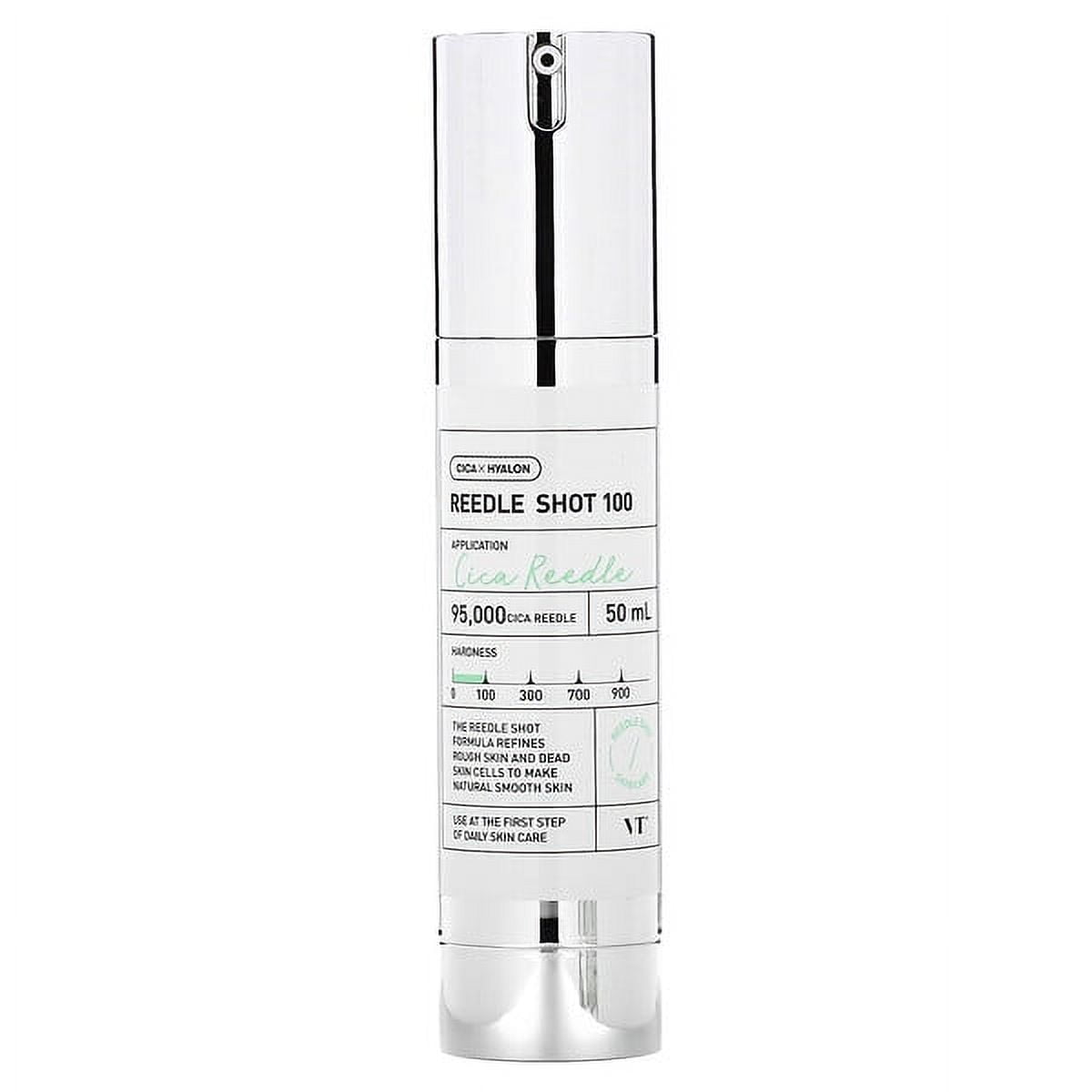

Vt Cosmetics, Reedle Shot 100, 1.69 Fl Oz (50 Ml) 1.69 Oz
Analysis updated August 2026 · How Scout scores
At a glance
Summary
This serum contains several beneficial ingredients such as niacinamide, macadamia oil, and sodium hyaluronate, which are known for their moisturizing and anti-aging properties. However, the presence of synthetic polymers and emulsifiers like sodium acrylate/sodium acryloyldimethyltaurate copolymer and polyisobutene indicates a moderate level of processing. Despite these additives, the product still offers a range of skin benefits due to its inclusion of natural extracts and skin actives.
Key ingredients 43
Macadamia Ternifolia Seed OilVery Good
Macadamia oil is a natural oil rich in fatty acids, providing excellent moisturizing properties. It helps to nourish and soften the skin. It is known for its ability to mimic the skin's natural oils.
Risks
There are minimal risks; it is generally safe for all skin types.
Benefits
It provides deep hydration and improves skin elasticity.
AdenosineVery Good
Adenosine is a beneficial ingredient known for its anti-aging properties. It helps to smooth the skin and reduce the appearance of wrinkles. It is well-tolerated by most skin types.
Risks
There are minimal risks; it is generally safe for all skin types.
Benefits
It improves skin smoothness and reduces signs of aging.
Centella Asiatica ExtractVery Good
Centella asiatica extract is a botanical ingredient known for its soothing and healing properties. It helps to calm irritated skin and promote wound healing. It is rich in antioxidants and beneficial for sensitive skin.
Risks
There are minimal risks; it is generally safe for all skin types.
Benefits
It soothes irritation and supports skin repair.
Propolis ExtractVery Good
Propolis extract is a natural ingredient known for its antibacterial and anti-inflammatory properties. It helps to soothe and protect the skin. It is beneficial for acne-prone and sensitive skin.
Risks
There are minimal risks; it is generally safe for all skin types.
Benefits
It provides antimicrobial protection and soothes irritation.
AsiaticosideVery Good
Asiaticoside is a compound derived from Centella asiatica with skin-soothing properties. It helps to promote collagen synthesis and improve skin elasticity. It is beneficial for sensitive and aging skin.
Risks
There are minimal risks; it is generally safe for all skin types.
Benefits
It supports skin repair and enhances elasticity.
MadecassosideVery Good
Madecassoside is a compound derived from Centella asiatica known for its anti-inflammatory and healing properties. It helps to soothe irritated skin and promote wound healing. It is beneficial for sensitive and damaged skin.
Risks
There are minimal risks; it is generally safe for all skin types.
Benefits
It calms inflammation and supports skin repair.
Madecassic AcidVery Good
Madecassic acid is a compound derived from Centella asiatica with skin-soothing properties. It helps to reduce inflammation and promote skin healing. It is beneficial for sensitive and irritated skin.
Risks
There are minimal risks; it is generally safe for all skin types.
Benefits
It soothes irritation and supports skin repair.
Asiatic AcidVery Good
Asiatic acid is a compound derived from Centella asiatica known for its anti-inflammatory and healing properties. It helps to soothe irritated skin and promote wound healing. It is beneficial for sensitive and damaged skin.
Risks
There are minimal risks; it is generally safe for all skin types.
Benefits
It calms inflammation and supports skin repair.
GlycerinGood
Glycerin is a humectant that attracts moisture to the skin, keeping it hydrated. It is widely used in skincare for its moisturizing properties. It helps improve skin barrier function.
Risks
There are minimal risks associated with glycerin; it is generally safe.
Benefits
It provides excellent hydration and improves skin smoothness.
NiacinamideGood
Niacinamide is a form of Vitamin B3 that offers multiple skin benefits, including improving skin tone and texture. It helps reduce the appearance of pores and fine lines. It is known for its anti-inflammatory properties.
Risks
There are minimal risks; it is well-tolerated by most skin types.
Benefits
It enhances skin barrier function and reduces redness.
Sodium HyaluronateGood
Sodium hyaluronate is a form of hyaluronic acid known for its excellent hydrating properties. It helps to retain moisture in the skin, keeping it plump and hydrated. It is widely used in skincare for its anti-aging benefits.
Risks
There are minimal risks; it is generally safe for all skin types.
Benefits
It provides deep hydration and improves skin elasticity.
GlycineGood
Beneficial ingredient — whole-food or functional value in this product class.
Risks
There are minimal risks; it is generally non-irritating.
Benefits
It provides skin conditioning and improves texture.
Purified WaterNeutral
Purified water is a common solvent used in cosmetics to dissolve other ingredients. It does not provide direct benefits or risks to the skin. It serves as a base for the formulation.
Risks
There are no known risks associated with purified water in cosmetics.
Benefits
It helps in the even distribution of other ingredients.
Dipropylene GlycolNeutral
Dipropylene glycol is used as a solvent and skin conditioning agent. It helps in improving the texture and spreadability of the product. It is generally considered safe for use in cosmetics.
Risks
In rare cases, it may cause mild irritation in sensitive individuals.
Benefits
It enhances the absorption of other beneficial ingredients.
Butylene GlycolNeutral
Butylene glycol is used as a solvent and conditioning agent in cosmetics. It helps improve the texture and spreadability of the product. It is generally considered safe for use in cosmetics.
Risks
In rare cases, it may cause mild irritation in sensitive individuals.
Benefits
It enhances the absorption of other beneficial ingredients.
1, 2-HexanediolNeutral
1, 2-Hexanediol is used as a solvent and preservative in cosmetics. It helps stabilize the formulation and extend shelf life. It is generally considered safe for use in cosmetics.
Risks
There are minimal risks; it is generally non-irritating.
Benefits
It helps maintain product stability and efficacy.
Ethylhexyl PalmitateNeutral
Ethylhexyl palmitate is an emollient that helps to soften and smooth the skin. It is used to improve the texture of cosmetic formulations. It is generally considered safe for use in cosmetics.
Risks
In rare cases, it may cause mild irritation in sensitive individuals.
Benefits
It enhances skin smoothness and provides a silky feel.
Hydrolyzed SpongeNeutral
Hydrolyzed sponge is used for its skin conditioning properties. It helps to improve the texture and feel of the skin. It is generally considered safe for use in cosmetics.
Risks
There are minimal risks; it is generally non-irritating.
Benefits
It provides a smooth and soft texture to the skin.
Sodium Acrylate/Sodium Acryloyldimethyltaurate CopolymerNeutral
This copolymer is used as a thickening agent in cosmetics. It helps to stabilize and improve the texture of the formulation. It is generally considered safe for use in cosmetics.
Risks
There are minimal risks; it is generally non-irritating.
Benefits
It enhances the viscosity and stability of the product.
PolyisobuteneNeutral
Polyisobutene is used as a film-forming agent in cosmetics. It helps to improve the texture and longevity of the product on the skin. It is generally considered safe for use in cosmetics.
Risks
There are minimal risks; it is generally non-irritating.
Benefits
It provides a smooth and even application.
Glycereth-26Neutral
Glycereth-26 is used as a humectant and conditioning agent in cosmetics. It helps to attract moisture to the skin. It is generally considered safe for use in cosmetics.
Risks
There are minimal risks; it is generally non-irritating.
Benefits
It provides hydration and improves skin feel.
EthylhexylglycerinNeutral
Ethylhexylglycerin is used as a preservative and skin conditioning agent. It helps to enhance the efficacy of other preservatives. It is generally considered safe for use in cosmetics.
Risks
There are minimal risks; it is generally non-irritating.
Benefits
It helps maintain product stability and skin conditioning.
Caprylyl GlycolNeutral
Caprylyl glycol is used as a skin conditioning agent and preservative. It helps to improve the texture and feel of the skin. It is generally considered safe for use in cosmetics.
Risks
There are minimal risks; it is generally non-irritating.
Benefits
It provides hydration and enhances product stability.
Sodium PolyacrylateNeutral
Sodium polyacrylate is used as a thickening agent in cosmetics. It helps to stabilize and improve the texture of the formulation. It is generally considered safe for use in cosmetics.
Risks
There are minimal risks; it is generally non-irritating.
Benefits
It enhances the viscosity and stability of the product.
Caprylyl/Capryl GlucosideNeutral
Caprylyl/capryl glucoside is a mild surfactant used in cosmetics. It helps to improve the texture and spreadability of the product. It is generally considered safe for use in cosmetics.
Risks
There are minimal risks; it is generally non-irritating.
Benefits
It enhances the cleansing and foaming properties of the product.
Sorbitan OleateNeutral
Sorbitan oleate is used as an emulsifier in cosmetics. It helps to stabilize and improve the texture of the formulation. It is generally considered safe for use in cosmetics.
Risks
There are minimal risks; it is generally non-irritating.
Benefits
It helps maintain product stability and consistency.
Xanthan GumNeutral
Xanthan gum is used as a thickening agent in cosmetics. It helps to stabilize and improve the texture of the formulation. It is generally considered safe for use in cosmetics.
Risks
There are minimal risks; it is generally non-irritating.
Benefits
It enhances the viscosity and stability of the product.
SerineNeutral
Serine is an amino acid used in cosmetics for its skin conditioning properties. It helps to improve the texture and feel of the skin. It is generally considered safe for use in cosmetics.
Risks
There are minimal risks; it is generally non-irritating.
Benefits
It provides skin conditioning and improves texture.
Glutamic AcidNeutral
Glutamic acid is an amino acid used in cosmetics for its skin conditioning properties. It helps to improve the texture and feel of the skin. It is generally considered safe for use in cosmetics.
Risks
There are minimal risks; it is generally non-irritating.
Benefits
It provides skin conditioning and improves texture.
Aspartic AcidNeutral
Aspartic acid is an amino acid used in cosmetics for its skin conditioning properties. It helps to improve the texture and feel of the skin. It is generally considered safe for use in cosmetics.
Risks
There are minimal risks; it is generally non-irritating.
Benefits
It provides skin conditioning and improves texture.
LeucineNeutral
Leucine is an amino acid used in cosmetics for its skin conditioning properties. It helps to improve the texture and feel of the skin. It is generally considered safe for use in cosmetics.
Risks
There are minimal risks; it is generally non-irritating.
Benefits
It provides skin conditioning and improves texture.
AlanineNeutral
Alanine is an amino acid used in cosmetics for its skin conditioning properties. It helps to improve the texture and feel of the skin. It is generally considered safe for use in cosmetics.
Risks
There are minimal risks; it is generally non-irritating.
Benefits
It provides skin conditioning and improves texture.
LysineNeutral
Lysine is an amino acid used in cosmetics for its skin conditioning properties. It helps to improve the texture and feel of the skin. It is generally considered safe for use in cosmetics.
Risks
There are minimal risks; it is generally non-irritating.
Benefits
It provides skin conditioning and improves texture.
ArginineNeutral
Arginine is an amino acid used in cosmetics for its skin conditioning properties. It helps to improve the texture and feel of the skin. It is generally considered safe for use in cosmetics.
Risks
There are minimal risks; it is generally non-irritating.
Benefits
It provides skin conditioning and improves texture.
TyrosineNeutral
Tyrosine is an amino acid used in cosmetics for its skin conditioning properties. It helps to improve the texture and feel of the skin. It is generally considered safe for use in cosmetics.
Risks
There are minimal risks; it is generally non-irritating.
Benefits
It provides skin conditioning and improves texture.
PhenylalanineNeutral
Phenylalanine is an amino acid used in cosmetics for its skin conditioning properties. It helps to improve the texture and feel of the skin. It is generally considered safe for use in cosmetics.
Risks
There are minimal risks; it is generally non-irritating.
Benefits
It provides skin conditioning and improves texture.
ThreonineNeutral
Threonine is an amino acid used in cosmetics for its skin conditioning properties. It helps to improve the texture and feel of the skin. It is generally considered safe for use in cosmetics.
Risks
There are minimal risks; it is generally non-irritating.
Benefits
It provides skin conditioning and improves texture.
ProlineNeutral
Proline is an amino acid used in cosmetics for its skin conditioning properties. It helps to improve the texture and feel of the skin. It is generally considered safe for use in cosmetics.
Risks
There are minimal risks; it is generally non-irritating.
Benefits
It provides skin conditioning and improves texture.
ValineNeutral
Valine is an amino acid used in cosmetics for its skin conditioning properties. It helps to improve the texture and feel of the skin. It is generally considered safe for use in cosmetics.
Risks
There are minimal risks; it is generally non-irritating.
Benefits
It provides skin conditioning and improves texture.
IsoleucineNeutral
Isoleucine is an amino acid used in cosmetics for its skin conditioning properties. It helps to improve the texture and feel of the skin. It is generally considered safe for use in cosmetics.
Risks
There are minimal risks; it is generally non-irritating.
Benefits
It provides skin conditioning and improves texture.
HistidineNeutral
Histidine is an amino acid used in cosmetics for its skin conditioning properties. It helps to improve the texture and feel of the skin. It is generally considered safe for use in cosmetics.
Risks
There are minimal risks; it is generally non-irritating.
Benefits
It provides skin conditioning and improves texture.
MethionineNeutral
Methionine is an amino acid used in cosmetics for its skin conditioning properties. It helps to improve the texture and feel of the skin. It is generally considered safe for use in cosmetics.
Risks
There are minimal risks; it is generally non-irritating.
Benefits
It provides skin conditioning and improves texture.
CysteineNeutral
Cysteine is an amino acid used in cosmetics for its skin conditioning properties. It helps to improve the texture and feel of the skin. It is generally considered safe for use in cosmetics.
Risks
There are minimal risks; it is generally non-irritating.
Benefits
It provides skin conditioning and improves texture.
Processing
Processed Foods
Get the full breakdown in the Scout appTake Scout shopping
Scan any product to see lab results, healthy alternatives, and your personalized analysis.
Download on theApp Store GET IT ONGoogle PlayAmazon pricing & content
Amazon price as of . Product prices and availability are accurate as of the date/time indicated and are subject to change. Any price and availability information displayed on Amazon.com at the time of purchase will apply to the purchase of this product.
CERTAIN CONTENT THAT APPEARS ON THIS SITE COMES FROM AMAZON. THIS CONTENT IS PROVIDED “AS IS” AND IS SUBJECT TO CHANGE OR REMOVAL AT ANY TIME.