
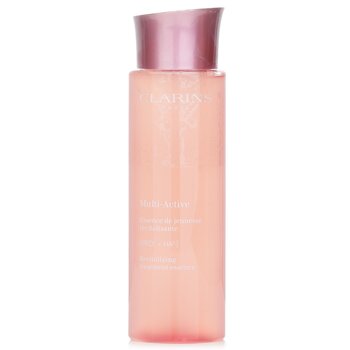
ClarinsMulti-Active Revitalizing Treatment Essence 200ml/6.7oz

68 Fair
View on Amazon

Summary

This product contains mostly safe ingredients with beneficial components like glycerin and sodium hyaluronate, which are known for their moisturizing properties. However, it includes synthetic preservatives such as sodium benzoate and disodium EDTA, which slightly lower its rating due to potential skin sensitivity concerns. The processing level indicates some degree of formulation complexity, but the absence of harsh chemicals or known endocrine disruptors is a positive aspect.

At a glance

Beneficial ingredients 0
Harmful ingredients 0
Category Serum

Key ingredients 9

Aqua/Water/Eau

Water is a universal solvent used as a base in many cosmetic formulations. It helps dissolve other ingredients and provides hydration. It is essential for the consistency and application of the product.

Risks

There are no significant risks associated with water in cosmetics.

Benefits

Water hydrates the skin and helps in the absorption of other beneficial ingredients.

See more about Aqua/Water/Eau →
Glycerin

Glycerin is a humectant that attracts moisture to the skin, improving hydration. It is commonly used in skincare products for its moisturizing properties. It helps maintain the skin's water balance on an intercellular level.

Risks

Glycerin is generally safe, but in rare cases, it can cause irritation if used in high concentrations.

Benefits

Glycerin helps keep the skin soft and supple by drawing moisture from the air into the skin.

See more about Glycerin →
Propanediol

Propanediol is a glycol that acts as a solvent and skin-conditioning agent. It enhances the absorption of other ingredients and provides a smooth application. It is often used as a natural alternative to propylene glycol.

Risks

Propanediol is generally considered safe, but it can cause mild irritation in sensitive individuals.

Benefits

Propanediol helps improve the texture of the product and enhances skin hydration.

See more about Propanediol →
Pentylene Glycol

Pentylene Glycol is a synthetic humectant and solvent that helps retain moisture in the skin. It also has antimicrobial properties that can enhance the preservation of the product. It is often used to improve the texture and feel of skincare products.

Risks

Pentylene Glycol is generally safe, but it may cause irritation in sensitive skin types.

Benefits

It helps keep the skin hydrated and can improve the efficacy of other active ingredients.

See more about Pentylene Glycol →
Butylene Glycol

Butylene Glycol is a common ingredient used as a solvent and conditioning agent in cosmetics. It helps improve the texture and spreadability of products. It also acts as a humectant, drawing moisture into the skin.

Risks

Butylene Glycol is generally safe, but it can cause irritation in some individuals with sensitive skin.

Benefits

It enhances the skin's moisture content and improves the overall feel of the product.

See more about Butylene Glycol →
Sodium Benzoate

Sodium Benzoate is a preservative used to prevent microbial growth in cosmetic products. It is effective in maintaining product stability and extending shelf life. It is commonly used in combination with other preservatives for enhanced efficacy.

Risks

Sodium Benzoate can cause irritation in sensitive skin and may form benzene, a carcinogen, under certain conditions.

Benefits

It helps keep the product safe for use by preventing spoilage and contamination.

See more about Sodium Benzoate →
Dipsacus Sylvestris Extract

Dipsacus Sylvestris Extract is a botanical ingredient known for its antioxidant properties. It is used in skincare for its potential to protect the skin from environmental stressors. It may also have soothing and anti-inflammatory effects.

Risks

There is limited research on its safety, but it is generally considered safe in cosmetic formulations.

Benefits

It provides antioxidant protection and may help soothe irritated skin.

Disodium Edta

Disodium EDTA is a chelating agent used to improve the stability and efficacy of cosmetic products. It binds to metal ions, preventing them from affecting the product's performance. It is commonly used to enhance the preservative system of formulations.

Risks

Disodium EDTA is generally safe but can cause irritation in sensitive individuals.

Benefits

It helps maintain the integrity of the product by preventing metal ion contamination.

See more about Disodium Edta →
Sodium Hyaluronate

Sodium Hyaluronate is a form of hyaluronic acid that is used for its excellent moisturizing properties. It can hold up to 1000 times its weight in water, making it a powerful hydrating agent. It is commonly used in skincare to improve skin elasticity and reduce the appearance of fine lines.

Risks

Sodium Hyaluronate is generally safe, but overuse can lead to excessive moisture retention, causing puffiness.

Benefits

It provides deep hydration and helps maintain skin elasticity and smoothness.

See more about Sodium Hyaluronate →

Processing

Group 3 · Processed

Processed Foods

Get the full breakdown in the Scout app

Scan any product to see lab results, healthy alternatives, and your personalized analysis.

Download on theApp Store