
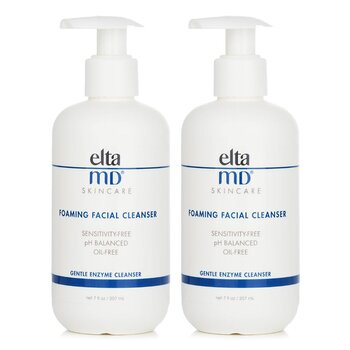

EltaMD Foaming Facial Cleanser, Exfoliating Face Cleanser, Helps Remove Oil and Dead Skin Cells, Safe for All Skin Types, Oil Free, Paraben Free, Sensitivity Free, Sensitive Skin Face Wash, 7 Oz Pump
Analysis updated September 2026 · How Scout scores
At a glance
Summary
This face wash contains beneficial ingredients like Sodium Cocoyl Glycinate and Bromelain, which are gentle and help maintain the skin's moisture barrier. However, the presence of phenoxyethanol and fragrance, which can cause irritation and allergic reactions, lowers its safety profile. The product also includes PEG/PPG compounds, which contribute to a moderate level of processing, affecting the overall score.
Key ingredients 25
Sodium Cocoyl GlycinateGood
Sodium Cocoyl Glycinate is a mild surfactant derived from coconut oil and glycine. It is known for its gentle cleansing properties and is less likely to irritate the skin compared to harsher surfactants. It helps maintain the skin's natural moisture barrier.
Risks
There are minimal risks associated with this ingredient, though very sensitive skin might still react.
Benefits
It provides gentle cleansing without stripping the skin of its natural oils.
Sodium Cocoyl Apple Amino AcidsGood
This ingredient is a mild surfactant derived from apple amino acids and coconut oil. It is known for its gentle cleansing properties and is suitable for sensitive skin. It helps in maintaining the skin's natural moisture balance.
Risks
There are minimal risks associated with this ingredient.
Benefits
It provides gentle cleansing and helps maintain skin moisture.
BromelainGood
Bromelain is an enzyme derived from pineapples, known for its exfoliating properties. It helps in removing dead skin cells and promoting skin renewal. It is beneficial for improving skin texture.
Risks
May cause irritation in very sensitive skin types.
Benefits
It aids in exfoliation and improves skin texture.
WaterNeutral
Water is a common solvent used in cosmetics to dissolve other ingredients. It helps in forming the base of the product. It does not have any direct benefits or risks in this context.
Risks
There are no significant risks associated with water in cosmetics.
Benefits
Water helps in dissolving other ingredients and provides a medium for them to function.
Methyl Perfluoroisobutyl EtherNeutral
Methyl Perfluoroisobutyl Ether is used for its ability to enhance the spreadability of the product. It is a fluorinated compound that provides a silky feel. It is generally considered safe in cosmetics.
Risks
There are concerns about bioaccumulation and environmental impact.
Benefits
It improves the spreadability and feel of the product on the skin.
Methyl Perfluorobutyl EtherNeutral
Similar to Methyl Perfluoroisobutyl Ether, this ingredient is used to enhance the texture and spreadability of the product. It provides a smooth application. It is considered safe for use in cosmetics.
Risks
Potential environmental concerns due to bioaccumulation.
Benefits
It enhances the product's texture and application.
Magnesium SilicateNeutral
Magnesium Silicate is used as an absorbent and anti-caking agent in cosmetics. It helps in improving the texture and stability of the product. It is generally considered safe for use.
Risks
Inhalation of fine particles can be a concern, but this is not typically an issue in liquid formulations.
Benefits
It helps in maintaining the product's texture and prevents caking.
PEG/PPG-14/4 DimethiconeNeutral
This is a silicone-based compound used for its conditioning and smoothing properties. It helps in providing a silky feel to the skin. It is generally considered safe for use in cosmetics.
Risks
There are concerns about potential buildup on the skin.
Benefits
It provides a smooth and silky feel to the skin.
Polyhydroxystearic AcidNeutral
Polyhydroxystearic Acid is used as an emulsifier and thickening agent in cosmetics. It helps in stabilizing the formulation. It is generally considered safe for use.
Risks
There are minimal risks associated with this ingredient.
Benefits
It helps in stabilizing and thickening the product.
Isononyl IsononanoateNeutral
Isononyl Isononanoate is an emollient that provides a smooth application and helps in moisturizing the skin. It is commonly used in cosmetics for its non-greasy feel. It is considered safe for use.
Risks
There are minimal risks associated with this ingredient.
Benefits
It provides a non-greasy moisturizing effect.
Ethylhexyl IsononanoateNeutral
This ingredient is used as an emollient and skin conditioning agent. It helps in providing a smooth and soft feel to the skin. It is generally considered safe for use in cosmetics.
Risks
There are minimal risks associated with this ingredient.
Benefits
It provides a smooth and soft feel to the skin.
Sodium Cocamidopropyl PG-Dimonium Chloride PhosphateNeutral
This ingredient is used as a conditioning agent and surfactant. It helps in cleansing the skin while providing conditioning benefits. It is generally considered safe for use.
Risks
There is a potential for skin irritation in sensitive individuals.
Benefits
It provides conditioning and cleansing benefits.
Sodium HydroxideNeutral
Sodium Hydroxide is used to adjust the pH of cosmetic formulations. It is effective in small amounts to ensure product stability. It is generally considered safe when used appropriately.
Risks
In high concentrations, it can be corrosive and irritating.
Benefits
It helps in maintaining the stability and pH balance of the product.
Capryloyl GlycineNeutral
Capryloyl Glycine is used for its antimicrobial properties and helps in maintaining skin health. It is effective in controlling the growth of bacteria on the skin. It is generally considered safe for use.
Risks
There are minimal risks associated with this ingredient.
Benefits
It helps in maintaining skin health by controlling bacterial growth.
Undecylenoyl GlycineNeutral
Undecylenoyl Glycine is used for its antimicrobial properties and helps in maintaining skin health. It is effective in controlling the growth of bacteria and fungi on the skin. It is generally considered safe for use.
Risks
There are minimal risks associated with this ingredient.
Benefits
It helps in maintaining skin health by controlling microbial growth.
Sodium BisulfiteNeutral
Sodium Bisulfite is used as a preservative and antioxidant in cosmetics. It helps in preventing the oxidation of other ingredients. It is generally considered safe for use.
Risks
Potential for allergic reactions in sensitive individuals.
Benefits
It helps in preserving the product by preventing oxidation.
MaltodextrinNeutral
Maltodextrin is used as a binding and stabilizing agent in cosmetics. It helps in improving the texture and stability of the product. It is generally considered safe for use.
Risks
There are minimal risks associated with this ingredient.
Benefits
It helps in stabilizing and improving the texture of the product.
Coconut AcidNeutral
Coconut Acid is used as a surfactant and cleansing agent in cosmetics. It helps in removing dirt and oil from the skin. It is generally considered safe for use.
Risks
There are minimal risks associated with this ingredient.
Benefits
It helps in cleansing the skin by removing dirt and oil.
Sodium ChlorideNeutral
Sodium Chloride is used as a thickening agent in cosmetics. It helps in improving the texture and viscosity of the product. It is generally considered safe for use.
Risks
There are minimal risks associated with this ingredient.
Benefits
It helps in thickening the product and improving its texture.
Hexylene GlycolNeutral
Hexylene Glycol is used as a solvent and viscosity agent in cosmetics. It helps in improving the texture and spreadability of the product. It is generally considered safe for use.
Risks
Potential for skin irritation in sensitive individuals.
Benefits
It helps in improving the texture and spreadability of the product.
Tetrasodium Glutamate DiacetateNeutral
Tetrasodium Glutamate Diacetate is used as a chelating agent in cosmetics. It helps in enhancing the effectiveness of preservatives. It is generally considered safe for use.
Risks
There are minimal risks associated with this ingredient.
Benefits
It enhances the effectiveness of preservatives in the product.
Acrylates CopolymerBad
Processed additive flagged under Scout's ingredient doctrine.
Risks
There is a minimal risk of skin irritation, especially in sensitive individuals.
Benefits
It helps in improving the texture and stability of the product.
PhenoxyethanolBad
Phenoxyethanol is a preservative used to prevent microbial growth in cosmetics. It is effective in low concentrations but can cause irritation in some individuals. It is a common alternative to parabens.
Risks
Potential skin irritation and allergic reactions in sensitive individuals.
Benefits
It helps in preserving the product by preventing microbial growth.
Propylene GlycolBad
Processed additive flagged under Scout's ingredient doctrine.
Risks
Potential for skin irritation in sensitive individuals.
Benefits
It helps in retaining moisture and improving product texture.
FragranceVery Bad
Fragrance is used to provide a pleasant scent to cosmetics. However, it can cause irritation and allergic reactions in sensitive individuals. It is often criticized for its potential to cause skin sensitivity.
Risks
Potential for skin irritation and allergic reactions.
Benefits
It provides a pleasant scent to the product.
Get the full breakdown in the Scout appTake Scout shopping
Scan any product to see lab results, healthy alternatives, and your personalized analysis.
Download on theApp Store GET IT ONGoogle Play