
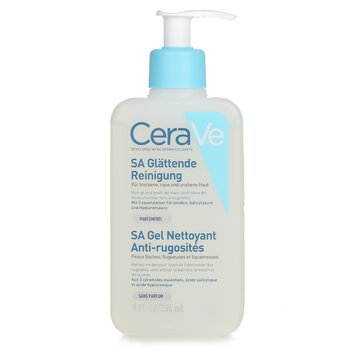

CeraVeSA Smoothing Cleanser(Random Packaging) 236ml/8oz
Analysis updated August 2026 · How Scout scores
At a glance
Summary
This cleanser contains beneficial ingredients like glycerin, niacinamide, and ceramides, which support skin hydration and barrier function. However, the presence of PEG compounds and phenoxyethanol introduces some concerns regarding synthetic additives and preservatives. The product is moderately processed, which affects its overall rating despite the inclusion of skin-friendly actives.
Key ingredients 24
Ceramide APVery Good
Ceramide AP is a type of ceramide that supports skin barrier function. It helps retain moisture and improve skin resilience. It is beneficial for maintaining healthy skin.
Risks
Generally considered safe with minimal risk of irritation.
Benefits
Enhances skin hydration and barrier protection.
Ceramide EOPVery Good
Ceramide EOP is a ceramide that plays a crucial role in skin barrier repair. It helps lock in moisture and protect the skin from external aggressors. It is suitable for all skin types, especially dry and sensitive skin.
Risks
Generally considered safe with minimal risk of irritation.
Benefits
Improves skin barrier function and hydration.
Hydrolyzed Hyaluronic AcidVery Good
Hydrolyzed Hyaluronic Acid is a smaller molecule form of hyaluronic acid. It penetrates the skin more easily and provides deep hydration. It is highly beneficial for maintaining skin moisture.
Risks
Generally considered safe with minimal risk of irritation.
Benefits
Provides intense hydration and plumps the skin.
GlycerinGood
Glycerin is a humectant that attracts moisture to the skin. It helps maintain skin hydration and improves skin barrier function. It is widely used in skincare for its moisturizing properties.
Risks
Generally considered safe with minimal risk of irritation.
Benefits
Helps keep the skin hydrated and soft.
NiacinamideGood
Niacinamide is a form of Vitamin B3 that offers multiple skin benefits. It helps improve skin tone, reduce redness, and enhance the skin barrier. It is well-tolerated and suitable for most skin types.
Risks
Rarely causes irritation or redness.
Benefits
Improves skin texture and reduces signs of aging.
GluconolactoneGood
Gluconolactone is a polyhydroxy acid (PHA) that provides gentle exfoliation. It helps improve skin texture and hydration. It is suitable for sensitive skin due to its mild nature.
Risks
May cause mild irritation in very sensitive skin.
Benefits
Exfoliates the skin gently while providing hydration.
Ceramide NPGood
Ceramide NP is a lipid that helps restore the skin barrier. It is essential for maintaining skin hydration and protecting against environmental damage. It is well-tolerated and beneficial for dry and sensitive skin.
Risks
Generally considered safe with minimal risk of irritation.
Benefits
Strengthens the skin barrier and retains moisture.
Salicylic AcidGood
Salicylic Acid is a beta hydroxy acid (BHA) known for its exfoliating properties. It helps unclog pores and reduce acne. It is effective for oily and acne-prone skin.
Risks
May cause dryness or irritation if overused.
Benefits
Reduces acne and improves skin texture.
CholesterolGood
Cholesterol is a lipid that helps maintain skin barrier function. It is essential for skin hydration and protection. It is beneficial for dry and sensitive skin.
Risks
Generally considered safe with minimal risk of irritation.
Benefits
Supports skin barrier and hydration.
PhytosphingosineGood
Phytosphingosine is a lipid that helps maintain the skin barrier. It has anti-inflammatory and antimicrobial properties. It is beneficial for improving skin health and reducing irritation.
Risks
Generally considered safe with minimal risk of irritation.
Benefits
Supports skin barrier and reduces inflammation.
WaterNeutral
Water is a common solvent used in cosmetic formulations. It helps dissolve other ingredients and provides a base for the product. It is generally considered safe and non-irritating.
Risks
There are no significant risks associated with water in cosmetics.
Benefits
Water helps in hydrating the skin and acts as a carrier for other beneficial ingredients.
Cocamidopropyl HydroxysultaineNeutral
Cocamidopropyl Hydroxysultaine is a surfactant and foam booster derived from coconut oil. It is used to enhance the texture and feel of the product. It is generally considered safe for use in cosmetics.
Risks
May cause mild irritation in sensitive individuals.
Benefits
Helps improve the lather and cleansing ability of the product.
Sodium Methyl Cocoyl TaurateNeutral
Sodium Methyl Cocoyl Taurate is a mild surfactant derived from coconut oil. It is used for its cleansing and foaming properties. It is considered safe and non-irritating for most skin types.
Risks
May cause mild irritation in sensitive individuals.
Benefits
Provides gentle cleansing without stripping the skin.
PEG-150 Pentaerythrityl TetrastearateNeutral
PEG-150 Pentaerythrityl Tetrastearate is an emulsifier and thickening agent. It helps stabilize formulations and improve texture. It is generally considered safe for use in cosmetics.
Risks
May cause irritation in individuals with PEG sensitivity.
Benefits
Improves the consistency and stability of the product.
CarbomerNeutral
Carbomer is a thickening agent used to stabilize cosmetic formulations. It helps create a smooth and consistent texture. It is considered safe for use in cosmetics.
Risks
May cause mild irritation in sensitive individuals.
Benefits
Improves the texture and stability of the product.
Calcium GluconateNeutral
Calcium Gluconate is used as a skin-conditioning agent. It helps improve skin texture and hydration. It is generally considered safe for use in cosmetics.
Risks
May cause mild irritation in sensitive individuals.
Benefits
Contributes to skin hydration and smoothness.
Sodium Lauroyl LactylateNeutral
Sodium Lauroyl Lactylate is a mild surfactant and emulsifier. It helps improve the texture and stability of formulations. It is considered safe and non-irritating for most skin types.
Risks
May cause mild irritation in sensitive individuals.
Benefits
Enhances product texture and cleansing ability.
Tetrasodium EDTANeutral
Tetrasodium EDTA is a chelating agent used to improve product stability. It binds to metal ions and prevents spoilage. It is generally considered safe for use in cosmetics.
Risks
May cause mild irritation in sensitive individuals.
Benefits
Improves product stability and longevity.
Xanthan GumNeutral
Xanthan Gum is a thickening agent used to stabilize cosmetic formulations. It helps improve the texture and consistency of products. It is considered safe for use in cosmetics.
Risks
May cause mild irritation in sensitive individuals.
Benefits
Enhances product texture and stability.
EthylhexylglycerinNeutral
Ethylhexylglycerin is a preservative and skin-conditioning agent. It helps enhance the efficacy of other preservatives and provides mild moisturizing benefits. It is generally considered safe for use in cosmetics.
Risks
May cause mild irritation in sensitive individuals.
Benefits
Improves product preservation and provides skin conditioning.
Sodium Lauroyl SarcosinateBad
Processed additive flagged under Scout's ingredient doctrine.
Risks
May cause mild irritation in sensitive individuals.
Benefits
Provides effective cleansing without stripping the skin of natural oils.
Sodium BenzoateBad
Synthetic preservative that can form benzene in the presence of vitamin C.
Risks
May cause irritation in sensitive individuals.
Benefits
Prevents spoilage and maintains product safety.
PhenoxyethanolBad
Processed additive flagged under Scout's ingredient doctrine.
Risks
May cause irritation in sensitive individuals.
Benefits
Prevents spoilage and maintains product integrity.
Disodium EDTABad
Processed additive flagged under Scout's ingredient doctrine.
Risks
May cause mild irritation in sensitive individuals.
Benefits
Enhances product stability and shelf life.
Processing
Processed Foods
Get the full breakdown in the Scout appTake Scout shopping
Scan any product to see lab results, healthy alternatives, and your personalized analysis.
Download on theApp Store GET IT ONGoogle Play