
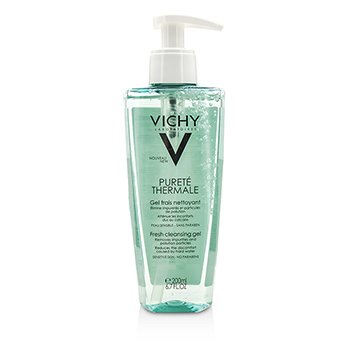

Vichy Cleansing Gel Face Wash, Pureté Thermale Fresh Facial Cleanser & Makeup Remover with Vitamin B5 - Unscented - 6.75oz
Analysis updated August 2026 · How Scout scores
At a glance
Summary
This face wash contains beneficial ingredients like glycerin and moringa seed extract, which provide hydration and antioxidant protection. However, the presence of triethanolamine, which can cause skin irritation and potential nitrosamine contamination, along with the inclusion of fragrance, which may trigger allergic reactions, lowers its safety profile. The product is moderately processed, which also impacts its overall rating.
Key ingredients 15
GlycerinGood
Glycerin is a humectant that attracts moisture to the skin, helping to keep it hydrated. It is widely used in skincare for its moisturizing properties. It is considered safe and beneficial for most skin types.
Risks
There are minimal risks associated with glycerin, though in rare cases it may cause irritation.
Benefits
Glycerin helps to maintain skin hydration and improve skin barrier function.
Moringa Pterygosperma Seed ExtractGood
Moringa Seed Extract is rich in antioxidants and is used for its skin-protective properties. It helps to nourish and protect the skin from environmental stressors. It is generally considered safe and beneficial for skin health.
Risks
There are minimal risks associated with this ingredient.
Benefits
It provides antioxidant protection and skin nourishment.
Aqua / WaterNeutral
Water is a universal solvent and is used as a base in many cosmetic products. It helps dissolve other ingredients and provides hydration. It is generally considered safe and non-irritating.
Risks
There are no significant risks associated with water in cosmetics.
Benefits
Water helps to hydrate the skin and dissolve other beneficial ingredients.
Coco-BetaineNeutral
Coco-Betaine is a mild surfactant derived from coconut oil, used to help cleanse the skin. It is generally considered gentle and suitable for sensitive skin. It helps to create foam and improve the texture of the product.
Risks
In rare cases, it may cause mild irritation or allergic reactions.
Benefits
Coco-Betaine helps to cleanse the skin without stripping natural oils.
Sodium Cocoyl GlycinateNeutral
Sodium Cocoyl Glycinate is a mild surfactant that helps to cleanse the skin while being gentle. It is derived from coconut oil and amino acids, making it suitable for sensitive skin. It is known for its ability to cleanse without causing dryness.
Risks
There are minimal risks, though it may cause irritation in very sensitive individuals.
Benefits
It provides gentle cleansing and helps maintain skin moisture.
Peg-120 Methyl Glucose DioleateNeutral
This ingredient is used as a thickener and emulsifier in cosmetic formulations. It helps to stabilize the product and improve texture. It is generally considered safe for use in cosmetics.
Risks
There is a potential risk of contamination with ethylene oxide or 1,4-dioxane.
Benefits
It improves the texture and stability of the product.
Sodium ChlorideNeutral
Sodium Chloride, or table salt, is used to thicken the aqueous portion of cosmetics. It helps to improve the viscosity and stability of the product. It is generally considered safe in small amounts.
Risks
In high concentrations, it may cause skin dryness or irritation.
Benefits
It helps to improve product texture and stability.
Dipropylene GlycolNeutral
Dipropylene Glycol is a solvent and viscosity-decreasing agent used in cosmetics. It helps to dissolve other ingredients and improve product texture. It is generally considered safe for use in cosmetics.
Risks
There are minimal risks, though it may cause irritation in sensitive individuals.
Benefits
It helps to improve the texture and stability of the product.
Lauric AcidNeutral
Lauric Acid is a fatty acid used for its cleansing and emulsifying properties. It is derived from coconut oil and is known for its antimicrobial properties. It is generally considered safe for use in cosmetics.
Risks
In high concentrations, it may cause skin irritation.
Benefits
It provides cleansing and antimicrobial benefits.
Caprylyl GlycolNeutral
Caprylyl Glycol is used as a skin conditioning agent and preservative booster. It helps to improve skin hydration and enhance the efficacy of preservatives. It is generally considered safe for use in cosmetics.
Risks
There are minimal risks, though it may cause irritation in sensitive individuals.
Benefits
It helps to condition the skin and boost preservative efficacy.
Citric AcidNeutral
Citric Acid is used to adjust the pH of cosmetic formulations. It is derived from citrus fruits and is known for its exfoliating properties. It is generally considered safe for use in cosmetics.
Risks
In high concentrations, it may cause skin irritation or sensitivity.
Benefits
It helps to adjust pH and provides mild exfoliation.
Tetrasodium EdtaNeutral
Tetrasodium EDTA is a chelating agent used to improve the stability and efficacy of cosmetic formulations. It helps to bind metal ions and prevent product degradation. It is generally considered safe for use in cosmetics.
Risks
There are minimal risks, though it may cause irritation in sensitive individuals.
Benefits
It helps to stabilize the product and enhance preservative efficacy.
TriethanolamineBad
Triethanolamine is used to adjust pH and stabilize emulsions in cosmetics. It can cause skin irritation and has been associated with allergic reactions. It is also a potential nitrosamine contaminant.
Risks
It may cause skin irritation and has potential contamination concerns.
Benefits
It helps to stabilize and adjust the pH of cosmetic formulations.
PhenoxyethanolBad
Processed additive flagged under Scout's ingredient doctrine.
Risks
In high concentrations, it may cause skin irritation or allergic reactions.
Benefits
It helps to preserve the product and prevent microbial contamination.
Parfum / FragranceVery Bad
Fragrance is used to impart scent to cosmetic products. It can cause skin irritation and allergic reactions, especially in sensitive individuals. It is often associated with potential allergenicity and sensitivity issues.
Risks
It may cause skin irritation, allergic reactions, and sensitivity.
Benefits
It provides a pleasant scent to the product.
Processing
Processed Foods
Get the full breakdown in the Scout appTake Scout shopping
Scan any product to see lab results, healthy alternatives, and your personalized analysis.
Download on theApp Store GET IT ONGoogle Play