
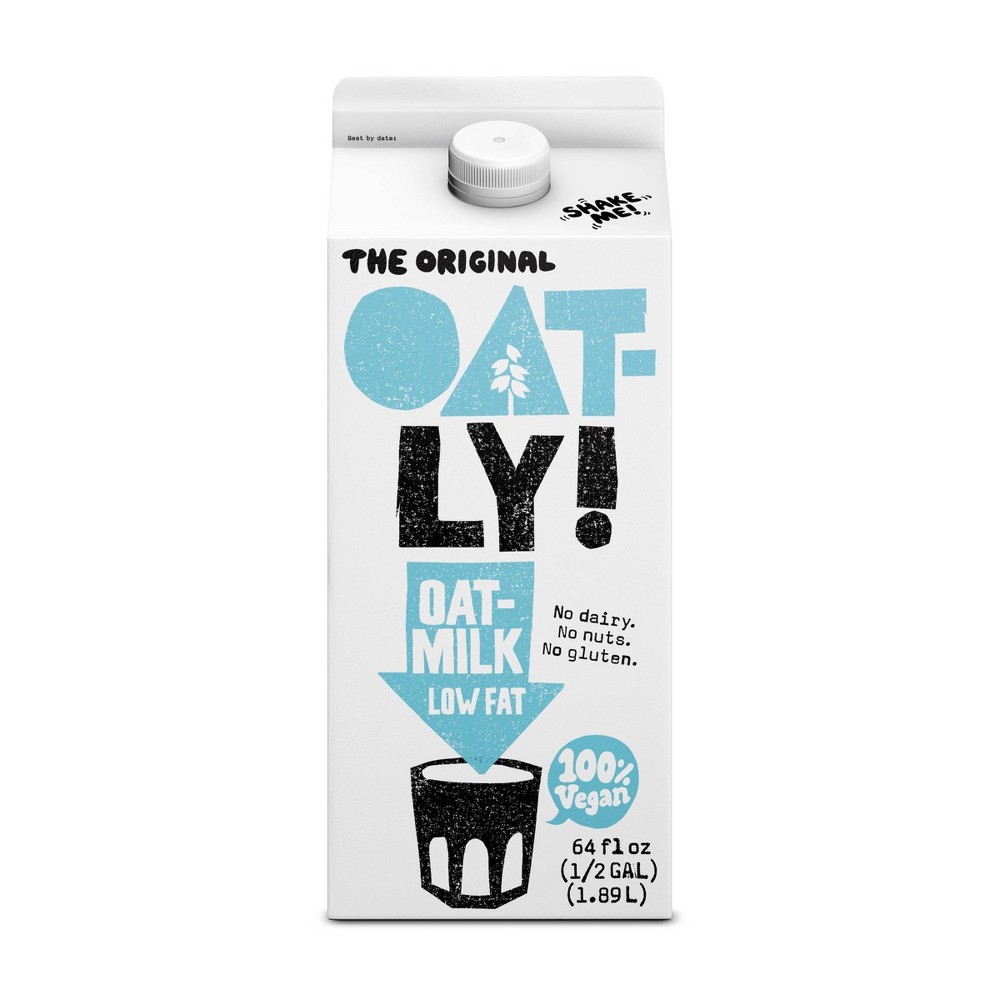

Oatly OATMILK LOW FAT
Analysis updated August 2026 · How Scout scores
At a glance
Summary
This oatmilk product is fortified with beneficial vitamins and minerals, enhancing its nutritional profile. However, it contains several additives and is moderately processed, which limits its score. The absence of harmful ingredients like seed oils or artificial sweeteners is positive, but the processing level and presence of additives prevent it from achieving a higher rating.
Key ingredients 10
OatmilkGood
Oatmilk is a plant-based milk alternative that is low in saturated fat. It is often fortified with vitamins and minerals to enhance its nutritional profile. The presence of oats provides dietary fiber, which can support digestive health.
Risks
Some individuals may have allergies or sensitivities to oats.
Benefits
Rich in beta-glucans, which can help lower cholesterol levels and support heart health.
Sea saltGood
Sea salt is a natural source of sodium and trace minerals. It is less processed than table salt and retains more minerals. It enhances flavor without the need for excessive processing.
Risks
High sodium intake can contribute to hypertension, but moderate use is generally safe.
Benefits
Provides essential trace minerals and enhances flavor naturally.
RiboflavinGood
Riboflavin, or vitamin B2, is essential for energy production and cellular function. It is often added to fortify plant-based milks. It helps convert food into energy and supports skin and eye health.
Benefits
Supports energy metabolism and overall cellular health.
Vitamin AGood
Vitamin A is crucial for maintaining healthy vision, immune function, and skin health. It is often added to fortify foods to ensure adequate intake. It plays a vital role in maintaining epithelial tissues and immune defenses.
Risks
Excessive intake can lead to toxicity, but this is rare with fortified foods.
Benefits
Supports vision, immune function, and skin health.
Vitamin D2Good
Vitamin D2 is a plant-based form of vitamin D used to fortify foods. It is essential for calcium absorption and bone health. It helps maintain proper bone structure and supports immune function.
Benefits
Enhances calcium absorption and supports bone health.
Vitamin B12Good
Vitamin B12 is essential for nerve function and the production of DNA and red blood cells. It is often added to plant-based milks to prevent deficiencies in vegan diets. It supports neurological health and energy production.
Benefits
Supports nerve health and helps prevent anemia.
Dipotassium phosphateNeutral
Dipotassium phosphate is used as a stabilizer and emulsifier in food products. It helps maintain the texture and consistency of oatmilk. While it is generally recognized as safe, it provides no significant nutritional benefits.
Risks
Excessive consumption may lead to imbalances in phosphate levels, but this is unlikely in typical dietary amounts.
Calcium carbonateNeutral
Standard formulation ingredient — neither beneficial nor harmful at typical use.
Risks
Excessive intake can lead to hypercalcemia, but this is rare with normal consumption.
Benefits
Provides a significant source of calcium, essential for maintaining strong bones and teeth.
Tricalcium phosphateNeutral
Tricalcium phosphate is used to fortify foods with calcium and phosphorus. It is a common additive in plant-based milks to enhance nutritional content. While beneficial for bone health, it is not as easily absorbed as other calcium forms.
Risks
Overconsumption may lead to imbalances in calcium and phosphorus levels.
Benefits
Contributes to the calcium content of the product, supporting bone health.
Dicalcium phosphateNeutral
Dicalcium phosphate is used as a dietary supplement to provide calcium and phosphorus. It is commonly added to fortify foods. While it supports bone health, it is not as bioavailable as other calcium sources.
Risks
Excessive intake may lead to mineral imbalances.
Benefits
Contributes to the calcium and phosphorus content, supporting bone health.
Processing
Processed Foods
Get the full breakdown in the Scout appTake Scout shopping
Scan any product to see lab results, healthy alternatives, and your personalized analysis.
Download on theApp Store GET IT ONGoogle PlayAmazon pricing & content
Amazon price as of . Product prices and availability are accurate as of the date/time indicated and are subject to change. Any price and availability information displayed on Amazon.com at the time of purchase will apply to the purchase of this product.
CERTAIN CONTENT THAT APPEARS ON THIS SITE COMES FROM AMAZON. THIS CONTENT IS PROVIDED “AS IS” AND IS SUBJECT TO CHANGE OR REMOVAL AT ANY TIME.