



At a glance
Summary
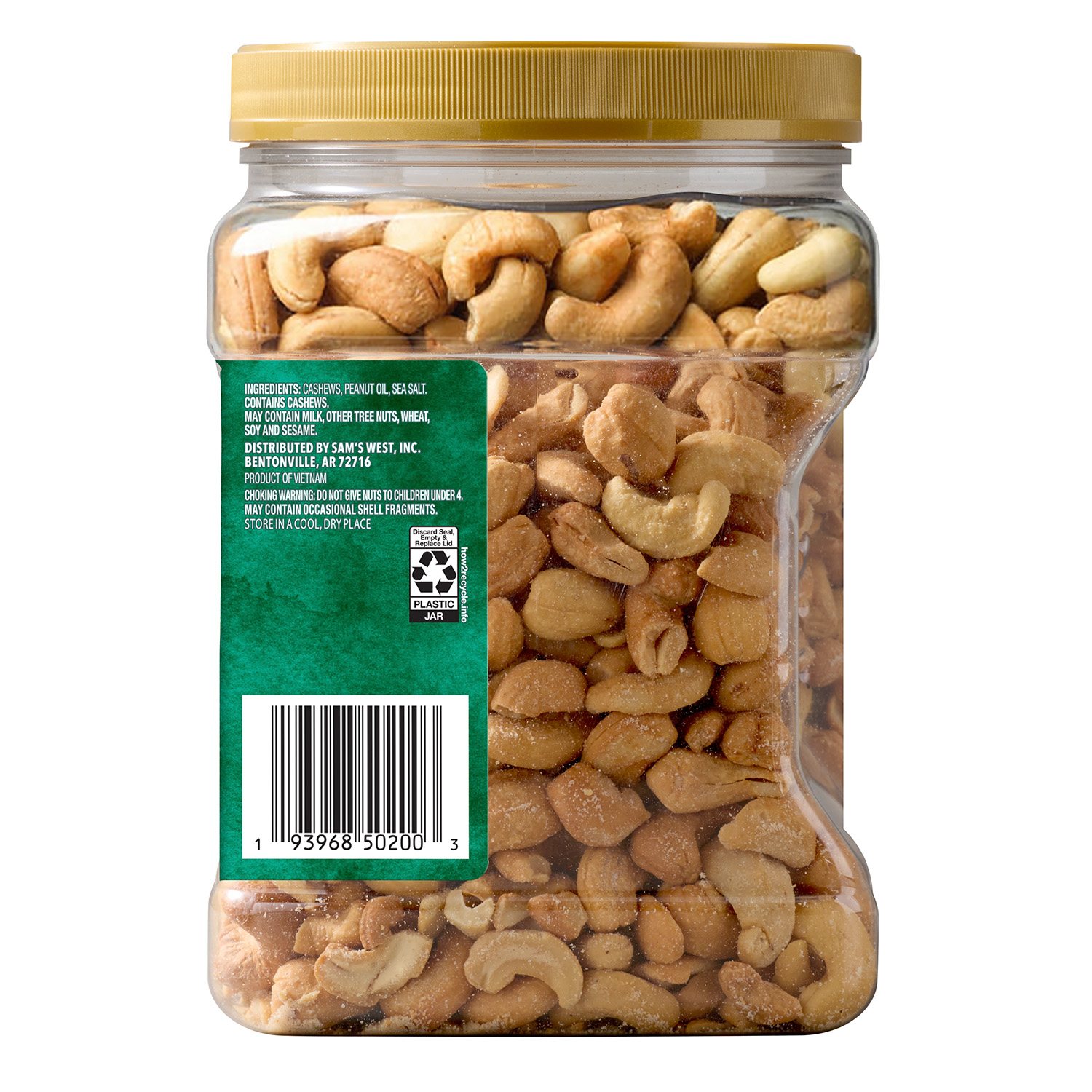
This product consists primarily of cashews, which are nutrient-dense and minimally processed, providing healthy fats and essential minerals. The addition of sea salt enhances flavor naturally without artificial additives. However, the use of peanut oil, a refined oil high in omega-6 fatty acids, slightly detracts from the overall healthfulness due to its potential inflammatory effects.
Key ingredients 3
CashewsGood
Cashews are a nutrient-dense nut rich in healthy fats, protein, and essential minerals like magnesium and zinc. They are minimally processed and provide a good source of monounsaturated fats, which support heart health. Compared to other nuts, cashews offer a creamy texture and versatile culinary use.
Risks
Cashews can be allergenic for some individuals and should be consumed in moderation due to their calorie density.
Benefits
Rich in monounsaturated fats, cashews support heart health and provide essential minerals that contribute to overall well-being.
Sea saltGood
Sea salt is a natural source of sodium and trace minerals, offering a more complex mineral profile than refined table salt. It is minimally processed, retaining its natural mineral content. Sea salt enhances flavor without the need for artificial additives.
Risks
Excessive sodium intake can lead to hypertension and cardiovascular issues if consumed in large amounts.
Benefits
Provides essential trace minerals and enhances flavor naturally, supporting balanced electrolyte levels.
Peanut oilBad
Peanut oil is a refined oil high in omega-6 fatty acids, which can contribute to inflammation when consumed excessively. It is often processed using high heat and chemicals, which can degrade its nutritional quality. Compared to healthier oils like olive or avocado oil, peanut oil offers fewer health benefits.
Risks
High omega-6 content may promote inflammation and imbalance in fatty acid intake.
Benefits
Peanut oil has a high smoke point, making it suitable for high-temperature cooking, but offers limited nutritional benefits.
Processing
Processed Culinary Ingredients
Get the full breakdown in the Scout appTake Scout shopping
Scan any product to see lab results, healthy alternatives, and your personalized analysis.
Download on theApp Store GET IT ONGoogle Play