


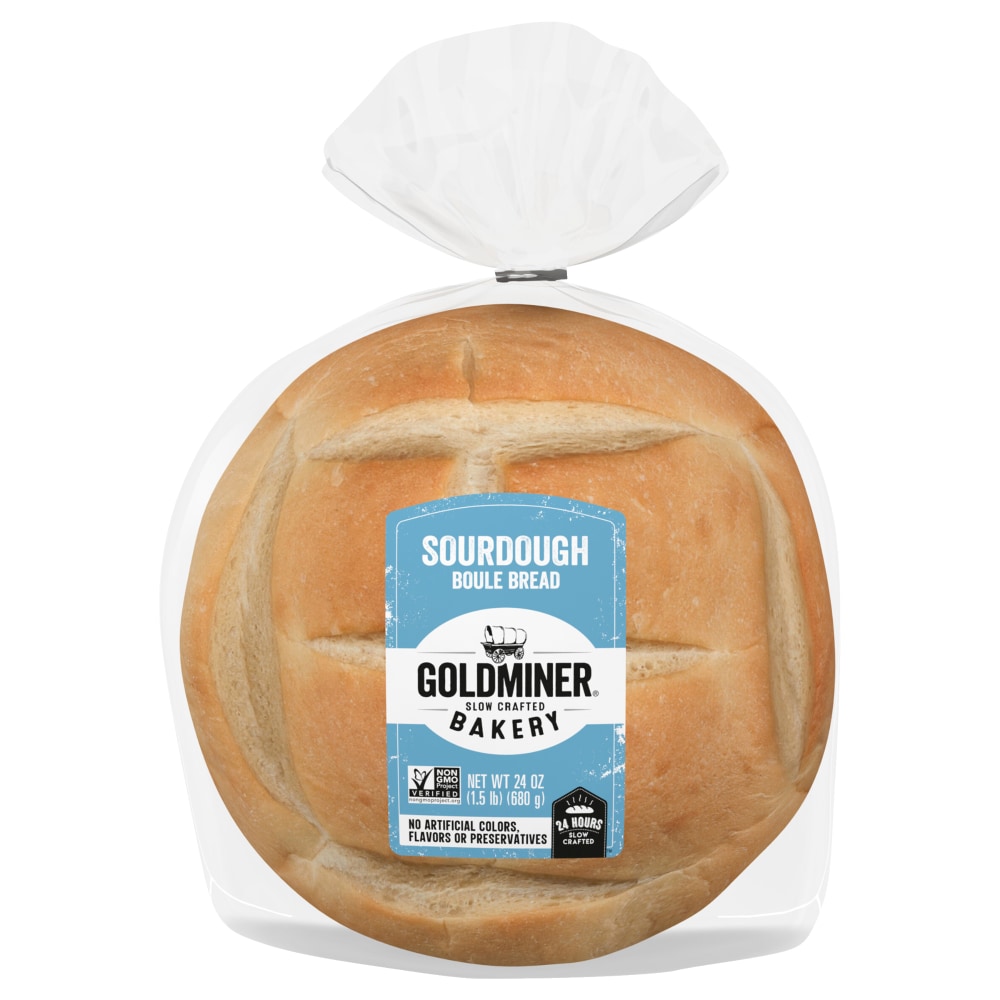


Sourdough Boule
Summary
This sourdough boule benefits from the use of whole wheat flour, which retains more nutrients and fiber compared to refined flour. The inclusion of enriched vitamins like niacin, thiamine, and folic acid adds nutritional value. However, the product is moderately processed, which limits its score, and it contains a relatively high amount of salt, which could be a concern for sodium intake.
At a glance
Key ingredients 11
Enriched flourNeutral
Enriched flour is refined wheat flour with added vitamins and minerals. It is processed to remove the bran and germ, which reduces fiber content. The enrichment process adds back some nutrients like iron and B vitamins.
Risks
May contribute to blood sugar spikes due to its high glycemic index.
Benefits
Provides essential nutrients such as iron and B vitamins due to the enrichment process.
WaterNeutral
Water is a fundamental ingredient in bread making, providing moisture and aiding in gluten development. It is essential for the fermentation process in sourdough. Water quality can affect the final texture and flavor of the bread.
Benefits
Essential for hydration and fermentation in bread making.
Whole wheat flourGood
Whole wheat flour is made from the entire wheat kernel, retaining its bran, germ, and endosperm. It is less processed than refined flour, providing more fiber and nutrients. The presence of fiber aids in digestion and provides a more sustained energy release.
Risks
May cause digestive discomfort in individuals with wheat sensitivities or celiac disease.
Benefits
Rich in dietary fiber, vitamins, and minerals, supporting digestive health and providing sustained energy.
Malted barley flourNeutral
Malted barley flour is used to enhance flavor and improve the texture of baked goods. It contains enzymes that help break down starches into sugars, aiding fermentation. It is typically used in small amounts in bread recipes.
Benefits
Enhances flavor and texture in baked goods and aids in fermentation.
NiacinGood
Niacin, also known as vitamin B3, is added to enriched flour to support metabolic health. It plays a crucial role in converting food into energy. Niacin is essential for maintaining healthy skin and nerves.
Benefits
Supports energy metabolism and is essential for healthy skin and nerve function.
Reduced ironGood
Reduced iron is added to enriched flour to prevent iron deficiency anemia. It is a form of iron that is easily absorbed by the body. Iron is crucial for oxygen transport in the blood.
Risks
Excessive iron intake can lead to toxicity, but this is rare from dietary sources alone.
Benefits
Helps prevent iron deficiency anemia and supports oxygen transport in the body.
Thiamine mononitrateGood
Thiamine mononitrate is a form of vitamin B1 added to enriched flour to support energy metabolism. It is essential for the proper functioning of the heart, muscles, and nervous system. Thiamine is water-soluble and needs regular replenishment through diet.
Benefits
Supports energy metabolism and is essential for heart and nervous system health.
RiboflavinGood
Riboflavin, or vitamin B2, is added to enriched flour to aid in energy production and cellular function. It is important for the metabolism of fats, drugs, and steroids. Riboflavin also supports skin and eye health.
Benefits
Supports energy production and is important for skin and eye health.
Folic acidGood
Folic acid is a synthetic form of folate, a B vitamin added to enriched flour to prevent neural tube defects in developing fetuses. It is crucial for DNA synthesis and repair. Folic acid is especially important for pregnant women.
Benefits
Prevents neural tube defects and supports DNA synthesis and repair.
Sea saltGood
Unrefined sea salt — a minimally processed, natural source of sodium and essential trace minerals, and a legitimate whole-food seasoning. Treated as a positive ingredient.
Risks
Excessive salt intake can contribute to high blood pressure.
Benefits
Enhances flavor and helps control yeast activity in bread making.
Organic enzymesNeutral
Organic enzymes are used in bread making to improve dough handling and texture. They help break down starches and proteins, aiding fermentation. The use of organic enzymes indicates a preference for natural processing aids.
Benefits
Improves dough handling and texture, aiding in the fermentation process.
Processing
Processed Foods
Get the full breakdown in the Scout app
Scan any product to see lab results, healthy alternatives, and your personalized analysis.
Download on theApp Store