
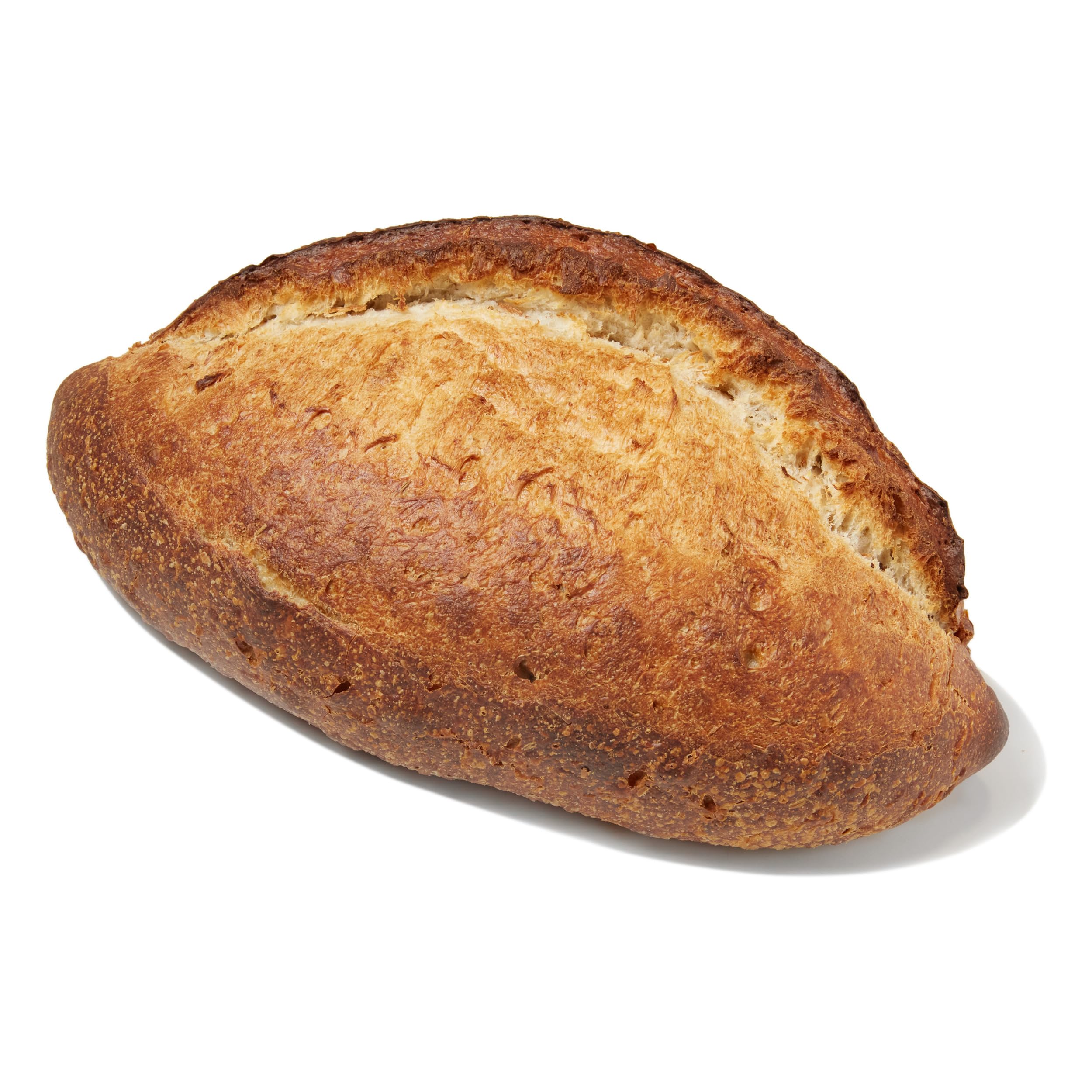


Whole Foods Market Rosemary Sourdough Batard
Whole Foods MarketAnalysis updated August 2026 · How Scout scores
At a glance
Summary
The Rosemary Sourdough Batard contains beneficial ingredients such as sour starter, whole wheat flour, and rosemary, which contribute to its nutritional value and flavor. However, it is classified as ultra-processed due to the presence of enriched wheat flour and dry malt powder, which limits its score. Despite the use of some whole grain ingredients, the processing level and inclusion of refined components prevent it from achieving a higher rating.
Key ingredients 13
NiacinGood
Beneficial ingredient — whole-food or functional value in this product class.
Benefits
Supports energy metabolism and is essential for overall health.
RiboflavinGood
Essential B vitamin — beneficial micronutrient.
Benefits
Supports energy production and cellular function.
Sour starterGood
Sour starter is a natural leavening agent that enhances flavor and texture. It contains beneficial bacteria that can aid digestion. It is a traditional method of bread fermentation.
Benefits
Enhances flavor and may improve gut health due to beneficial bacteria.
Sea saltGood
Sea salt is a natural source of sodium and trace minerals. It is less processed than table salt and adds flavor to the bread. It is considered a healthier alternative to refined salt.
Risks
Excessive sodium intake can lead to high blood pressure.
Benefits
Provides essential minerals and enhances flavor.
Whole wheat flourGood
Whole wheat flour is a whole grain flour that retains all parts of the grain. It is rich in fiber and nutrients, supporting digestive health. It is less processed than refined flour.
Risks
May cause digestive discomfort in individuals with gluten sensitivity.
Benefits
Rich in fiber and nutrients, supporting heart and digestive health.
RosemaryGood
Rosemary is an herb that adds flavor and aroma to the bread. It contains antioxidants and anti-inflammatory compounds. It is a natural ingredient with potential health benefits.
Benefits
Contains antioxidants and enhances flavor.
Wheat branGood
Wheat bran is the outer layer of the wheat kernel, rich in fiber. It supports digestive health and adds texture to the bread. It is a minimally processed ingredient.
Risks
May cause digestive discomfort in individuals with gluten sensitivity.
Benefits
High in fiber, supporting digestive health and regularity.
Malted barley flourNeutral
Malted barley flour is used to enhance flavor and improve dough fermentation. It is minimally processed and adds a slight sweetness to the bread. It also aids in the browning of the crust.
Benefits
Enhances flavor and aids in fermentation, contributing to a better texture.
Thiamin mononitrateNeutral
Thiamin mononitrate is a form of vitamin B1 added to enriched flours. It plays a crucial role in energy metabolism. It is added to prevent thiamin deficiency.
Benefits
Essential for energy metabolism and nerve function.
Folic acidNeutral
Folic acid is a synthetic form of folate added to enriched flours. It is crucial for DNA synthesis and repair. It is added to prevent neural tube defects in pregnancy.
Risks
Excessive intake may mask vitamin B12 deficiency.
Benefits
Essential for DNA synthesis and preventing birth defects.
WaterNeutral
Water is a fundamental ingredient in bread, hydrating the flour and activating yeast. It is essential for dough formation and texture. It is a natural and unprocessed ingredient.
Benefits
Essential for dough formation and hydration.
Dry malt powderNeutral
Dry malt powder is used to enhance flavor and improve dough fermentation. It is made from malted barley and wheat flour. It adds a slight sweetness and aids in browning.
Benefits
Enhances flavor and aids in fermentation.
Wheat flourBad
Refined grain flour stripped of bran and germ.
Risks
Refined wheat flour may contribute to blood sugar spikes and lacks fiber.
Benefits
Enriched wheat flour provides essential vitamins like niacin and folic acid.
Processing
Ultra-Processed Foods
Get the full breakdown in the Scout appTake Scout shopping
Scan any product to see lab results, healthy alternatives, and your personalized analysis.
Download on theApp Store GET IT ONGoogle Play