
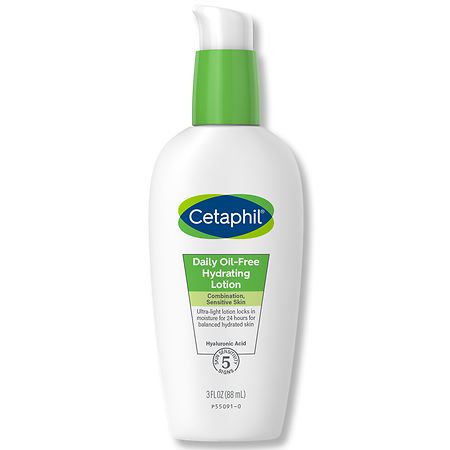
Cetaphil Hydrating Oil-Free Face Moisturizer with Hyaluronic Acid - 3 fl oz: Hypoallergenic, For Normal, Oily, Combination, Sensitive, Mature
Analysis updated August 2026 · How Scout scores
At a glance
Summary
This moisturizer contains beneficial ingredients like glycerin and hydrolyzed hyaluronic acid, which are known for their excellent moisturizing properties. However, the presence of cyclopentasiloxane, a silicone with potential environmental concerns, and acrylates, which are synthetic, slightly lowers its rating. The product is moderately processed, which also impacts its overall score.
Key ingredients 16
Hydrolyzed Hyaluronic AcidVery Good
Hydrolyzed Hyaluronic Acid is a powerful humectant that helps to retain moisture in the skin. It is known for its ability to improve skin hydration and elasticity. It is highly regarded for its skin benefits.
Risks
There are no significant risks associated with Hydrolyzed Hyaluronic Acid.
Benefits
Improves skin hydration and elasticity.
GlycerinGood
Glycerin is a well-known humectant that attracts moisture to the skin. It helps to maintain skin hydration and improve skin barrier function. It is widely used for its moisturizing properties.
Risks
There are no significant risks associated with glycerin.
Benefits
Attracts moisture to the skin and improves skin barrier function.
Sodium PCAGood
Sodium PCA is a natural component of skin that acts as a humectant. It helps to maintain skin hydration and improve moisture retention. It is beneficial for its moisturizing properties.
Risks
There are no significant risks associated with Sodium PCA.
Benefits
Maintains skin hydration and improves moisture retention.
WaterNeutral
Water is a common solvent used in cosmetics to dissolve other ingredients. It helps in the application and absorption of the product. It does not provide direct benefits or risks.
Risks
There are no significant risks associated with water in cosmetics.
Benefits
Water helps in the application and absorption of the product.
Dicaprylyl CarbonateNeutral
Dicaprylyl Carbonate is an emollient that helps to soften and smooth the skin. It is often used to improve the texture of formulations. It is generally considered safe with no significant benefits or risks.
Risks
There are no significant risks associated with Dicaprylyl Carbonate.
Benefits
It helps to soften and smooth the skin.
Hydroxyethyl UreaNeutral
Hydroxyethyl Urea is a humectant that helps to retain moisture in the skin. It is used to improve skin hydration. It is generally considered safe with no significant benefits or risks.
Risks
There are no significant risks associated with Hydroxyethyl Urea.
Benefits
It helps to retain moisture in the skin.
Glyceryl StearateNeutral
Glyceryl Stearate is an emulsifier that helps to blend water and oil components. It is used to stabilize formulations and improve texture. It is generally considered safe with no significant benefits or risks.
Risks
There are no significant risks associated with Glyceryl Stearate.
Benefits
Helps to blend water and oil components and stabilize formulations.
PEG-100 StearateNeutral
PEG-100 Stearate is an emulsifier that helps to stabilize formulations. It is used to improve the texture and consistency of products. It is generally considered safe with no significant benefits or risks.
Risks
There are no significant risks associated with PEG-100 Stearate.
Benefits
Improves texture and consistency of products.
Sodium HydroxideNeutral
Sodium Hydroxide is used to adjust the pH of cosmetic formulations. It is necessary for maintaining the stability and effectiveness of the product. It is generally considered safe in small amounts.
Risks
In high concentrations, it can be irritating, but it is used in safe amounts in cosmetics.
Benefits
Helps to maintain the stability and effectiveness of the product.
Humarine HClNeutral
Humarine HCl is used as a conditioning agent in cosmetics. It helps to improve the texture and feel of the product. It is generally considered safe with no significant benefits or risks.
Risks
There are no significant risks associated with Humarine HCl.
Benefits
Improves the texture and feel of the product.
Cetyl AlcoholNeutral
Cetyl Alcohol is a fatty alcohol used as an emollient and thickener. It helps to soften the skin and improve the texture of formulations. It is generally considered safe with no significant benefits or risks.
Risks
There are no significant risks associated with Cetyl Alcohol.
Benefits
Softens the skin and improves the texture of formulations.
Caprylyl GlycolNeutral
Caprylyl Glycol is used as a skin conditioning agent and preservative. It helps to improve the shelf life of products and provides moisturizing benefits. It is generally considered safe with no significant benefits or risks.
Risks
There are no significant risks associated with Caprylyl Glycol.
Benefits
Improves shelf life and provides moisturizing benefits.
ErythritolNeutral
Erythritol is used as a humectant and conditioning agent in cosmetics. It helps to retain moisture and improve the feel of the product. It is generally considered safe with no significant benefits or risks.
Risks
There are no significant risks associated with Erythritol.
Benefits
Retains moisture and improves the feel of the product.
CyclopentasiloxaneBad
Cyclopentasiloxane is a silicone used to provide a smooth application and feel. However, it is a volatile silicone that can contribute to environmental concerns. It is often criticized for its potential bioaccumulation.
Risks
Potential environmental concerns and bioaccumulation.
Benefits
Provides a smooth application and feel.
PhenoxyethanolBad
Processed additive flagged under Scout's ingredient doctrine.
Risks
In high concentrations, it can cause irritation, but it is used in safe amounts in cosmetics.
Benefits
Prevents microbial growth and ensures product safety.
Acrylates/C10-30 Alkyl Acrylate CrosspolymerBad
Processed additive flagged under Scout's ingredient doctrine.
Risks
There are no significant risks associated with this ingredient.
Benefits
Improves texture and stabilizes emulsions.
Processing
Processed Foods
Get the full breakdown in the Scout appTake Scout shopping
Scan any product to see lab results, healthy alternatives, and your personalized analysis.
Download on theApp Store GET IT ONGoogle PlayAmazon pricing & content
Amazon price as of . Product prices and availability are accurate as of the date/time indicated and are subject to change. Any price and availability information displayed on Amazon.com at the time of purchase will apply to the purchase of this product.
CERTAIN CONTENT THAT APPEARS ON THIS SITE COMES FROM AMAZON. THIS CONTENT IS PROVIDED “AS IS” AND IS SUBJECT TO CHANGE OR REMOVAL AT ANY TIME.