
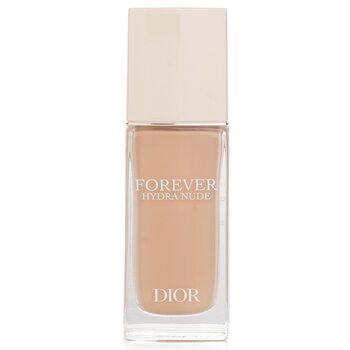


Christian DiorDior Forever Hydra Nude 24Hour Natural Perfection Foundation - # 1N Neutral 30ml/1oz
Analysis updated September 2026 · How Scout scores
At a glance
Summary
This foundation contains beneficial ingredients like shea butter and avocado oil, which provide moisturizing and nourishing properties. However, it also includes several fragrance components and preservatives such as phenoxyethanol, which can cause skin irritation and allergic reactions. The presence of these potentially irritating ingredients, along with synthetic compounds like PEG-100 stearate, impacts the overall safety and quality of the product.
Key ingredients 21
Butyrospermum Parkii (Shea) ButterVery Good
Shea butter is a natural fat extracted from the nuts of the shea tree, known for its moisturizing and anti-inflammatory properties. It is rich in vitamins and fatty acids, making it an excellent emollient for dry skin. It is generally well-tolerated and beneficial for skin health.
Risks
May cause allergic reactions in individuals with nut allergies.
Benefits
Deeply moisturizes and nourishes the skin, improving elasticity.
Persea Gratissima (Avocado) OilVery Good
Avocado oil is rich in fatty acids and vitamins, providing excellent moisturizing and nourishing properties. It helps to soothe and protect the skin, making it a popular ingredient in skincare. It is generally safe and beneficial for most skin types.
Risks
May cause irritation in individuals with avocado allergies.
Benefits
Enhances skin hydration and provides essential nutrients for skin health.
GlycerinGood
Glycerin is a humectant that attracts moisture to the skin, helping to keep it hydrated. It is widely used in skincare for its moisturizing properties. It is generally considered safe and beneficial for most skin types.
Risks
Rarely, it may cause irritation in sensitive individuals.
Benefits
Helps maintain skin hydration and improves skin barrier function.
Tocopheryl AcetateGood
Beneficial ingredient — whole-food or functional value in this product class.
Risks
May cause mild irritation in sensitive skin.
Benefits
Provides antioxidant protection and supports skin health.
Aqua (Water)Neutral
Water is a common solvent used in cosmetics to dissolve other ingredients. It helps in the application and absorption of the product. It does not have any direct benefits or risks associated with its use in cosmetics.
Benefits
Provides a base for other ingredients to be mixed and applied smoothly.
Cetearyl AlcoholNeutral
Cetearyl alcohol is a fatty alcohol used as an emollient and thickener in cosmetics. It helps to stabilize and improve the texture of products. It is generally considered safe and non-irritating.
Risks
Rarely, it may cause irritation in sensitive skin.
Benefits
Improves product texture and provides a smooth application.
Glyceryl StearateNeutral
Glyceryl stearate is an emulsifier that helps to blend oil and water components in cosmetics. It also acts as a lubricant on the skin's surface, giving it a soft and smooth appearance. It is generally considered safe for use in cosmetics.
Risks
May cause mild irritation in sensitive individuals.
Benefits
Enhances product stability and provides a smooth feel on the skin.
PEG-100 StearateNeutral
PEG-100 stearate is an emulsifier used to stabilize and thicken cosmetic formulations. It helps to improve the texture and consistency of products. It is generally considered safe, though it may contain trace amounts of ethylene oxide and 1,4-dioxane.
Risks
Potential contamination with ethylene oxide and 1,4-dioxane, which are harmful.
Benefits
Improves product texture and stability.
Caprylyl GlycolNeutral
Caprylyl glycol is a skin conditioning agent and preservative booster. It helps to improve the moisture content of the skin and enhance the effectiveness of preservatives. It is generally considered safe for use in cosmetics.
Risks
May cause mild irritation in sensitive skin.
Benefits
Enhances skin hydration and boosts preservative efficacy.
CarbomerNeutral
Carbomer is a thickening agent used to create gel-like textures in cosmetics. It helps to stabilize emulsions and improve product consistency. It is generally considered safe for use in cosmetics.
Risks
May cause mild irritation if not properly neutralized.
Benefits
Improves product texture and stability.
Sodium HydroxideNeutral
Standard formulation ingredient — neither beneficial nor harmful at typical use.
Risks
Potential for skin irritation and chemical burns if used improperly.
Benefits
Helps to balance the pH of cosmetic products.
EthylhexylglycerinNeutral
Ethylhexylglycerin is a skin conditioning agent and preservative enhancer. It helps to improve the moisture content of the skin and boost the effectiveness of preservatives. It is generally considered safe for use in cosmetics.
Risks
May cause mild irritation in sensitive skin.
Benefits
Enhances skin hydration and boosts preservative efficacy.
DimethiconeBad
Occlusive silicone film-former — flagged under clean-beauty doctrine.
Risks
May cause irritation or breakouts in some individuals with sensitive skin.
Benefits
Provides a smooth, silky feel and helps to lock in moisture.
PhenoxyethanolBad
Phenoxyethanol is a preservative used to prevent microbial growth in cosmetics. It is effective at low concentrations but can cause irritation and allergic reactions in some individuals. It is considered a moderate risk ingredient.
Risks
Potential for skin irritation and allergic reactions.
Benefits
Prevents microbial contamination, extending product shelf life.
Disodium EDTABad
Processed additive flagged under Scout's ingredient doctrine.
Risks
May cause mild irritation in sensitive skin.
Benefits
Improves product stability and prevents metal ion interference.
LimoneneBad
Limonene is a fragrance ingredient that can cause skin irritation and allergic reactions. It is a common allergen and can oxidize to form skin-sensitizing compounds. It is considered a moderate risk ingredient.
Risks
Potential for skin irritation and allergic reactions.
Benefits
Provides a citrus scent to the product.
LinaloolBad
Linalool is a fragrance ingredient that can cause skin irritation and allergic reactions. It is a common allergen and can oxidize to form skin-sensitizing compounds. It is considered a moderate risk ingredient.
Risks
Potential for skin irritation and allergic reactions.
Benefits
Provides a floral scent to the product.
Hexyl CinnamalBad
Hexyl cinnamal is a fragrance ingredient that can cause skin irritation and allergic reactions. It is a common allergen and is considered a moderate risk ingredient. It is used to impart a jasmine-like scent to cosmetics.
Risks
Potential for skin irritation and allergic reactions.
Benefits
Provides a jasmine-like scent to the product.
CitronellolBad
Citronellol is a fragrance ingredient that can cause skin irritation and allergic reactions. It is a common allergen and is considered a moderate risk ingredient. It is used to impart a rose-like scent to cosmetics.
Risks
Potential for skin irritation and allergic reactions.
Benefits
Provides a rose-like scent to the product.
GeraniolBad
Geraniol is a fragrance ingredient that can cause skin irritation and allergic reactions. It is a common allergen and is considered a moderate risk ingredient. It is used to impart a floral scent to cosmetics.
Risks
Potential for skin irritation and allergic reactions.
Benefits
Provides a floral scent to the product.
Parfum (Fragrance)Very Bad
Fragrance is used to impart a pleasant scent to cosmetics but can cause allergic reactions and skin irritation. It is often a mixture of various chemicals, some of which may be harmful. It is considered a high-risk ingredient for sensitive individuals.
Risks
High potential for allergic reactions and skin irritation.
Benefits
Provides a pleasant scent to the product.
Get the full breakdown in the Scout appTake Scout shopping
Scan any product to see lab results, healthy alternatives, and your personalized analysis.
Download on theApp Store GET IT ONGoogle Play