
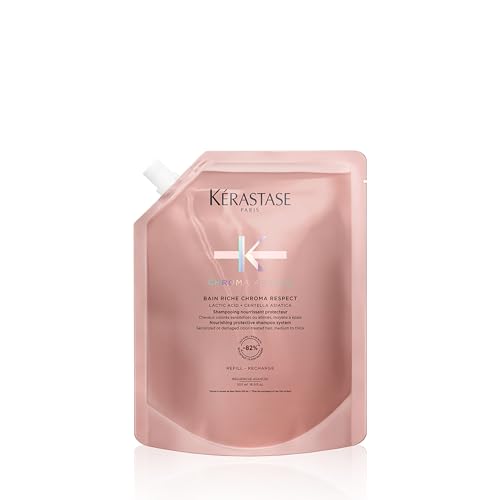


KerastaseChroma Absolu Bain Riche Chroma Respect Shampoo (For Sensitized or Damaged Color-Treated Hair) 250ml/8.5oz
Analysis updated September 2026 · How Scout scores
At a glance
Summary
This shampoo contains beneficial ingredients like glycerin and sodium lauroyl sarcosinate, which provide moisture and gentle cleansing suitable for color-treated hair. However, it also includes sodium C14-16 olefin sulfonate, which can be harsh on the scalp, and cocamide MEA, which has potential contamination concerns. The presence of synthetic fragrance and sodium chloride further detracts from its overall safety and suitability for sensitive scalps.
Key ingredients 29
GlycerinGood
Glycerin is a humectant that attracts moisture to the hair and scalp. It helps to maintain hydration and improve the overall texture of the hair. It is considered beneficial for dry and damaged hair.
Risks
Generally considered safe with minimal risk.
Benefits
Helps to retain moisture, improving hair hydration and texture.
Salicylic AcidGood
Salicylic Acid is used for its exfoliating properties, helping to remove dead skin cells from the scalp. It can help to reduce dandruff and improve scalp health. It is beneficial for those with flaky or oily scalps.
Risks
May cause irritation in sensitive scalps.
Benefits
Exfoliates the scalp, reducing dandruff and improving scalp health.
Sodium HyaluronateGood
Sodium Hyaluronate is a form of hyaluronic acid used for its moisturizing properties. It helps to retain moisture in the hair and scalp, improving hydration. It is beneficial for dry and damaged hair.
Risks
Generally considered safe with minimal risk.
Benefits
Retains moisture, improving hydration of hair and scalp.
Centella Asiatica ExtractGood
Centella Asiatica Extract is used for its soothing and anti-inflammatory properties. It can help to calm irritated scalps and promote healthy hair growth. It is beneficial for sensitive and damaged scalps.
Risks
Generally considered safe with minimal risk.
Benefits
Soothes irritated scalps and promotes healthy hair growth.
Aqua / Water / EauNeutral
Water is a common solvent used in cosmetic formulations. It acts as a base for the product, allowing other ingredients to dissolve and mix properly. It does not have any direct benefits or risks associated with its use in shampoos.
Risks
There are no known risks associated with water in cosmetic formulations.
Benefits
Water helps to dissolve and distribute other ingredients evenly throughout the product.
Cocamidopropyl BetaineNeutral
Cocamidopropyl Betaine is a mild surfactant derived from coconut oil. It is used to reduce irritation from harsher surfactants and improve foam quality. While generally considered safe, it can cause allergic reactions in some individuals.
Risks
May cause allergic reactions in sensitive individuals.
Benefits
Provides mild cleansing and improves foam quality.
Glycol DistearateNeutral
Glycol Distearate is used as an opacifying agent and to give the product a pearlescent appearance. It does not have significant benefits or risks associated with its use in shampoos. It primarily serves an aesthetic purpose.
Benefits
Enhances the visual appeal of the product with a pearlescent effect.
Hexylene GlycolNeutral
Hexylene Glycol is used as a solvent and viscosity agent in cosmetic formulations. It helps to improve the texture and spreadability of the product. It does not have significant benefits or risks in shampoos.
Benefits
Improves product texture and spreadability.
Citric AcidNeutral
Citric Acid is used to adjust the pH of cosmetic formulations. It helps to maintain the stability and effectiveness of the product. It does not have direct benefits or risks in shampoos.
Benefits
Helps to maintain product stability by adjusting pH.
Sodium HydroxideNeutral
Sodium Hydroxide is used to adjust the pH of cosmetic formulations. It is a strong base that can be irritating in high concentrations but is generally safe in small amounts. It helps to balance the pH of the product.
Risks
Can be irritating in high concentrations.
Benefits
Balances the pH of the product for stability.
Sodium ChlorideNeutral
Standard formulation ingredient — neither beneficial nor harmful at typical use.
Risks
May cause dryness and irritation of the scalp.
Benefits
Used to thicken the product and improve texture.
PEG-55 Propylene Glycol OleateNeutral
PEG-55 Propylene Glycol Oleate is used as an emulsifier and surfactant in shampoos. It helps to mix oil and water-based ingredients. It does not have significant benefits or risks in shampoos.
Benefits
Helps to emulsify and stabilize the formulation.
Coco-BetaineNeutral
Coco-Betaine is a mild surfactant derived from coconut oil. It is used to enhance foam and reduce irritation from harsher surfactants. It is generally considered safe but can cause allergic reactions in some individuals.
Risks
May cause allergic reactions in sensitive individuals.
Benefits
Enhances foam and reduces irritation from harsher surfactants.
Hydroxypropyl Guar Hydroxypropyltrimonium ChlorideNeutral
This ingredient is used as a conditioning agent in shampoos. It helps to improve the texture and manageability of hair. It does not have significant benefits or risks in shampoos.
Benefits
Improves hair texture and manageability.
CarbomerNeutral
Carbomer is used as a thickening agent in cosmetic formulations. It helps to stabilize and improve the texture of the product. It does not have significant benefits or risks in shampoos.
Benefits
Stabilizes and improves product texture.
Benzoic AcidNeutral
Benzoic Acid is used as a preservative in cosmetic formulations. It helps to prevent microbial growth and extend the shelf life of the product. It is generally considered safe but can cause irritation in sensitive individuals.
Risks
May cause irritation in sensitive individuals.
Benefits
Prevents microbial growth and extends product shelf life.
Polyquaternium-7Neutral
Polyquaternium-7 is used as a conditioning agent in shampoos. It helps to improve the texture and manageability of hair. It does not have significant benefits or risks in shampoos.
Benefits
Improves hair texture and manageability.
ArginineNeutral
Arginine is an amino acid used for its conditioning properties in hair care products. It helps to improve the strength and elasticity of hair. It does not have significant benefits or risks in shampoos.
Benefits
Improves hair strength and elasticity.
Lactic AcidNeutral
Lactic Acid is used to adjust the pH of cosmetic formulations. It helps to maintain the stability and effectiveness of the product. It does not have direct benefits or risks in shampoos.
Benefits
Helps to maintain product stability by adjusting pH.
CI 17200 / Red 33Neutral
CI 17200 / Red 33 is a synthetic dye used to impart color to cosmetic products. It is used for aesthetic purposes and does not have significant benefits or risks in shampoos.
Benefits
Imparts color to the product for aesthetic purposes.
Sodium C14-16 Olefin SulfonateBad
Sodium C14-16 Olefin Sulfonate is a surfactant used for its cleansing properties. It can be harsh on the scalp, potentially stripping natural oils and causing dryness. It is often used as an alternative to SLS but can still be irritating for sensitive scalps.
Risks
May cause dryness and irritation, especially for sensitive scalps.
Benefits
Provides effective cleansing and foaming properties.
Cocamide MEABad
Cocamide MEA is used as a foaming agent and thickener in shampoos. It has been flagged for potential contamination with carcinogenic nitrosamines. Its use is controversial due to these potential health risks.
Risks
Potential contamination with carcinogenic nitrosamines.
Benefits
Enhances foam and viscosity in shampoo formulations.
Sodium Lauroyl SarcosinateBad
Processed additive flagged under Scout's ingredient doctrine.
Risks
Generally considered safe with minimal risk.
Benefits
Provides gentle cleansing suitable for sensitive and color-treated hair.
Propylene GlycolBad
Processed additive flagged under Scout's ingredient doctrine.
Risks
May cause irritation in sensitive individuals.
Benefits
Helps to retain moisture and improve product texture.
Sodium BenzoateBad
Synthetic preservative that can form benzene in the presence of vitamin C.
Risks
May cause irritation in sensitive individuals.
Benefits
Prevents microbial growth and extends product shelf life.
LinaloolBad
Processed additive flagged under Scout's ingredient doctrine.
Risks
May cause allergic reactions in sensitive individuals.
Benefits
Imparts a pleasant scent to the product.
LimoneneBad
Processed additive flagged under Scout's ingredient doctrine.
Risks
May cause allergic reactions in sensitive individuals.
Benefits
Imparts a citrus scent to the product.
CI 19140 / Yellow 5Very Bad
Heavily flagged ingredient class under Scout's doctrine.
Benefits
Imparts color to the product for aesthetic purposes.
Parfum / FragranceVery Bad
Parfum / Fragrance is used to impart a pleasant scent to cosmetic products. It is often a mixture of various chemicals, some of which can cause allergic reactions or irritation. The lack of transparency in its composition can be concerning for sensitive individuals.
Risks
May cause allergic reactions or irritation due to undisclosed chemical composition.
Benefits
Imparts a pleasant scent to the product.
Get the full breakdown in the Scout appTake Scout shopping
Scan any product to see lab results, healthy alternatives, and your personalized analysis.
Download on theApp Store GET IT ONGoogle PlayAmazon pricing & content
Amazon price as of . Product prices and availability are accurate as of the date/time indicated and are subject to change. Any price and availability information displayed on Amazon.com at the time of purchase will apply to the purchase of this product.
CERTAIN CONTENT THAT APPEARS ON THIS SITE COMES FROM AMAZON. THIS CONTENT IS PROVIDED “AS IS” AND IS SUBJECT TO CHANGE OR REMOVAL AT ANY TIME.