
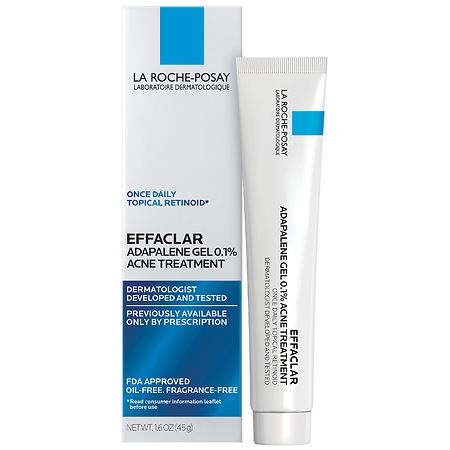


La Roche Posay Unscented Effaclar Adapalene Topical Retinoid Oil Free Acne Treatment - 1.6oz: For Oily, Combination, Acne-Prone Skin
La Roche-PosayAnalysis updated June 2026 · How Scout scores
At a glance
Summary
This acne treatment contains methylparaben, a preservative associated with potential endocrine disruption, which negatively impacts its safety profile. While it includes beneficial active ingredients like adapalene, the presence of parabens and the overall processing level limit its score. The product is formulated without synthetic fragrances, which is a positive aspect, but the use of parabens and its ultra-processed nature prevent a higher rating.
Key ingredients 8
Adapalene USP 0.1%Neutral
Adapalene is a synthetic retinoid used for acne treatment. It helps to regulate skin cell turnover and reduce inflammation. It is effective in treating acne but can cause skin irritation.
Risks
Potential risks include skin irritation, dryness, and increased sensitivity to sunlight.
Benefits
It is beneficial for reducing acne lesions and improving skin texture.
Carbomer HomopolymerNeutral
Carbomer Homopolymer is a thickening agent used to stabilize emulsions. It helps to create a smooth texture in cosmetic formulations. It is generally considered safe for use in cosmetics.
Risks
There are minimal risks associated with its use, primarily related to potential skin irritation in sensitive individuals.
Benefits
It provides a stable and smooth texture to the product, enhancing user experience.
Edetate DisodiumNeutral
Edetate Disodium is a chelating agent that binds metal ions, improving product stability. It helps to prevent deterioration of the product by binding trace metals. It is widely used in cosmetics and pharmaceuticals.
Risks
Potential risks include mild skin irritation in sensitive individuals.
Benefits
It enhances the stability and shelf-life of the product.
Poloxamer 182Neutral
Poloxamer 182 is a surfactant and emulsifying agent used in cosmetics. It helps to mix oil and water components in formulations. It is generally considered safe for use in personal care products.
Risks
There are minimal risks, primarily related to potential skin irritation in sensitive individuals.
Benefits
It aids in creating stable emulsions, improving product consistency.
Purified WaterNeutral
Purified Water is used as a solvent in cosmetic formulations. It helps to dissolve other ingredients and create a uniform product. It is essential for the formulation of many cosmetic products.
Risks
There are no significant risks associated with its use.
Benefits
It acts as a solvent, facilitating the mixing of ingredients.
Sodium HydroxideNeutral
Sodium Hydroxide is used to adjust the pH of cosmetic formulations. It helps to maintain the stability and efficacy of the product. It is used in small amounts and is generally considered safe.
Risks
Potential risks include skin irritation if used in high concentrations.
Benefits
It ensures the product maintains an appropriate pH level for skin compatibility.
Propylene GlycolBad
Processed additive flagged under Scout's ingredient doctrine.
Risks
Potential risks include skin irritation, especially in individuals with sensitive skin.
Benefits
It helps to maintain skin hydration, improving skin texture.
MethylparabenVery Bad
Methylparaben is a preservative used to prevent microbial growth in cosmetics. It is effective in extending the shelf-life of products. However, parabens have been associated with potential endocrine disruption.
Risks
Concerns include potential endocrine disruption and skin irritation.
Benefits
It effectively prevents microbial growth, ensuring product safety.
Get the full breakdown in the Scout appTake Scout shopping
Scan any product to see lab results, healthy alternatives, and your personalized analysis.
Download on theApp Store GET IT ONGoogle PlayAmazon pricing & content
Amazon price as of . Product prices and availability are accurate as of the date/time indicated and are subject to change. Any price and availability information displayed on Amazon.com at the time of purchase will apply to the purchase of this product.
CERTAIN CONTENT THAT APPEARS ON THIS SITE COMES FROM AMAZON. THIS CONTENT IS PROVIDED “AS IS” AND IS SUBJECT TO CHANGE OR REMOVAL AT ANY TIME.