
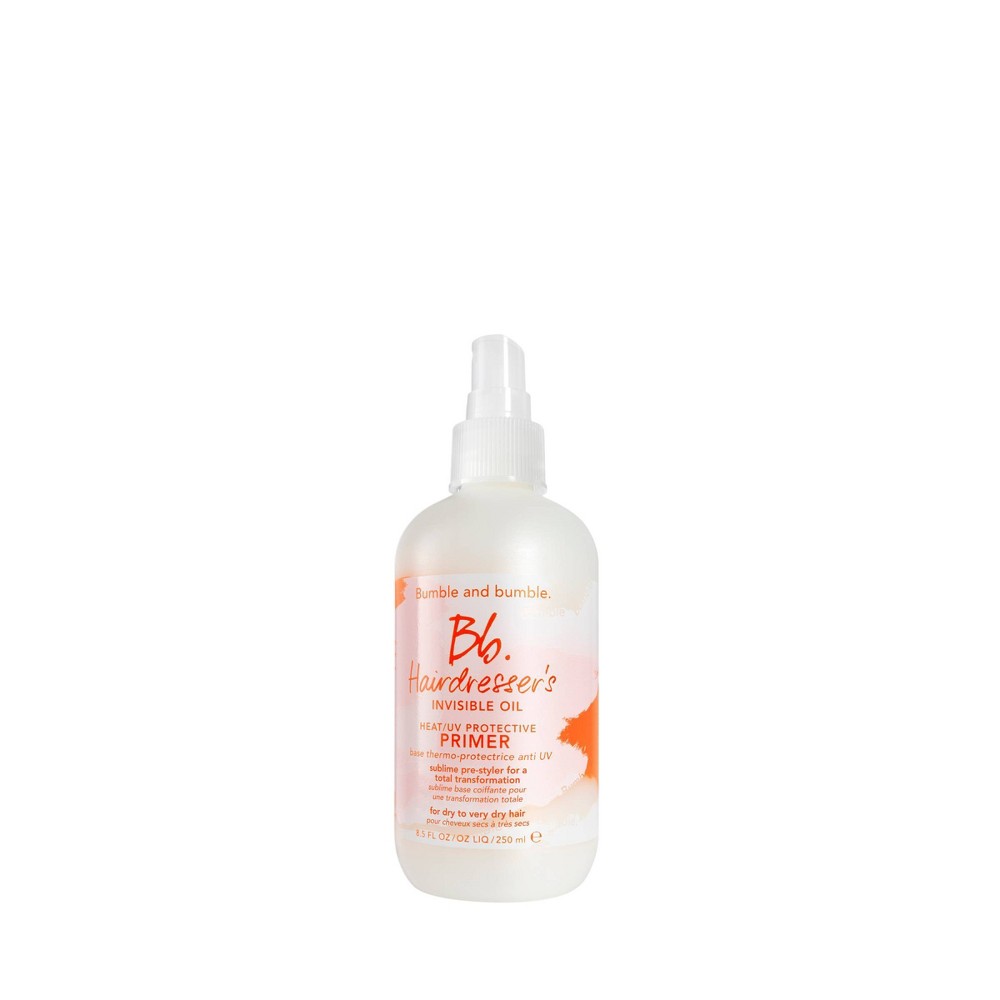
Bumble and bumble Hairdresser's Invisible Oil Primer - 8.5 fl oz - Ulta Beauty: Heat Protection, Shine Enhancing, For All Hair Types
Analysis updated August 2026 · How Scout scores
At a glance
Summary
This hair primer contains several beneficial natural oils such as grape seed, sweet almond, and argan oil, which provide nourishment and moisture to the hair. However, the presence of synthetic ingredients like BHT and phenoxyethanol, along with multiple fragrance components that can cause skin irritation, lowers its overall safety profile. The product's formulation is a mix of natural and synthetic elements, leading to a moderate processing level.
Key ingredients 32
Vitis Vinifera (Grape) Seed OilVery Good
Grape Seed Oil is a natural oil rich in antioxidants and fatty acids. It helps to moisturize and nourish the skin and hair. It is well-tolerated and beneficial for most skin types.
Risks
Minimal risk of allergic reactions.
Benefits
Rich in antioxidants, it helps to moisturize and protect the skin and hair.
Prunus Amygdalus Dulcis (Sweet Almond) OilVery Good
Sweet Almond Oil is a natural emollient that helps to soften and moisturize the skin and hair. It is rich in vitamins and fatty acids, providing nourishment. It is generally safe and beneficial for most skin types.
Risks
Potential allergen for individuals with nut allergies.
Benefits
Moisturizes and nourishes the skin and hair, rich in vitamins.
Macadamia Integrifolia Seed OilVery Good
Macadamia Oil is a natural oil that is highly emollient and nourishing. It helps to moisturize and protect the skin and hair. It is rich in fatty acids and antioxidants.
Risks
Minimal risk of allergic reactions.
Benefits
Highly moisturizing and nourishing, rich in fatty acids.
Cocos Nucifera (Coconut) OilVery Good
Coconut Oil is a natural oil known for its moisturizing and conditioning properties. It helps to nourish and protect the skin and hair. It is widely used and well-tolerated.
Risks
May cause breakouts in acne-prone skin.
Benefits
Deeply moisturizing and conditioning, widely beneficial.
Argania Spinosa Kernel OilVery Good
Argan Oil is a highly valued natural oil rich in fatty acids and vitamin E. It helps to moisturize and protect the skin and hair. It is well-tolerated and beneficial for most skin types.
Risks
Minimal risk of allergic reactions.
Benefits
Rich in vitamin E, it moisturizes and protects the skin and hair.
Carthamus Tinctorius (Safflower) Seed OilVery Good
Safflower Oil is a natural oil that helps to moisturize and nourish the skin and hair. It is rich in linoleic acid, which is beneficial for skin health. It is generally safe and well-tolerated.
Risks
Minimal risk of allergic reactions.
Benefits
Moisturizes and nourishes, rich in linoleic acid.
Gardenia Taitensis Flower ExtractGood
Gardenia Extract is used for its fragrance and potential antioxidant properties. It adds a pleasant scent to the product. It may also provide some skin-soothing benefits.
Risks
Potential allergen for sensitive individuals.
Benefits
Provides a pleasant fragrance and potential antioxidant benefits.
GlycerinGood
Glycerin is a humectant that helps to attract moisture to the skin and hair. It is widely used in cosmetics for its moisturizing properties. It is generally safe and beneficial for most skin types.
Benefits
Attracts moisture, providing hydration to skin and hair.
Sodium HyaluronateGood
Sodium Hyaluronate is a form of hyaluronic acid known for its excellent moisturizing properties. It helps to hydrate and plump the skin and hair. It is well-tolerated and beneficial for most skin types.
Benefits
Provides deep hydration and plumping effects.
WaterNeutral
Water is a common solvent used in cosmetic formulations. It helps dissolve other ingredients and provides a base for the product. It does not have any direct benefits or risks in this context.
Benefits
Water acts as a solvent and helps in the application of the product.
Cetearyl AlcoholNeutral
Cetearyl Alcohol is a fatty alcohol used as an emollient and thickener. It helps to soften the skin and improve the texture of the product. It is generally considered safe and non-irritating.
Risks
May cause mild irritation in very sensitive skin types.
Benefits
Helps to soften and smooth the skin, improving product texture.
Butylene GlycolNeutral
Butylene Glycol is a common solvent and conditioning agent in cosmetics. It helps to improve the spreadability of the product. It is generally considered safe for use in cosmetics.
Risks
May cause mild irritation in sensitive individuals.
Benefits
Improves product spreadability and acts as a conditioning agent.
PEG-12 Glyceryl DimyristateNeutral
PEG-12 Glyceryl Dimyristate is an emulsifier that helps blend oil and water-based ingredients. It is commonly used in cosmetics for its stabilizing properties. It is generally considered safe for use.
Risks
Potential contamination with ethylene oxide and 1,4-dioxane.
Benefits
Helps stabilize formulations by emulsifying oil and water components.
Hydroxypropyltrimonium Hydrolyzed Corn StarchNeutral
This ingredient is used as a conditioning agent in hair care products. It helps to improve the texture and manageability of hair. It is generally considered safe for use.
Benefits
Improves hair texture and manageability.
Hydrolyzed Vegetable Protein PG-Propyl SilanetriolNeutral
This ingredient is used to strengthen and protect hair. It helps to improve hair elasticity and reduce breakage. It is generally considered safe for use.
Benefits
Strengthens and protects hair, improving elasticity.
Hydrolyzed Wheat Protein PG-Propyl SilanetriolNeutral
This ingredient is used to strengthen and protect hair. It helps to improve hair elasticity and reduce breakage. It is generally considered safe for use.
Benefits
Strengthens and protects hair, improving elasticity.
Distearyldimonium ChlorideNeutral
Distearyldimonium Chloride is a conditioning agent used in hair care products. It helps to improve the texture and manageability of hair. It is generally considered safe for use.
Benefits
Improves hair texture and manageability.
DimethiconolNeutral
Dimethiconol is a silicone-based polymer used for its smoothing and conditioning properties. It helps to improve the texture and feel of hair. It is generally considered safe for use in cosmetics.
Risks
May cause build-up on hair with prolonged use.
Benefits
Smooths and conditions hair, improving texture.
Butyl MethoxydibenzoylmethaneNeutral
Butyl Methoxydibenzoylmethane is a UV filter used to protect hair from sun damage. It helps to prevent color fading and damage from UV exposure. It is generally considered safe for use.
Risks
Potential for skin irritation in sensitive individuals.
Benefits
Protects hair from UV damage and color fading.
Sodium ChlorideNeutral
Sodium Chloride is used as a thickening agent in cosmetic formulations. It helps to improve the texture and consistency of the product. It is generally considered safe for use.
Risks
May cause dryness in hair with prolonged use.
Benefits
Improves product texture and consistency.
Citric AcidNeutral
Citric Acid is used to adjust the pH of cosmetic formulations. It helps to maintain the stability and effectiveness of the product. It is generally considered safe for use.
Risks
Potential for skin irritation in sensitive individuals.
Benefits
Helps maintain product stability and effectiveness.
DimethiconeBad
Occlusive silicone film-former — flagged under clean-beauty doctrine.
Risks
May cause build-up on hair with prolonged use.
Benefits
Smooths and conditions hair, improving texture.
Behentrimonium MethosulfateBad
Processed additive flagged under Scout's ingredient doctrine.
Benefits
Detangles and softens hair, improving manageability.
Cetrimonium ChlorideBad
Processed additive flagged under Scout's ingredient doctrine.
Benefits
Detangles and softens hair, improving manageability.
BHTBad
BHT is a synthetic antioxidant used to preserve the shelf life of products. It has been associated with potential health concerns, including endocrine disruption. It is considered controversial in cosmetic formulations.
Risks
Potential endocrine disruptor and allergen.
Benefits
Helps to preserve the shelf life of products.
Hexyl CinnamalBad
Hexyl Cinnamal is a fragrance ingredient used to impart a floral scent. It is a known allergen and can cause skin irritation. It is considered a controversial ingredient in cosmetics.
Risks
Known allergen and potential skin irritant.
Benefits
Provides a floral scent to the product.
LinaloolBad
Linalool is a fragrance ingredient used to impart a floral scent. It is a known allergen and can cause skin irritation. It is considered a controversial ingredient in cosmetics.
Risks
Known allergen and potential skin irritant.
Benefits
Provides a floral scent to the product.
LimoneneBad
Limonene is a fragrance ingredient used to impart a citrus scent. It is a known allergen and can cause skin irritation. It is considered a controversial ingredient in cosmetics.
Risks
Known allergen and potential skin irritant.
Benefits
Provides a citrus scent to the product.
Potassium SorbateBad
Synthetic preservative — flagged in daily-use products.
Risks
Potential for skin irritation in sensitive individuals.
Benefits
Prevents microbial growth, extending product shelf life.
PhenoxyethanolBad
Phenoxyethanol is a preservative used to prevent microbial growth in cosmetics. It has been associated with potential skin irritation and allergic reactions. It is considered a controversial ingredient in cosmetics.
Risks
Potential skin irritant and allergen.
Benefits
Prevents microbial growth, extending product shelf life.
Ethylhexyl MethoxycinnamateVery Bad
Heavily flagged ingredient class under Scout's doctrine.
Risks
Potential for skin irritation in sensitive individuals.
Benefits
Protects hair from UV damage and color fading.
Fragrance (Parfum)Very Bad
Fragrance is used to add scent to cosmetic products. It is a common allergen and can cause skin irritation. It is considered a controversial ingredient due to potential undisclosed chemicals.
Risks
Common allergen and potential skin irritant.
Benefits
Adds a pleasant scent to the product.
Get the full breakdown in the Scout appTake Scout shopping
Scan any product to see lab results, healthy alternatives, and your personalized analysis.
Download on theApp Store GET IT ONGoogle PlayAmazon pricing & content
Amazon price as of . Product prices and availability are accurate as of the date/time indicated and are subject to change. Any price and availability information displayed on Amazon.com at the time of purchase will apply to the purchase of this product.
CERTAIN CONTENT THAT APPEARS ON THIS SITE COMES FROM AMAZON. THIS CONTENT IS PROVIDED “AS IS” AND IS SUBJECT TO CHANGE OR REMOVAL AT ANY TIME.