
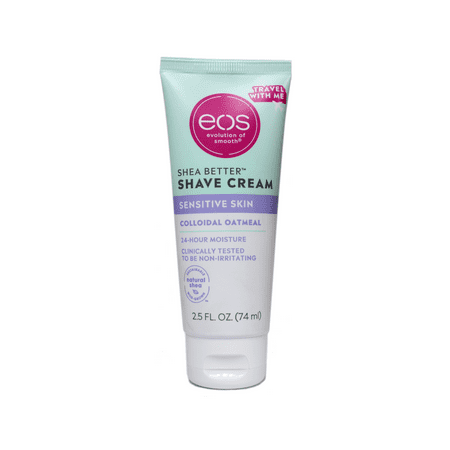

eos Shaving Cream - Travel Size - 2.5 fl oz
Analysis updated August 2026 · How Scout scores
At a glance
Summary
This shaving cream contains beneficial ingredients like glycerin, shea butter, and aloe vera, which provide moisturizing and soothing properties. However, the presence of petrolatum, fragrance, and phenoxyethanol raises concerns due to potential skin irritation and environmental impact. The product's formulation includes both natural and synthetic components, resulting in a moderate processing level.
Key ingredients 38
Colloidal OatmealVery Good
Colloidal Oatmeal is known for its soothing and anti-inflammatory properties. It is used to relieve dry, itchy, and irritated skin. It is highly beneficial for sensitive skin types.
Risks
There are no significant risks associated with colloidal oatmeal.
Benefits
It provides soothing relief for irritated skin and helps to maintain skin hydration.
Butyrospermum Parkii (Shea) OilVery Good
Shea Oil is a natural oil rich in fatty acids and vitamins. It is used for its moisturizing and nourishing properties. It is highly beneficial for dry and sensitive skin.
Risks
There are no significant risks associated with shea oil.
Benefits
It deeply moisturizes and nourishes the skin, improving elasticity.
Butyrospermum Parkii (Shea) ButterVery Good
Shea Butter is a natural butter known for its rich emollient properties. It helps to moisturize and protect the skin. It is beneficial for dry and sensitive skin types.
Risks
There are no significant risks associated with shea butter.
Benefits
It provides deep hydration and improves skin barrier function.
Helianthus Annuus (Sunflower) Seed OilVery Good
Sunflower Seed Oil is a natural oil rich in vitamins and fatty acids. It is used for its moisturizing and antioxidant properties. It is beneficial for maintaining healthy skin.
Risks
There are no significant risks associated with sunflower seed oil.
Benefits
It helps to moisturize and protect the skin, providing antioxidant benefits.
Aloe Barbadensis Leaf JuiceVery Good
Aloe Vera is known for its soothing and hydrating properties. It is used to calm irritated skin and provide moisture. It is highly beneficial for sensitive and dry skin.
Risks
There are no significant risks associated with aloe vera.
Benefits
It soothes and hydrates the skin, reducing irritation and redness.
CocoglyceridesGood
Cocoglycerides are derived from coconut oil and glycerin, used as emollients in cosmetics. They help to moisturize and soften the skin. They are considered safe and beneficial for skin health.
Risks
There are minimal risks associated with cocoglycerides.
Benefits
They provide excellent moisturizing properties and improve skin texture.
GlycerinGood
Glycerin is a powerful humectant that attracts moisture to the skin. It is widely used in skincare products for its hydrating properties. It is safe and beneficial for all skin types.
Risks
There are no significant risks associated with glycerin.
Benefits
It helps to maintain skin hydration and improve skin barrier function.
Punica Granatum ExtractGood
Pomegranate Extract is rich in antioxidants and used for its anti-aging properties. It helps to protect the skin from environmental damage. It is beneficial for maintaining youthful skin.
Risks
There are minimal risks associated with pomegranate extract.
Benefits
It provides antioxidant protection and helps to improve skin elasticity.
Rubus Idaeus (Raspberry) Leaf ExtractGood
Raspberry Leaf Extract is known for its antioxidant and anti-inflammatory properties. It helps to protect the skin from oxidative stress. It is beneficial for soothing and calming the skin.
Risks
There are minimal risks associated with raspberry leaf extract.
Benefits
It provides antioxidant protection and soothes irritated skin.
Ascorbyl PalmitateGood
Ascorbyl Palmitate is a stable form of Vitamin C used for its antioxidant properties. It helps to protect the skin from free radical damage. It is beneficial for brightening and improving skin tone.
Risks
There are minimal risks associated with ascorbyl palmitate.
Benefits
It provides antioxidant protection and helps to brighten the skin.
Tocopheryl AcetateGood
Tocopheryl Acetate is a form of Vitamin E used for its antioxidant properties. It helps to protect the skin from free radical damage. It is beneficial for maintaining healthy skin.
Risks
There are minimal risks associated with tocopheryl acetate.
Benefits
It provides antioxidant protection and helps to improve skin health.
Water/EauNeutral
Water is a common solvent used in cosmetic formulations. It acts as a base for the product, helping to dissolve other ingredients. It does not have any direct benefits or risks.
Risks
There are no significant risks associated with water in cosmetics.
Benefits
Water helps to hydrate the skin by providing moisture.
Cetyl AlcoholNeutral
Cetyl Alcohol is a fatty alcohol used as an emollient and thickener in cosmetics. It helps to soften and smooth the skin. It is generally considered safe and non-irritating.
Risks
Rarely, it may cause mild irritation in sensitive individuals.
Benefits
It helps to improve the texture and feel of the skin.
Stearyl AlcoholNeutral
Stearyl Alcohol is a fatty alcohol used as an emollient and thickener in cosmetics. It helps to stabilize formulations and improve texture. It is generally considered safe and non-irritating.
Risks
Rarely, it may cause mild irritation in sensitive individuals.
Benefits
It helps to soften and smooth the skin.
Glycol DistearateNeutral
Glycol Distearate is used as an opacifying agent and emollient in cosmetics. It helps to improve the appearance and feel of the product. It is generally considered safe for use.
Risks
There are minimal risks associated with glycol distearate.
Benefits
It enhances the texture and appearance of cosmetic products.
Laureth-23Neutral
Laureth-23 is a surfactant and emulsifier used in cosmetics. It helps to mix oil and water components in formulations. It is generally considered safe for use.
Risks
There is a potential risk of skin irritation in sensitive individuals.
Benefits
It improves the stability and consistency of cosmetic products.
Titanium Dioxide (CI 77891)Neutral
Titanium Dioxide is used as a pigment and UV filter in cosmetics. It provides opacity and sun protection. It is considered safe for use in non-nano form.
Risks
Inhalation of nano-sized particles may pose health risks.
Benefits
It offers sun protection and improves product opacity.
Glyceryl Stearate SENeutral
Glyceryl Stearate SE is an emulsifier used to stabilize cosmetic formulations. It helps to blend oil and water components. It is generally considered safe for use.
Risks
There are minimal risks associated with glyceryl stearate SE.
Benefits
It improves the texture and stability of cosmetic products.
Caprylyl GlycolNeutral
Caprylyl Glycol is used as a skin conditioning agent and preservative. It helps to improve the texture and feel of the product. It is generally considered safe for use.
Risks
There are minimal risks associated with caprylyl glycol.
Benefits
It helps to condition the skin and improve product stability.
Magnesium Aluminum SilicateNeutral
Magnesium Aluminum Silicate is used as a thickening agent in cosmetics. It helps to improve the texture and stability of the product. It is generally considered safe for use.
Risks
There are minimal risks associated with magnesium aluminum silicate.
Benefits
It enhances the texture and stability of cosmetic products.
CarbomerNeutral
Carbomer is used as a thickening and stabilizing agent in cosmetics. It helps to create a smooth and consistent texture. It is generally considered safe for use.
Risks
There are minimal risks associated with carbomer.
Benefits
It improves the texture and stability of cosmetic products.
Hexylene GlycolNeutral
Hexylene Glycol is used as a solvent and viscosity agent in cosmetics. It helps to improve the texture and spreadability of the product. It is generally considered safe for use.
Risks
There is a potential risk of skin irritation in sensitive individuals.
Benefits
It enhances the texture and spreadability of cosmetic products.
Sodium HydroxideNeutral
Sodium Hydroxide is used to adjust the pH of cosmetic formulations. It is used in very small amounts to ensure product stability. It is generally considered safe when used appropriately.
Risks
In high concentrations, it can be corrosive and cause skin irritation.
Benefits
It helps to maintain the stability and effectiveness of the product.
Citric AcidNeutral
Citric Acid is used to adjust the pH and as a preservative in cosmetics. It helps to maintain product stability and extend shelf life. It is generally considered safe for use.
Risks
There is a potential risk of skin irritation in sensitive individuals.
Benefits
It helps to preserve the product and maintain its stability.
Hexyl CinnamalNeutral
Hexyl Cinnamal is a fragrance ingredient used to add scent to cosmetics. It is used in small concentrations to enhance product appeal. It is generally considered safe for use.
Risks
There is a potential risk of skin irritation and allergic reactions.
Benefits
It provides a pleasant scent to the product.
Butylphenyl MethylpropionalNeutral
Butylphenyl Methylpropional is a fragrance ingredient used to add scent to cosmetics. It is used in small concentrations to enhance product appeal. It is generally considered safe for use.
Risks
There is a potential risk of skin irritation and allergic reactions.
Benefits
It provides a pleasant scent to the product.
CitronellolNeutral
Citronellol is a fragrance ingredient used to add scent to cosmetics. It is used in small concentrations to enhance product appeal. It is generally considered safe for use.
Risks
There is a potential risk of skin irritation and allergic reactions.
Benefits
It provides a pleasant scent to the product.
HydroxycitronellalNeutral
Hydroxycitronellal is a fragrance ingredient used to add scent to cosmetics. It is used in small concentrations to enhance product appeal. It is generally considered safe for use.
Risks
There is a potential risk of skin irritation and allergic reactions.
Benefits
It provides a pleasant scent to the product.
Propylene GlycolBad
Processed additive flagged under Scout's ingredient doctrine.
Risks
In high concentrations, it may cause skin irritation or allergic reactions.
Benefits
It helps to keep the skin hydrated by attracting water.
DimethiconeBad
Occlusive silicone film-former — flagged under clean-beauty doctrine.
Risks
There is a potential risk of skin irritation in sensitive individuals.
Benefits
It provides a smooth, silky feel and helps to protect the skin.
PhenoxyethanolBad
Phenoxyethanol is a preservative used to prevent microbial growth in cosmetics. It can cause skin irritation and allergic reactions in some individuals. It is considered a safer alternative to parabens but still has potential risks.
Risks
There is a risk of skin irritation and allergic reactions.
Benefits
It helps to preserve the product and extend its shelf life.
Potassium SorbateBad
Synthetic preservative — flagged in daily-use products.
Risks
There is a potential risk of skin irritation in sensitive individuals.
Benefits
It helps to preserve the product and extend its shelf life.
Disodium EDTABad
Processed additive flagged under Scout's ingredient doctrine.
Risks
There are minimal risks associated with disodium EDTA.
Benefits
It enhances the stability and shelf life of cosmetic products.
Sodium BenzoateBad
Synthetic preservative that can form benzene in the presence of vitamin C.
Risks
There is a potential risk of skin irritation in sensitive individuals.
Benefits
It helps to preserve the product and extend its shelf life.
LinaloolBad
Processed additive flagged under Scout's ingredient doctrine.
Risks
There is a potential risk of skin irritation and allergic reactions.
Benefits
It provides a pleasant scent to the product.
LimoneneBad
Processed additive flagged under Scout's ingredient doctrine.
Risks
There is a potential risk of skin irritation and allergic reactions.
Benefits
It provides a pleasant scent to the product.
PetrolatumVery Bad
Petrolatum is a petroleum-derived ingredient used as an occlusive agent. It forms a barrier on the skin to prevent moisture loss. However, it may contain impurities and is not environmentally friendly.
Risks
There is a risk of contamination with harmful substances and environmental concerns.
Benefits
It provides a protective barrier to lock in moisture.
Fragrance/ParfumVery Bad
Fragrance is used to add scent to cosmetic products. It can cause skin irritation and allergic reactions in sensitive individuals. It is often criticized for its lack of transparency regarding specific ingredients.
Risks
There is a risk of skin irritation and allergic reactions.
Benefits
It provides a pleasant scent to the product.
Get the full breakdown in the Scout appTake Scout shopping
Scan any product to see lab results, healthy alternatives, and your personalized analysis.
Download on theApp Store GET IT ONGoogle PlayAmazon pricing & content
Amazon price as of . Product prices and availability are accurate as of the date/time indicated and are subject to change. Any price and availability information displayed on Amazon.com at the time of purchase will apply to the purchase of this product.
CERTAIN CONTENT THAT APPEARS ON THIS SITE COMES FROM AMAZON. THIS CONTENT IS PROVIDED “AS IS” AND IS SUBJECT TO CHANGE OR REMOVAL AT ANY TIME.