
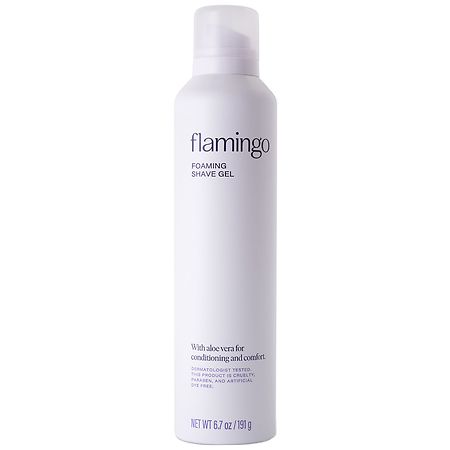


Flamingo Women s Foaming Shaving Gel with Aloe Vera 6.7 oz
Analysis updated August 2026 · How Scout scores
At a glance
Summary
This shaving gel contains beneficial ingredients like Aloe Vera, Glycerin, Bisabolol, and Allantoin, which provide soothing and moisturizing benefits. However, it also includes Triethanolamine, Fragrance, and Phenoxyethanol, which can cause skin irritation and have potential health concerns. The presence of these ingredients, along with the processed nature of the product, affects its overall safety and quality.
Key ingredients 23
Aloe Barbadensis (Aloe Vera) Leaf JuiceVery Good
Aloe Vera is known for its soothing and moisturizing properties. It is often used in skincare products to calm irritated skin and provide hydration. It is a natural ingredient with a long history of safe use.
Risks
Aloe Vera is generally safe, but some individuals may experience allergic reactions.
Benefits
Aloe Vera provides soothing and anti-inflammatory benefits, making it ideal for sensitive or irritated skin.
GlycerinGood
Glycerin is a humectant used in cosmetics to attract moisture to the skin. It is well-tolerated and helps to hydrate and soften the skin. It is a common ingredient in skincare products due to its moisturizing properties.
Risks
Glycerin is generally safe, but excessive use may lead to a sticky feeling on the skin.
Benefits
It helps to hydrate the skin by attracting moisture from the environment.
BisabololGood
Bisabolol is a natural compound known for its soothing and anti-inflammatory properties. It is often used in skincare products to calm irritated skin. It is derived from chamomile and is generally considered safe.
Risks
Bisabolol is generally safe, but some individuals may experience allergic reactions.
Benefits
It provides soothing and anti-inflammatory benefits, making it ideal for sensitive or irritated skin.
AllantoinGood
Allantoin is a skin conditioning agent known for its soothing and healing properties. It helps to protect and hydrate the skin, promoting cell regeneration. It is widely used in skincare products and is generally considered safe.
Risks
Allantoin is generally safe, but excessive use may lead to skin irritation.
Benefits
It helps to soothe and protect the skin, promoting healing and hydration.
Water/Aqua/EauNeutral
Water is a common solvent used in cosmetic formulations. It helps dissolve other ingredients and provides a base for the product. It is generally considered safe and non-irritating.
Risks
There are no significant risks associated with water in cosmetics.
Benefits
Water helps to hydrate the skin and is essential for the formulation of many cosmetic products.
Palmitic AcidNeutral
Palmitic Acid is a fatty acid used as an emollient and surfactant in cosmetics. It helps to soften the skin and improve the texture of formulations. It is generally considered safe for use in cosmetics.
Risks
There are minimal risks associated with Palmitic Acid, though it may cause irritation in sensitive individuals.
Benefits
Palmitic Acid helps to moisturize and protect the skin by forming a barrier to prevent moisture loss.
IsopentaneNeutral
Isopentane is a volatile solvent used in cosmetics to help products dry quickly. It is generally considered safe for use in cosmetics when used in appropriate concentrations. It evaporates quickly, leaving no residue.
Risks
Isopentane is flammable and can cause irritation if inhaled in large amounts.
Benefits
It helps products to dry quickly and provides a smooth application.
Laureth-23Neutral
Laureth-23 is a surfactant and emulsifier used in cosmetics to help mix oil and water. It is generally considered safe for use in cosmetics. It helps to improve the texture and spreadability of products.
Risks
There is a potential risk of skin irritation, especially in sensitive individuals.
Benefits
Laureth-23 helps to stabilize formulations and improve product texture.
SorbitolNeutral
Sorbitol is a sugar alcohol used as a humectant in cosmetics. It helps to retain moisture in the skin and improve product texture. It is generally considered safe for use in cosmetics.
Risks
Sorbitol is generally safe, but excessive use may lead to skin irritation.
Benefits
It helps to hydrate the skin by attracting moisture from the environment.
Stearic AcidNeutral
Stearic Acid is a fatty acid used as an emulsifier and thickener in cosmetics. It helps to stabilize formulations and improve texture. It is generally considered safe for use in cosmetics.
Risks
Stearic Acid is generally safe, but may cause irritation in sensitive individuals.
Benefits
It helps to thicken and stabilize formulations, providing a smooth texture.
IsobutaneNeutral
Isobutane is a propellant used in aerosol products. It helps to dispense the product in a fine mist. It is generally considered safe for use in cosmetics when used in appropriate concentrations.
Risks
Isobutane is flammable and can cause irritation if inhaled in large amounts.
Benefits
It helps to dispense products evenly and efficiently.
Glyceryl OleateNeutral
Glyceryl Oleate is an emulsifier and surfactant used in cosmetics. It helps to mix oil and water and improve product texture. It is generally considered safe for use in cosmetics.
Risks
There is a potential risk of skin irritation, especially in sensitive individuals.
Benefits
Glyceryl Oleate helps to stabilize formulations and improve product texture.
HydroxyethylcelluloseNeutral
Hydroxyethylcellulose is a thickening agent used in cosmetics to improve texture. It helps to stabilize formulations and provide a smooth application. It is generally considered safe for use in cosmetics.
Risks
There are minimal risks associated with Hydroxyethylcellulose, though it may cause irritation in sensitive individuals.
Benefits
It helps to thicken and stabilize formulations, providing a smooth texture.
Titanium Dioxide (Ci 77891)Neutral
Titanium Dioxide is used as a pigment and UV filter in cosmetics. It provides opacity and sun protection in formulations. It is generally considered safe for use in cosmetics when used in non-nano form.
Risks
Inhalation of nano-sized particles can pose health risks, but non-nano forms are generally safe.
Benefits
It provides sun protection and opacity in cosmetic formulations.
HydroxypropylcelluloseNeutral
Hydroxypropylcellulose is a thickening agent used in cosmetics to improve texture. It helps to stabilize formulations and provide a smooth application. It is generally considered safe for use in cosmetics.
Risks
There are minimal risks associated with Hydroxypropylcellulose, though it may cause irritation in sensitive individuals.
Benefits
It helps to thicken and stabilize formulations, providing a smooth texture.
Disodium PhosphateNeutral
Disodium Phosphate is used as a buffering agent in cosmetics to maintain pH balance. It helps to stabilize formulations and improve product performance. It is generally considered safe for use in cosmetics.
Risks
There are minimal risks associated with Disodium Phosphate, though it may cause irritation in sensitive individuals.
Benefits
It helps to maintain pH balance and stabilize formulations.
SilicaNeutral
Silica is used as an absorbent and anti-caking agent in cosmetics. It helps to improve the texture and feel of products. It is generally considered safe for use in cosmetics.
Risks
Inhalation of silica dust can pose health risks, but it is generally safe in cosmetic formulations.
Benefits
It helps to improve texture and absorb excess oil in formulations.
HydroxycitronellalNeutral
Hydroxycitronellal is a fragrance ingredient used in cosmetics to impart scent. It is known for its floral aroma and is generally considered safe in low concentrations. However, it can cause allergic reactions in sensitive individuals.
Risks
Hydroxycitronellal can cause skin irritation and allergic reactions.
Benefits
It provides a pleasant floral scent to cosmetic products.
TriethanolamineBad
Triethanolamine is used to adjust the pH of cosmetic products. It can be irritating to the skin and eyes, especially in high concentrations. There is also concern about the formation of nitrosamines, which are potential carcinogens.
Risks
Triethanolamine can cause skin and eye irritation and may form harmful nitrosamines.
Benefits
It helps to stabilize and emulsify formulations, ensuring product consistency.
PhenoxyethanolBad
Phenoxyethanol is a preservative used in cosmetics to prevent microbial growth. It can cause skin irritation and allergic reactions, especially in sensitive individuals. There are concerns about its potential neurotoxicity at high concentrations.
Risks
Phenoxyethanol can cause skin irritation and potential neurotoxicity.
Benefits
It helps to preserve the product by preventing microbial growth.
Polysorbate 60Bad
Processed additive flagged under Scout's ingredient doctrine.
Risks
There is a potential risk of skin irritation, especially in sensitive individuals.
Benefits
Polysorbate 60 helps to stabilize formulations and improve product texture.
Sodium PhosphateBad
Processed additive flagged under Scout's ingredient doctrine.
Risks
There are minimal risks associated with Sodium Phosphate, though it may cause irritation in sensitive individuals.
Benefits
It helps to maintain pH balance and stabilize formulations.
Fragrance/ParfumVery Bad
Fragrance is used to impart scent to cosmetic products. It can cause allergic reactions and skin irritation, especially in sensitive individuals. The exact composition is often undisclosed, leading to concerns about potential allergens.
Risks
Fragrance can cause skin irritation and allergic reactions.
Benefits
It provides a pleasant scent to cosmetic products.
Get the full breakdown in the Scout appTake Scout shopping
Scan any product to see lab results, healthy alternatives, and your personalized analysis.
Download on theApp Store GET IT ONGoogle PlayAmazon pricing & content
Amazon price as of . Product prices and availability are accurate as of the date/time indicated and are subject to change. Any price and availability information displayed on Amazon.com at the time of purchase will apply to the purchase of this product.
CERTAIN CONTENT THAT APPEARS ON THIS SITE COMES FROM AMAZON. THIS CONTENT IS PROVIDED “AS IS” AND IS SUBJECT TO CHANGE OR REMOVAL AT ANY TIME.