
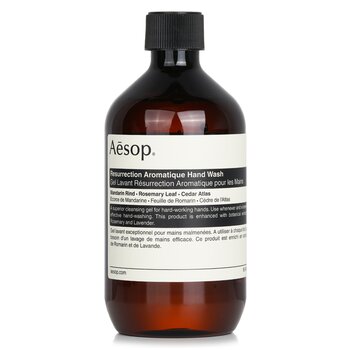

AesopResurrection Aromatique Hand Wash With Screw Cap 500ml/16.9oz
Analysis updated August 2026 · How Scout scores
At a glance
Summary
This hand wash contains beneficial essential oils like lavender and rosemary, which provide pleasant scents and potential skin benefits. However, the presence of sodium laureth sulfate, a surfactant that can strip natural oils and may be contaminated with 1,4-dioxane, and phenoxyethanol, a preservative with potential irritation risks, lowers its safety profile. The product's processing level and inclusion of PEG compounds further impact its overall rating.
Key ingredients 16
GlycerinGood
Glycerin is a humectant that attracts moisture to the skin, helping to keep it hydrated. It is a well-tolerated ingredient that enhances skin barrier function. It is widely used in skincare for its moisturizing properties.
Risks
Generally considered safe with minimal risk of irritation.
Benefits
Excellent for moisturizing and maintaining skin hydration.
Citrus Nobilis (Mandarin Orange) Peel OilGood
Mandarin Orange Peel Oil is a natural essential oil known for its refreshing scent and potential antioxidant properties. It can enhance the sensory experience of the product. It may also provide mild antibacterial benefits.
Risks
May cause photosensitivity if used in high concentrations.
Benefits
Provides a pleasant fragrance and potential antioxidant benefits.
Cedrus Atlantica (Cedarwood) Bark OilGood
Cedarwood Bark Oil is an essential oil with a warm, woody aroma. It is known for its calming properties and potential antimicrobial effects. It can enhance the fragrance profile of the product.
Risks
May cause skin sensitivity in some individuals.
Benefits
Provides a soothing aroma and potential antimicrobial benefits.
Lavandula Angustifolia (Lavender) OilGood
Lavender Oil is a popular essential oil known for its calming and soothing properties. It has potential anti-inflammatory and antimicrobial effects. It is often used in skincare for its pleasant scent and skin benefits.
Risks
May cause irritation or allergic reactions in sensitive skin.
Benefits
Offers calming effects and a pleasant fragrance.
Citrus Aurantium Dulcis (Orange) OilGood
Orange Oil is an essential oil with a fresh, citrus scent. It is known for its uplifting aroma and potential antioxidant properties. It can enhance the sensory experience of the product.
Risks
May increase photosensitivity if used in high concentrations.
Benefits
Provides a refreshing scent and potential antioxidant benefits.
Rosmarinus Officinalis (Rosemary) Leaf OilGood
Rosemary Leaf Oil is an essential oil with antioxidant and antimicrobial properties. It is known for its invigorating scent and potential skin benefits. It can enhance the fragrance and efficacy of the product.
Risks
May cause irritation in sensitive skin types.
Benefits
Offers antioxidant benefits and a refreshing aroma.
Water (Aqua)Neutral
Water is a universal solvent used as a base in many cosmetic formulations. It helps dissolve other ingredients and provides a medium for them to function. It does not have any direct benefits or risks in this context.
Risks
There are no significant risks associated with water in cosmetic formulations.
Benefits
Water helps in the even distribution of other ingredients in the formulation.
Cocamidopropyl HydroxysultaineNeutral
Cocamidopropyl Hydroxysultaine is a surfactant and foam booster derived from coconut oil. It is generally considered mild and less irritating than other surfactants. It helps to stabilize foam and improve the texture of the product.
Risks
May cause mild irritation in sensitive individuals.
Benefits
Enhances foam quality and provides a gentle cleansing action.
PEG-40 Hydrogenated Castor OilNeutral
PEG-40 Hydrogenated Castor Oil is an emulsifier and surfactant that helps blend oil and water-based ingredients. It is generally considered safe but may contain trace amounts of ethylene oxide and 1,4-dioxane. It improves the texture and stability of formulations.
Risks
Potential contamination with ethylene oxide and 1,4-dioxane.
Benefits
Improves product texture and helps in mixing oil and water components.
Sodium ChlorideNeutral
Sodium Chloride, or table salt, is used to thicken and stabilize formulations. It is generally considered safe and non-irritating in cosmetic products. It helps to adjust the viscosity of the product.
Risks
Excessive use may lead to dryness or irritation.
Benefits
Helps in thickening and stabilizing the product formulation.
Sodium DehydroacetateNeutral
Sodium Dehydroacetate is a preservative used to inhibit the growth of microorganisms in cosmetic products. It is considered safe for use in low concentrations. It helps to extend the shelf life of the product.
Risks
May cause mild irritation in sensitive individuals.
Benefits
Effective in preserving the product and preventing microbial growth.
Citric AcidNeutral
Citric Acid is used to adjust the pH of cosmetic formulations. It is generally considered safe and non-irritating in small amounts. It helps to maintain the stability and effectiveness of the product.
Risks
High concentrations may cause skin irritation.
Benefits
Helps in maintaining the pH balance of the product.
Sodium Laureth SulfateBad
Sodium Laureth Sulfate is a surfactant used for its cleansing and foaming properties. It can strip natural oils from the skin and may be contaminated with 1,4-dioxane, a potential carcinogen. It is considered milder than Sodium Lauryl Sulfate but still poses irritation risks.
Risks
Potential skin irritation and contamination with 1,4-dioxane.
Benefits
Effective at removing dirt and oil from the skin.
PhenoxyethanolBad
Phenoxyethanol is a preservative used to prevent microbial growth in cosmetic products. It can cause skin irritation and allergic reactions in some individuals. It is considered a safer alternative to parabens but still has potential risks.
Risks
Potential skin irritation and allergic reactions.
Benefits
Effective preservative that extends the shelf life of products.
LimoneneBad
Processed additive flagged under Scout's ingredient doctrine.
Risks
May cause skin irritation upon oxidation.
Benefits
Provides a citrus fragrance to the product.
LinaloolBad
Processed additive flagged under Scout's ingredient doctrine.
Risks
Potential for skin irritation in sensitive individuals.
Benefits
Contributes a floral fragrance to the product.
Processing
Processed Foods
Get the full breakdown in the Scout appTake Scout shopping
Scan any product to see lab results, healthy alternatives, and your personalized analysis.
Download on theApp Store GET IT ONGoogle Play