
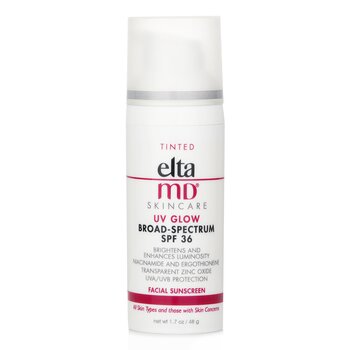

Elta MD UV Glow Tinted Broad Spectrum SPF 36 1.7 oz
Analysis updated August 2026 · How Scout scores
At a glance
Summary
This sunscreen contains beneficial ingredients like niacinamide, sodium hyaluronate, and tocopheryl acetate, which support skin health and hydration. However, it also includes preservatives such as phenoxyethanol and iodopropynyl butylcarbamate, which can cause irritation and allergic reactions in some individuals. The presence of these preservatives and the overall processing level of the product limit its score.
Key ingredients 17
NiacinamideGood
Niacinamide is a form of Vitamin B3 known for its anti-inflammatory and skin-soothing properties. It helps improve skin texture and tone. It is highly beneficial for maintaining skin health.
Risks
There are no significant risks associated with niacinamide in cosmetics.
Benefits
It improves skin elasticity, enhances barrier function, and reduces redness.
Sodium HyaluronateGood
Sodium Hyaluronate is a form of hyaluronic acid known for its excellent moisture-retaining properties. It helps in keeping the skin hydrated and plump. It is highly beneficial for maintaining skin moisture levels.
Risks
There are no significant risks associated with sodium hyaluronate in cosmetics.
Benefits
It provides deep hydration and helps in maintaining skin elasticity.
Tocopheryl AcetateGood
Tocopheryl Acetate is a form of Vitamin E used for its antioxidant properties. It helps protect the skin from free radical damage. It is beneficial for maintaining skin health.
Risks
There are no significant risks associated with tocopheryl acetate in cosmetics.
Benefits
It provides antioxidant protection and helps in maintaining skin health.
Iron OxidesGood
Beneficial ingredient — whole-food or functional value in this product class.
Risks
There are no significant risks associated with iron oxides in cosmetics.
Benefits
They provide natural pigmentation and are safe for use in cosmetics.
WaterNeutral
Water is commonly used as a solvent in cosmetic formulations. It helps dissolve other ingredients and provides a base for the product. It does not have any direct benefits or risks in this context.
Risks
There are no significant risks associated with water in cosmetics.
Benefits
Water helps in the even distribution of other ingredients in the formulation.
CyclopentasiloxaneNeutral
Cyclopentasiloxane is a silicone-based compound used for its smooth application and quick-drying properties. It helps in spreading the product evenly on the skin. It is generally considered safe for use in cosmetics.
Risks
There are minimal risks, though some concerns exist about bioaccumulation in the environment.
Benefits
It provides a silky texture and helps in the even application of the product.
Octyldodecyl NeopentanoateNeutral
Octyldodecyl Neopentanoate is an emollient that provides a smooth feel and helps in the spreadability of the product. It is commonly used in cosmetics for its moisturizing properties. It is considered safe for use.
Risks
There are no significant risks associated with this ingredient.
Benefits
It enhances the texture and spreadability of the product.
Butylene GlycolNeutral
Butylene Glycol is a common solvent and conditioning agent in cosmetics. It helps in retaining moisture and improving the texture of the product. It is generally recognized as safe for use.
Risks
There are minimal risks, though it may cause irritation in sensitive individuals.
Benefits
It acts as a humectant, helping to keep the skin hydrated.
Hydroxyethyl Acrylate/Sodium Acryloyldimethyl Taurate CopolymerNeutral
This copolymer is used as a thickening agent and stabilizer in cosmetic formulations. It helps maintain the consistency of the product. It is considered safe for use in cosmetics.
Risks
There are no significant risks associated with this ingredient.
Benefits
It provides stability and consistency to the formulation.
PolyisobuteneNeutral
Polyisobutene is used as a thickening agent and film-former in cosmetics. It helps in providing a smooth application and enhances the texture of the product. It is generally considered safe for use.
Risks
There are no significant risks associated with this ingredient.
Benefits
It improves the texture and application of the product.
PEG-7 Trimethylolpropane Coconut EtherNeutral
This ingredient is used as an emollient and surfactant in cosmetics. It helps in moisturizing the skin and improving the spreadability of the product. It is considered safe for use.
Risks
There are minimal risks, though it may cause irritation in sensitive individuals.
Benefits
It provides moisturizing benefits and enhances product spreadability.
Lactic AcidNeutral
Lactic Acid is an alpha hydroxy acid used for its exfoliating properties. It helps in removing dead skin cells and improving skin texture. It is generally considered safe for use in cosmetics.
Risks
It may cause irritation in sensitive skin or if used in high concentrations.
Benefits
It helps in exfoliating the skin and improving texture.
Oleth-3 PhosphateNeutral
Oleth-3 Phosphate is used as an emulsifier in cosmetic formulations. It helps in blending oil and water-based ingredients. It is considered safe for use in cosmetics.
Risks
There are no significant risks associated with this ingredient.
Benefits
It helps in stabilizing emulsions and improving product consistency.
Isopropyl PalmitateNeutral
Isopropyl Palmitate is an emollient used to enhance the texture and spreadability of cosmetic products. It helps in moisturizing the skin. It is generally considered safe for use.
Risks
There are minimal risks, though it may cause acne in some individuals.
Benefits
It provides a smooth texture and helps in moisturizing the skin.
TriethoxycaprylylsilaneNeutral
Triethoxycaprylylsilane is used as a surface modifier in cosmetics. It helps in improving the dispersion of pigments and enhances product stability. It is considered safe for use.
Risks
There are no significant risks associated with this ingredient.
Benefits
It improves pigment dispersion and enhances product stability.
PhenoxyethanolBad
Phenoxyethanol is a preservative used to prevent microbial growth in cosmetics. It is effective in maintaining product safety. However, it can cause irritation and allergic reactions in some individuals.
Risks
It may cause skin irritation and allergic reactions, especially in sensitive individuals.
Benefits
It helps in preserving the product and preventing microbial contamination.
Iodopropynyl ButylcarbamateBad
Iodopropynyl Butylcarbamate is a preservative used to prevent microbial growth in cosmetics. It is effective in maintaining product safety. However, it can cause skin irritation and allergic reactions in some individuals.
Risks
It may cause skin irritation and allergic reactions, especially in sensitive individuals.
Benefits
It helps in preserving the product and preventing microbial contamination.
Get the full breakdown in the Scout appTake Scout shopping
Scan any product to see lab results, healthy alternatives, and your personalized analysis.
Download on theApp Store GET IT ONGoogle Play