


At a glance
Summary
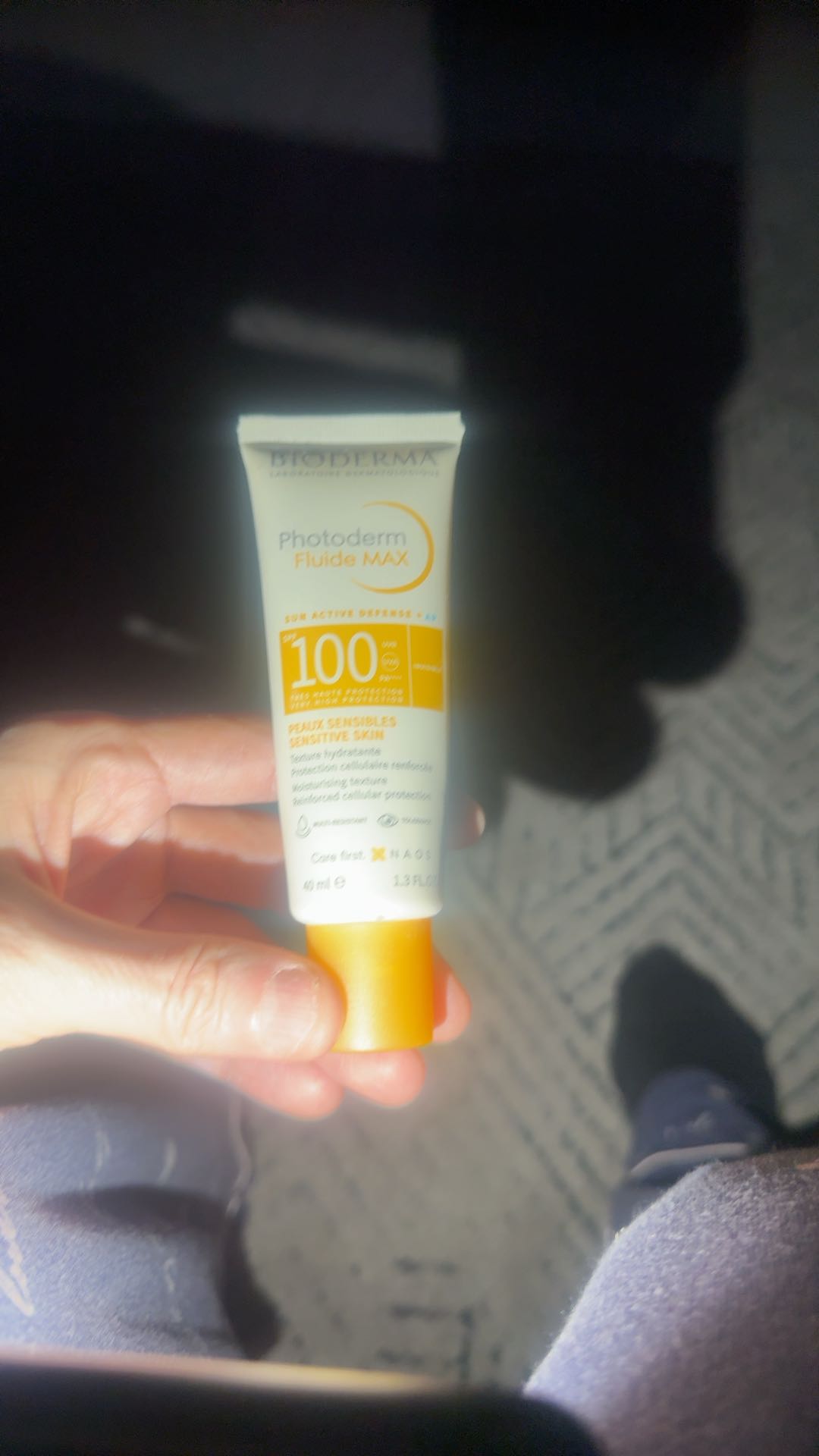
This sunscreen contains several chemical UV filters, which can be concerning due to potential endocrine disruption and environmental impact. However, it also includes beneficial ingredients like glycerin and tocopherol, which provide moisturizing and antioxidant benefits. The presence of sodium hydroxide, a potential skin irritant, and the processed nature of the product contribute to a moderate score.
Key ingredients 27
GlycerinGood
Glycerin is a humectant that attracts moisture to the skin, helping to keep it hydrated. It is widely used in cosmetics for its moisturizing properties. It is considered safe and beneficial for all skin types.
Risks
There are no significant risks associated with glycerin.
Benefits
It helps to maintain skin hydration and improve skin barrier function.
TocopherolGood
Tocopherol, also known as Vitamin E, is an antioxidant that helps to protect the skin from free radical damage. It is widely used in cosmetics for its skin conditioning properties. It is considered safe and beneficial for all skin types.
Risks
There are no significant risks associated with Tocopherol.
Benefits
It helps to maintain skin health and improve skin texture.
WaterNeutral
Water is a common solvent used in many cosmetic formulations. It helps dissolve other ingredients and provides a base for the product. It is generally considered safe and non-irritating.
Risks
There are no significant risks associated with water in cosmetics.
Benefits
Water helps to hydrate the skin and improve the texture of the product.
Dibutyl AdipateNeutral
Dibutyl Adipate is used as an emollient and plasticizer in cosmetics. It helps to soften and smooth the skin. It is generally considered safe for use in cosmetics.
Risks
There are minimal risks associated with Dibutyl Adipate, though it may cause mild irritation in sensitive individuals.
Benefits
It provides a smooth application and enhances the texture of the product.
Diethylhexyl Butamido TriazoneNeutral
Diethylhexyl Butamido Triazone is a UV filter used in sunscreens to protect the skin from UV radiation. It is effective in absorbing UV rays. It is considered safe for use in cosmetics.
Risks
There is a potential for skin irritation in sensitive individuals.
Benefits
It provides effective protection against UVB rays, reducing the risk of sunburn.
Diethylamino Hydroxybenzoyl Hexyl BenzoateNeutral
This ingredient is a UVA filter used in sunscreens to protect the skin from UVA radiation. It is effective in providing broad-spectrum protection. It is generally considered safe for use in cosmetics.
Risks
There is a potential for skin irritation in sensitive individuals.
Benefits
It helps prevent premature skin aging by protecting against UVA rays.
Dicaprylyl CarbonateNeutral
Dicaprylyl Carbonate is an emollient that provides a silky feel to the skin. It helps to improve the spreadability of the product. It is considered safe for use in cosmetics.
Risks
There are minimal risks associated with Dicaprylyl Carbonate.
Benefits
It enhances the texture and application of the product.
Diisopropyl SebacateNeutral
Diisopropyl Sebacate is used as an emollient and solvent in cosmetics. It helps to soften the skin and improve product spreadability. It is generally considered safe for use in cosmetics.
Risks
There are minimal risks associated with Diisopropyl Sebacate.
Benefits
It provides a smooth application and enhances the texture of the product.
Bis-Ethylhexyloxyphenol Methoxyphenyl TriazineNeutral
This ingredient is a broad-spectrum UV filter used in sunscreens. It provides effective protection against both UVA and UVB rays. It is considered safe for use in cosmetics.
Risks
There is a potential for skin irritation in sensitive individuals.
Benefits
It helps prevent sunburn and skin damage from UV exposure.
Corn Starch ModifiedNeutral
Modified corn starch is used as a thickening agent in cosmetics. It helps to improve the texture and stability of the product. It is generally considered safe for use in cosmetics.
Risks
There are minimal risks associated with modified corn starch.
Benefits
It enhances the consistency and feel of the product.
Polyglyceryl-6 StearateNeutral
Polyglyceryl-6 Stearate is an emulsifier used to stabilize formulations. It helps to blend oil and water components in cosmetics. It is considered safe for use in cosmetics.
Risks
There are minimal risks associated with Polyglyceryl-6 Stearate.
Benefits
It improves the stability and texture of the product.
1, 2-HexanediolNeutral
1, 2-Hexanediol is used as a solvent and preservative in cosmetics. It helps to enhance the shelf life of the product. It is generally considered safe for use in cosmetics.
Risks
There are minimal risks associated with 1, 2-Hexanediol.
Benefits
It helps to maintain product stability and prevent microbial growth.
Microcrystalline CelluloseNeutral
Microcrystalline Cellulose is used as a bulking agent and stabilizer in cosmetics. It helps to improve the texture and consistency of the product. It is considered safe for use in cosmetics.
Risks
There are minimal risks associated with Microcrystalline Cellulose.
Benefits
It enhances the texture and stability of the product.
C20-22 Alkyl PhosphateNeutral
C20-22 Alkyl Phosphate is used as an emulsifier and surfactant in cosmetics. It helps to stabilize formulations and improve texture. It is generally considered safe for use in cosmetics.
Risks
There are minimal risks associated with C20-22 Alkyl Phosphate.
Benefits
It enhances the stability and feel of the product.
C20-22 AlcoholsNeutral
C20-22 Alcohols are fatty alcohols used as emollients and thickeners in cosmetics. They help to soften the skin and improve product texture. They are considered safe for use in cosmetics.
Risks
There are minimal risks associated with C20-22 Alcohols.
Benefits
They provide a smooth application and enhance the texture of the product.
Caprylyl GlycolNeutral
Caprylyl Glycol is used as a skin conditioning agent and preservative in cosmetics. It helps to improve skin hydration and extend product shelf life. It is generally considered safe for use in cosmetics.
Risks
There are minimal risks associated with Caprylyl Glycol.
Benefits
It helps to maintain skin moisture and prevent microbial growth.
Polyglyceryl-6 BehenateNeutral
Polyglyceryl-6 Behenate is an emulsifier used to stabilize formulations. It helps to blend oil and water components in cosmetics. It is considered safe for use in cosmetics.
Risks
There are minimal risks associated with Polyglyceryl-6 Behenate.
Benefits
It improves the stability and texture of the product.
Cellulose GumNeutral
Cellulose Gum is used as a thickening agent in cosmetics. It helps to improve the texture and stability of the product. It is generally considered safe for use in cosmetics.
Risks
There are minimal risks associated with Cellulose Gum.
Benefits
It enhances the consistency and feel of the product.
EctoinNeutral
Ectoin is a natural compound used for its protective and moisturizing properties. It helps to protect the skin from environmental stressors. It is considered safe for use in cosmetics.
Risks
There are minimal risks associated with Ectoin.
Benefits
It helps to maintain skin hydration and protect against environmental damage.
MannitolNeutral
Mannitol is used as a humectant and skin conditioning agent in cosmetics. It helps to attract moisture to the skin. It is generally considered safe for use in cosmetics.
Risks
There are minimal risks associated with Mannitol.
Benefits
It helps to maintain skin hydration and improve skin texture.
XylitolNeutral
Xylitol is used as a humectant and skin conditioning agent in cosmetics. It helps to attract moisture to the skin. It is generally considered safe for use in cosmetics.
Risks
There are minimal risks associated with Xylitol.
Benefits
It helps to maintain skin hydration and improve skin texture.
O-Cymen-5-OlNeutral
O-Cymen-5-Ol is used as a preservative and antimicrobial agent in cosmetics. It helps to prevent microbial growth and extend product shelf life. It is generally considered safe for use in cosmetics.
Risks
There are minimal risks associated with O-Cymen-5-Ol.
Benefits
It helps to maintain product stability and prevent microbial contamination.
Xanthan GumNeutral
Xanthan Gum is used as a thickening agent in cosmetics. It helps to improve the texture and stability of the product. It is generally considered safe for use in cosmetics.
Risks
There are minimal risks associated with Xanthan Gum.
Benefits
It enhances the consistency and feel of the product.
RhamnoseNeutral
Rhamnose is a sugar used for its skin conditioning properties in cosmetics. It helps to improve skin texture and hydration. It is generally considered safe for use in cosmetics.
Risks
There are minimal risks associated with Rhamnose.
Benefits
It helps to maintain skin hydration and improve skin texture.
Sodium HydroxideNeutral
Standard formulation ingredient — neither beneficial nor harmful at typical use.
Risks
It can cause skin irritation and damage if used in high concentrations.
Benefits
It helps to maintain the desired pH level of the product.
Butyl MethoxydibenzoylmethaneNeutral
Butyl Methoxydibenzoylmethane is a UVA filter used in sunscreens. It provides effective protection against UVA rays. It is generally considered safe for use in cosmetics.
Risks
There is a potential for skin irritation in sensitive individuals.
Benefits
It helps prevent premature skin aging by protecting against UVA rays.
Propylheptyl CaprylateNeutral
Propylheptyl Caprylate is used as an emollient in cosmetics. It helps to soften the skin and improve product spreadability. It is generally considered safe for use in cosmetics.
Risks
There are minimal risks associated with Propylheptyl Caprylate.
Benefits
It provides a smooth application and enhances the texture of the product.
Processing
Processed Foods
Get the full breakdown in the Scout appTake Scout shopping
Scan any product to see lab results, healthy alternatives, and your personalized analysis.
Download on theApp Store GET IT ONGoogle Play