
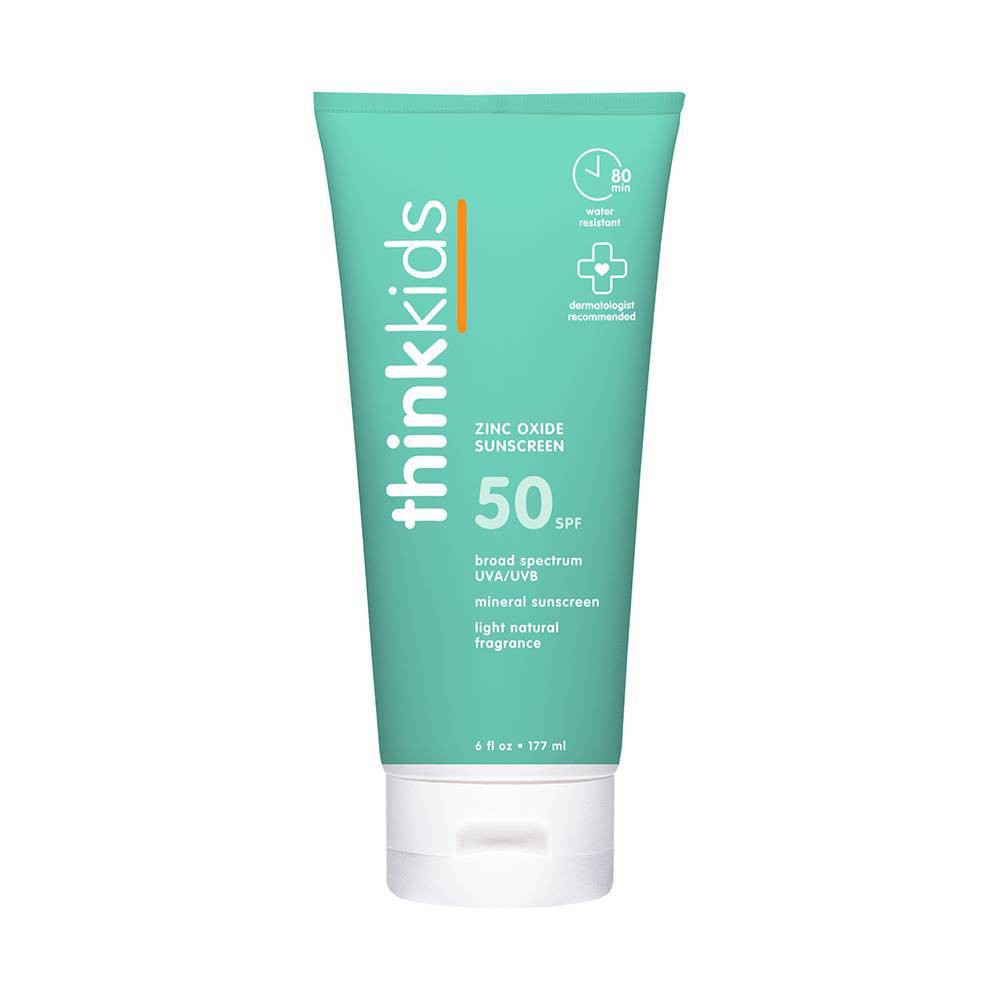

thinkkids Mineral Sunscreen with Non-Nano Zinc Oxide, UVA/UVB Protection - Water Resistant - SPF 50 - 6 fl oz
Analysis updated August 2026 · How Scout scores
At a glance
Summary
This mineral sunscreen features non-nano zinc oxide, which is a safe and effective UV filter. It includes beneficial natural oils and skin-friendly ingredients like jojoba oil and sodium hyaluronate, which provide moisturizing and antioxidant benefits. However, the presence of a natural fragrance oil, which can cause irritation, and the product's classification as ultra-processed limit its overall score.
Key ingredients 22
TocopherolVery Good
Tocopherol, or Vitamin E, is an antioxidant that helps protect the skin from free radical damage. It is beneficial for maintaining skin health and improving moisture retention. It is widely used in skincare for its protective properties.
Risks
Generally safe with no significant risks.
Benefits
Provides antioxidant protection and supports skin health.
Helianthus Annuus (Sunflower) Seed OilVery Good
Sunflower Seed Oil is a natural oil rich in fatty acids and Vitamin E. It helps nourish and moisturize the skin. It is well-tolerated by most skin types and provides antioxidant benefits.
Risks
Generally safe with no significant risks.
Benefits
Nourishes the skin and provides antioxidant protection.
Simmondsia Chinensis (Jojoba) Seed OilVery Good
Jojoba Oil is a natural oil that closely resembles the skin's natural sebum. It is known for its moisturizing and soothing properties. It is beneficial for maintaining skin balance and health.
Risks
Generally safe with no significant risks.
Benefits
Moisturizes and balances the skin's natural oils.
Olea Europaea (Olive) Fruit OilVery Good
Olive Oil is a natural oil rich in antioxidants and fatty acids. It helps nourish and protect the skin. It is widely used for its moisturizing and anti-inflammatory properties.
Risks
Generally safe with no significant risks.
Benefits
Nourishes the skin and provides antioxidant protection.
Vaccinium Macrocarpon (Cranberry) Seed OilVery Good
Cranberry Seed Oil is rich in antioxidants and essential fatty acids. It helps protect the skin from environmental stressors and supports skin health. It is beneficial for its moisturizing and anti-aging properties.
Risks
Generally safe with no significant risks.
Benefits
Provides antioxidant protection and supports skin health.
Rubus Idaeus (Raspberry) Seed OilVery Good
Raspberry Seed Oil is known for its high antioxidant content and UV protection properties. It helps protect the skin from sun damage and supports skin health. It is beneficial for its moisturizing and anti-inflammatory properties.
Risks
Generally safe with no significant risks.
Benefits
Provides UV protection and antioxidant benefits.
Caprylic/Capric TriglycerideGood
Caprylic/Capric Triglyceride is derived from coconut oil and glycerin. It is used as an emollient and helps to moisturize and replenish the skin. It is well-tolerated by most skin types.
Risks
Rarely, it may cause irritation in very sensitive skin.
Benefits
Provides skin-conditioning benefits and helps improve the texture of the product.
GlycerinGood
Glycerin is a humectant that attracts moisture to the skin. It is widely used in skincare for its hydrating properties. It helps maintain the skin's moisture balance.
Risks
Generally safe with no significant risks.
Benefits
Enhances skin hydration and improves skin barrier function.
Sodium HyaluronateGood
Sodium Hyaluronate is a form of hyaluronic acid that helps retain moisture in the skin. It is known for its excellent hydrating properties and ability to improve skin elasticity. It is beneficial for all skin types.
Risks
Generally safe with no significant risks.
Benefits
Enhances skin hydration and plumps the skin.
Citrus Paradisi (Grapefruit) Seed OilGood
Grapefruit Seed Oil is known for its antimicrobial properties. It is used in cosmetics for its potential to preserve formulations naturally. It may also provide some antioxidant benefits.
Risks
May cause irritation in sensitive skin.
Benefits
Provides antimicrobial and antioxidant benefits.
Carica Papaya (Papaya) Fruit ExtractGood
Papaya Fruit Extract is rich in vitamins and enzymes that help exfoliate and brighten the skin. It is used in cosmetics for its skin-renewing properties. It may also provide antioxidant benefits.
Risks
May cause irritation in sensitive skin.
Benefits
Exfoliates and brightens the skin, providing antioxidant benefits.
Purified WaterNeutral
Purified water is commonly used as a solvent in cosmetic formulations. It helps dissolve other ingredients and provides a base for the product. It does not have any direct benefits or risks.
Benefits
Provides a base for the formulation and helps in the application of the product.
Polyglyceryl-4 IsostearateNeutral
Polyglyceryl-4 Isostearate is an emulsifier that helps blend oil and water components. It is generally considered safe and non-irritating. It does not have direct skin benefits.
Benefits
Helps stabilize the formulation and improve product consistency.
Hydrogenated Glyceryl AbietateNeutral
Hydrogenated Glyceryl Abietate is used as a film-forming agent in cosmetics. It helps improve the water resistance of the product. It does not have direct skin benefits.
Benefits
Improves the durability and water resistance of the sunscreen.
Cetyl DimethiconeNeutral
Cetyl Dimethicone is a silicone-based ingredient used for its smoothing properties. It helps improve the texture and spreadability of the product. It is generally considered safe for use in cosmetics.
Risks
May cause build-up on the skin with prolonged use.
Benefits
Enhances the application and feel of the product on the skin.
Sorbitan SesquioleateNeutral
Sorbitan Sesquioleate is an emulsifier that helps blend ingredients. It is commonly used in skincare products for its stabilizing properties. It does not have direct skin benefits.
Benefits
Improves the stability and consistency of the formulation.
Magnesium SulfateNeutral
Magnesium Sulfate, also known as Epsom salt, is used as a thickening agent. It helps improve the texture of the product. It does not have direct skin benefits.
Benefits
Contributes to the viscosity and stability of the formulation.
Hydrogenated Castor OilNeutral
Hydrogenated Castor Oil is used as an emollient and thickening agent in cosmetics. It helps improve the texture and stability of the product. It does not have direct skin benefits.
Benefits
Improves the texture and stability of the formulation.
Caprylhydroxamic AcidNeutral
Caprylhydroxamic Acid is used as a preservative in cosmetics. It helps prevent microbial growth and extend the shelf life of the product. It is considered safe for use in cosmetics.
Benefits
Provides preservation benefits and extends product shelf life.
TriethoxycaprylylsilaneNeutral
Triethoxycaprylylsilane is used as a surface modifier in cosmetics. It helps improve the dispersion of pigments and enhance product performance. It does not have direct skin benefits.
Benefits
Enhances product performance and pigment dispersion.
Glyceryl CaprylateNeutral
Glyceryl Caprylate is used as an emollient and co-emulsifier in cosmetics. It helps improve the texture and stability of the product. It is considered safe for use in cosmetics.
Benefits
Improves the texture and stability of the formulation.
Natural Fragrance OilBad
Fragrance oils, even when labeled as natural, can cause irritation and allergic reactions in sensitive individuals. They are often used to enhance the scent of the product. The exact composition is often undisclosed, leading to potential risks.
Risks
May cause skin irritation and allergic reactions.
Benefits
Enhances the sensory experience of the product.
Processing
Processed Foods
Get the full breakdown in the Scout appTake Scout shopping
Scan any product to see lab results, healthy alternatives, and your personalized analysis.
Download on theApp Store GET IT ONGoogle PlayAmazon pricing & content
Amazon price as of . Product prices and availability are accurate as of the date/time indicated and are subject to change. Any price and availability information displayed on Amazon.com at the time of purchase will apply to the purchase of this product.
CERTAIN CONTENT THAT APPEARS ON THIS SITE COMES FROM AMAZON. THIS CONTENT IS PROVIDED “AS IS” AND IS SUBJECT TO CHANGE OR REMOVAL AT ANY TIME.