
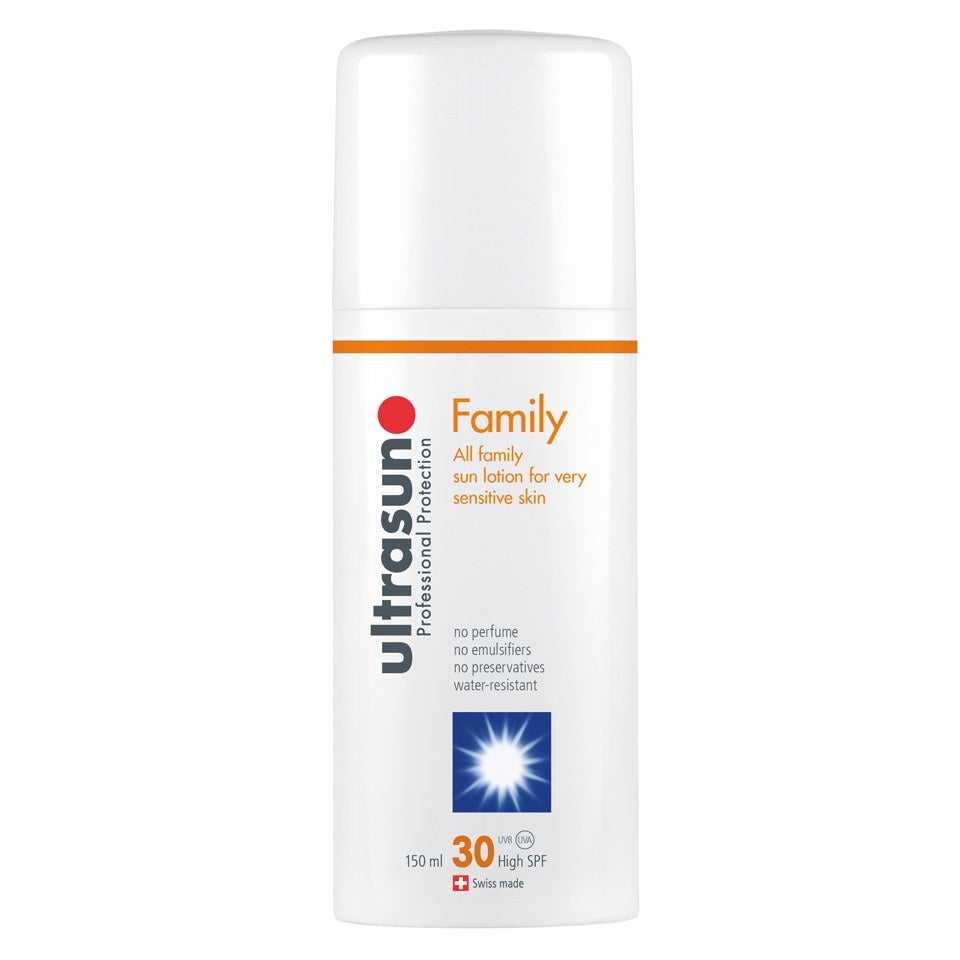
Ultrasun Sun Protection Very Sensitive Family All Day Spf30 150ml For All
Analysis updated October 2026 · How Scout scores
At a glance
Summary
This sunscreen contains a mix of chemical and mineral UV filters, including titanium dioxide, which is generally considered safe. However, it also includes several chemical filters like ethylhexyl salicylate and bis-ethylhexyloxyphenol methoxyphenyl triazine, which can be concerning due to potential endocrine disruption. The presence of beneficial ingredients like squalane and glycerin provides some skin benefits, but the inclusion of alcohol and other synthetic compounds affects its overall safety profile.
Key ingredients 31
SqualaneVery Good
Squalane is a highly effective emollient and natural antioxidant. It is derived from olives and is known for its moisturizing properties. It is suitable for all skin types and is non-comedogenic.
Risks
There are no significant risks associated with squalane.
Benefits
It helps to hydrate the skin, improve elasticity, and reduce the appearance of fine lines.
Caprylic/Capric TriglycerideGood
Caprylic/Capric Triglyceride is derived from coconut oil and glycerin. It is used as an emollient and helps to improve the spreadability of the product. It is well-tolerated by most skin types.
Risks
There are minimal risks, though it may cause mild irritation in very sensitive individuals.
Benefits
It provides a lightweight, non-greasy barrier that helps to retain moisture in the skin.
GlycerinGood
Glycerin is a natural humectant that attracts moisture to the skin. It is widely used in skincare products for its hydrating properties. It is safe and effective for all skin types.
Risks
There are no significant risks associated with glycerin.
Benefits
It helps to maintain skin hydration and improves skin barrier function.
CocoglyceridesGood
Cocoglycerides are derived from coconut oil and glycerin. They are used as emollients and help to improve the texture of cosmetic products. They are generally well-tolerated by most skin types.
Risks
There are minimal risks, though they may cause mild irritation in very sensitive individuals.
Benefits
They provide a smooth, non-greasy feel and help to moisturize the skin.
Vitis Vinifera Seed ExtractGood
Vitis Vinifera Seed Extract, or grape seed extract, is rich in antioxidants. It helps to protect the skin from free radical damage and has anti-inflammatory properties. It is suitable for all skin types.
Risks
There are minimal risks, though it may cause mild irritation in very sensitive individuals.
Benefits
It helps to improve skin elasticity and reduce the signs of aging.
Decyl GlucosideGood
Beneficial ingredient — whole-food or functional value in this product class.
Risks
It may cause mild irritation in very sensitive individuals.
Benefits
It provides gentle cleansing without stripping the skin of natural oils.
Tocopheryl AcetateGood
Tocopheryl Acetate is a form of Vitamin E used as an antioxidant in cosmetics. It helps to protect the skin from free radical damage and has moisturizing properties. It is suitable for all skin types.
Risks
There are minimal risks, though it may cause mild irritation in very sensitive individuals.
Benefits
It helps to improve skin texture and reduce the signs of aging.
Ascorbyl TetraisopalmitateGood
Ascorbyl Tetraisopalmitate is a stable form of Vitamin C used in cosmetics. It provides antioxidant protection and helps to brighten the skin. It is suitable for all skin types.
Risks
There are minimal risks, though it may cause mild irritation in very sensitive individuals.
Benefits
It helps to improve skin tone and reduce the appearance of dark spots.
TocopherolGood
Tocopherol is a form of Vitamin E used as an antioxidant in cosmetics. It helps to protect the skin from free radical damage and has moisturizing properties. It is suitable for all skin types.
Risks
There are minimal risks, though it may cause mild irritation in very sensitive individuals.
Benefits
It helps to improve skin texture and reduce the signs of aging.
UbiquinoneGood
Ubiquinone, also known as Coenzyme Q10, is an antioxidant used in cosmetics. It helps to protect the skin from free radical damage and has anti-aging properties. It is suitable for all skin types.
Risks
There are minimal risks, though it may cause mild irritation in very sensitive individuals.
Benefits
It helps to improve skin elasticity and reduce the appearance of fine lines.
AquaNeutral
Aqua, or water, is commonly used as a solvent in cosmetic formulations. It helps to dissolve other ingredients and provides a base for the product. It is generally considered safe and non-irritating.
Risks
There are no significant risks associated with water in cosmetic products.
Benefits
Water helps to hydrate the skin and is essential for the formulation of many skincare products.
Pentylene GlycolNeutral
Pentylene Glycol is a synthetic humectant and solvent. It helps to retain moisture in the skin and enhances the penetration of other ingredients. It is generally considered safe for use in cosmetics.
Risks
It may cause mild irritation in sensitive skin types.
Benefits
It improves skin hydration and enhances the efficacy of active ingredients.
Methylene Bis-Benzotriazolyl Tetramethylbutylphenol (Nano)Neutral
This ingredient is a broad-spectrum UV filter used in sunscreens. It provides protection against both UVA and UVB rays. The nano form allows for a more transparent application.
Risks
There are concerns about the safety of nanoparticles, though current research suggests they do not penetrate healthy skin.
Benefits
It effectively protects the skin from sun damage without leaving a white cast.
Titanium Dioxide (Nano)Neutral
Titanium Dioxide is a mineral sunscreen agent that provides broad-spectrum UV protection. The nano form helps to reduce the whitening effect on the skin. It is widely used in sunscreens for its effectiveness.
Risks
There are concerns about inhalation risks in powder form, but it is considered safe in lotions and creams.
Benefits
It offers strong UV protection and is less likely to cause skin irritation compared to chemical sunscreens.
Ethylhexyl SalicylateNeutral
Ethylhexyl Salicylate is a chemical sunscreen agent that absorbs UVB radiation. It is commonly used to enhance the SPF of sunscreen products. It is generally considered safe for use in cosmetics.
Risks
It may cause skin irritation in sensitive individuals.
Benefits
It helps to protect the skin from sunburn and UV damage.
Bis-Ethylhexyloxyphenol Methoxyphenyl TriazineNeutral
This is a broad-spectrum UV filter that provides protection against UVA and UVB rays. It is photostable and does not degrade in sunlight. It is considered safe for use in sunscreens.
Risks
There are minimal risks, though it may cause mild irritation in sensitive skin.
Benefits
It offers long-lasting sun protection and helps to prevent skin damage from UV exposure.
C12-15 Alkyl BenzoateNeutral
C12-15 Alkyl Benzoate is an emollient that provides a silky feel to the skin. It is used to improve the texture and spreadability of cosmetic products. It is generally considered safe for use.
Risks
It may cause mild irritation in sensitive individuals.
Benefits
It enhances the sensory properties of the product and helps to soften the skin.
Diethylamino Hydroxybenzoyl Hexyl BenzoateNeutral
This ingredient is a UVA filter used in sunscreens. It provides effective protection against long-wave UVA rays. It is photostable and does not degrade in sunlight.
Risks
There are minimal risks, though it may cause mild irritation in sensitive skin.
Benefits
It helps to prevent premature aging and skin damage caused by UVA exposure.
Ethylhexyl TriazoneNeutral
Ethylhexyl Triazone is a UVB filter used in sunscreens. It provides high UVB protection and is photostable. It is considered safe for use in cosmetic products.
Risks
It may cause mild irritation in sensitive individuals.
Benefits
It helps to protect the skin from sunburn and UVB-induced damage.
C8-22 Alkyl Acrylates/Methacrylic Acid CrosspolymerNeutral
This ingredient is used as a film-forming agent and thickener in cosmetic formulations. It helps to stabilize emulsions and improve product texture. It is generally considered safe for use.
Risks
There are minimal risks, though it may cause mild irritation in sensitive skin.
Benefits
It enhances the stability and consistency of the product.
Polyacrylate Crosspolymer-6Neutral
Polyacrylate Crosspolymer-6 is used as a thickening and stabilizing agent in cosmetics. It helps to improve the texture and spreadability of products. It is considered safe for use in skincare formulations.
Risks
It may cause mild irritation in sensitive individuals.
Benefits
It enhances the viscosity and stability of the product.
Hydrogenated PhosphatidylcholineNeutral
Hydrogenated Phosphatidylcholine is used as an emulsifier and skin-conditioning agent. It helps to stabilize formulations and improve skin texture. It is considered safe for use in cosmetics.
Risks
It may cause mild irritation in sensitive individuals.
Benefits
It enhances the stability and efficacy of the product.
SilicaNeutral
Silica is used as an absorbent and anti-caking agent in cosmetics. It helps to improve the texture and mattify the skin. It is generally considered safe for use.
Risks
Inhalation of silica dust can be harmful, but it is safe in cream and lotion formulations.
Benefits
It helps to control shine and improve the feel of the product.
Propyl AlcoholNeutral
Propyl Alcohol is used as a solvent and antiseptic in cosmetics. It helps to dissolve other ingredients and provides a cooling effect. It is generally considered safe for use in small amounts.
Risks
It can be drying to the skin if used in high concentrations.
Benefits
It helps to improve the texture and application of the product.
AlcoholNeutral
Alcohol is used as a solvent and preservative in cosmetics. It helps to dissolve other ingredients and provides a quick-drying effect. It is generally considered safe for use in small amounts.
Risks
It can be drying and irritating to the skin if used in high concentrations.
Benefits
It helps to improve the texture and stability of the product.
Cetyl PhosphateNeutral
Cetyl Phosphate is used as an emulsifier and surfactant in cosmetics. It helps to stabilize formulations and improve texture. It is considered safe for use in skincare products.
Risks
It may cause mild irritation in sensitive individuals.
Benefits
It enhances the stability and consistency of the product.
Xanthan GumNeutral
Xanthan Gum is a natural thickening agent used in cosmetics. It helps to stabilize emulsions and improve product texture. It is generally considered safe for use.
Risks
There are minimal risks, though it may cause mild irritation in very sensitive individuals.
Benefits
It enhances the viscosity and stability of the product.
T-Butyl AlcoholNeutral
T-Butyl Alcohol is used as a solvent and denaturant in cosmetics. It helps to dissolve other ingredients and provides a quick-drying effect. It is generally considered safe for use in small amounts.
Risks
It can be drying and irritating to the skin if used in high concentrations.
Benefits
It helps to improve the texture and application of the product.
Diisopropyl AdipateNeutral
Diisopropyl Adipate is used as an emollient and solvent in cosmetics. It helps to improve the texture and spreadability of products. It is generally considered safe for use.
Risks
It may cause mild irritation in sensitive individuals.
Benefits
It provides a smooth, non-greasy feel and helps to soften the skin.
Propylene GlycolBad
Processed additive flagged under Scout's ingredient doctrine.
Risks
It may cause mild irritation in sensitive skin types.
Benefits
It improves skin hydration and enhances the efficacy of active ingredients.
LecithinBad
Processed additive flagged under Scout's ingredient doctrine.
Risks
It may cause mild irritation in sensitive individuals.
Benefits
It enhances the stability and efficacy of the product.
Get the full breakdown in the Scout appTake Scout shopping
Scan any product to see lab results, healthy alternatives, and your personalized analysis.
Download on theApp Store GET IT ONGoogle PlayAmazon pricing & content
Amazon price as of . Product prices and availability are accurate as of the date/time indicated and are subject to change. Any price and availability information displayed on Amazon.com at the time of purchase will apply to the purchase of this product.
CERTAIN CONTENT THAT APPEARS ON THIS SITE COMES FROM AMAZON. THIS CONTENT IS PROVIDED “AS IS” AND IS SUBJECT TO CHANGE OR REMOVAL AT ANY TIME.