
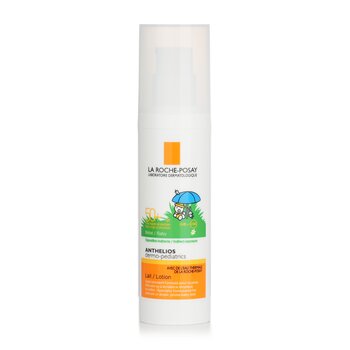

Anthelios Dermo-Pediatrics Milk SPF 50 by La Roche-Posay for Unisex - 1.7 oz Sunscreen
Analysis updated August 2026 · How Scout scores
At a glance
Summary
This sunscreen contains beneficial ingredients like glycerin, titanium dioxide, and shea butter, which provide hydration and broad-spectrum protection. However, the presence of denatured alcohol and triethanolamine, which can be drying and potentially irritating, lowers its safety profile. The inclusion of chemical UV filters and synthetic polymers also contributes to a moderate processing level, impacting the overall score.
Key ingredients 30
Butyrospermum Parkii Butter/Shea ButterVery Good
Shea Butter is a natural fat extracted from the nuts of the shea tree. It is known for its moisturizing and skin-soothing properties.
Risks
Low risk of irritation; potential for allergic reaction in individuals with nut allergies.
Benefits
Provides deep hydration and nourishment to the skin.
GlycerinGood
Glycerin is a humectant that attracts moisture to the skin, helping to keep it hydrated. It is widely used in skincare products for its moisturizing properties.
Risks
Generally considered safe with minimal risk of irritation.
Benefits
Helps to maintain skin hydration and improve skin barrier function.
Caprylic/Capric TriglycerideGood
Caprylic/Capric Triglyceride is derived from coconut oil and glycerin. It is used as an emollient and helps to improve the spreadability of the product.
Risks
Low risk of irritation or allergic reaction.
Benefits
Provides skin conditioning and enhances the product's texture.
TocopherolGood
Tocopherol, also known as Vitamin E, is an antioxidant that helps to protect the skin from free radical damage. It is commonly used in skincare products for its protective properties.
Risks
Low risk of irritation; generally considered safe.
Benefits
Provides antioxidant protection and supports skin health.
Aqua/WaterNeutral
Water is a common solvent used in many cosmetic formulations. It helps to dissolve other ingredients and provides a base for the product. It does not have any direct benefits or risks.
Benefits
Provides a base for the formulation and helps in the application of the product.
C12-15 Alkyl BenzoateNeutral
C12-15 Alkyl Benzoate is an emollient that helps to improve the texture and spreadability of the product. It is commonly used in sunscreens and lotions.
Risks
May cause mild irritation in sensitive individuals.
Benefits
Improves product texture and provides a smooth application.
Ethylhexyl SalicylateNeutral
Ethylhexyl Salicylate is a chemical sunscreen agent that absorbs UVB radiation. It is commonly used in sunscreen formulations.
Risks
Potential for skin irritation in sensitive individuals.
Benefits
Helps protect the skin from UVB radiation.
Bis-Ethylhexyloxyphenol Methoxyphenyl TriazineNeutral
This is a broad-spectrum UV filter that provides protection against both UVA and UVB rays. It is photostable and commonly used in sunscreens.
Risks
Generally considered safe with low risk of irritation.
Benefits
Offers effective broad-spectrum sun protection.
Titanium DioxideNeutral
Standard formulation ingredient — neither beneficial nor harmful at typical use.
Risks
Low risk of irritation; concerns about inhalation in powder form.
Benefits
Provides effective protection against UVA and UVB rays.
Butyl MethoxydibenzoylmethaneNeutral
Also known as Avobenzone, it is a chemical sunscreen agent that absorbs UVA rays. It is commonly used in combination with other UV filters.
Risks
Can degrade in sunlight unless stabilized by other ingredients.
Benefits
Provides protection against UVA radiation.
Drometrizole TrisiloxaneNeutral
This is a UV filter that provides protection against both UVA and UVB rays. It is often used in combination with other sunscreen agents.
Risks
Generally considered safe with low risk of irritation.
Benefits
Enhances sun protection efficacy.
Zea Mays Starch / Corn StarchNeutral
Corn starch is used as an absorbent and thickening agent in cosmetic formulations. It helps to improve the texture and feel of the product.
Risks
Low risk of irritation; potential for microbial contamination if not properly preserved.
Benefits
Improves product texture and absorbs excess oil.
Synthetic WaxNeutral
Synthetic wax is used as a thickening agent and to improve the texture of the product. It helps to provide a smooth application.
Risks
Generally considered safe with low risk of irritation.
Benefits
Enhances product texture and stability.
Diethylhexyl Butamido TriazoneNeutral
This is a UV filter that provides protection against UVB rays. It is often used in combination with other sunscreen agents.
Risks
Generally considered safe with low risk of irritation.
Benefits
Enhances UVB protection in sunscreen formulations.
Potassium Cetyl PhosphateNeutral
Potassium Cetyl Phosphate is an emulsifier that helps to stabilize and thicken formulations. It is commonly used in creams and lotions.
Risks
Low risk of irritation or allergic reaction.
Benefits
Improves product stability and texture.
Aluminum HydroxideNeutral
Aluminum Hydroxide is used as a coating agent for mineral sunscreens to improve their stability and application. It is commonly used in combination with titanium dioxide.
Risks
Generally considered safe with low risk of irritation.
Benefits
Enhances the stability and application of mineral sunscreens.
Ammonium Polyacryldimethyltauramide / Ammonium Polyacryloyldimethyl TaurateNeutral
This ingredient is used as a thickening and stabilizing agent in cosmetic formulations. It helps to improve the texture and feel of the product.
Risks
Low risk of irritation; concerns about synthetic polymer use.
Benefits
Improves product texture and stability.
Caprylyl GlycolNeutral
Caprylyl Glycol is a skin conditioning agent that also acts as a preservative. It helps to improve the moisture content of the skin.
Risks
Generally considered safe with low risk of irritation.
Benefits
Enhances skin hydration and product preservation.
Glyceryl StearateNeutral
Glyceryl Stearate is an emulsifier that helps to blend oil and water components in formulations. It is commonly used in creams and lotions.
Risks
Generally considered safe with low risk of irritation.
Benefits
Improves product texture and stability.
Hydroxypropyl MethylcelluloseNeutral
This ingredient is used as a thickening and film-forming agent in cosmetic formulations. It helps to improve the texture and application of the product.
Risks
Low risk of irritation; generally considered safe.
Benefits
Enhances product texture and application.
Palmitic AcidNeutral
Palmitic Acid is a fatty acid used as an emollient and surfactant in cosmetic formulations. It helps to improve the texture and feel of the product.
Risks
Generally considered safe with low risk of irritation.
Benefits
Provides skin conditioning and improves product texture.
PEG-100 StearateNeutral
PEG-100 Stearate is an emulsifier that helps to blend oil and water components in formulations. It is commonly used in creams and lotions.
Risks
Low risk of irritation; concerns about ethoxylation byproducts.
Benefits
Improves product texture and stability.
PEG-8 LaurateNeutral
PEG-8 Laurate is an emulsifier and surfactant used in cosmetic formulations. It helps to improve the texture and spreadability of the product.
Risks
Low risk of irritation; concerns about ethoxylation byproducts.
Benefits
Enhances product texture and application.
Stearic AcidNeutral
Stearic Acid is a fatty acid used as an emulsifier and thickening agent in cosmetic formulations. It helps to improve the texture and stability of the product.
Risks
Generally considered safe with low risk of irritation.
Benefits
Provides skin conditioning and improves product texture.
Styrene/Acrylates CopolymerBad
Processed additive flagged under Scout's ingredient doctrine.
Risks
Low risk of irritation; concerns about microplastic pollution.
Benefits
Improves water resistance and durability of the sunscreen.
DimethiconeBad
Occlusive silicone film-former — flagged under clean-beauty doctrine.
Risks
Generally considered safe with minimal risk of irritation.
Benefits
Improves skin texture and provides a protective barrier.
Propylene GlycolBad
Processed additive flagged under Scout's ingredient doctrine.
Risks
May cause irritation in sensitive skin or with prolonged use.
Benefits
Helps to maintain skin hydration and improve product stability.
Disodium EDTABad
Processed additive flagged under Scout's ingredient doctrine.
Risks
Low risk of irritation; concerns about environmental persistence.
Benefits
Improves product stability and shelf life.
TriethanolamineBad
Triethanolamine is used as a pH balancer and emulsifier in cosmetic formulations. However, it can cause skin irritation and has potential contamination concerns with nitrosamines.
Risks
May cause skin irritation and potential contamination with harmful nitrosamines.
Benefits
Helps to stabilize formulations and adjust pH levels.
Alcohol DenatVery Bad
Denatured alcohol is used as a solvent and can help other ingredients penetrate the skin. However, it can be drying and irritating to the skin.
Risks
May cause dryness and irritation, especially in sensitive skin.
Benefits
Improves product absorption and acts as a preservative.
Get the full breakdown in the Scout appTake Scout shopping
Scan any product to see lab results, healthy alternatives, and your personalized analysis.
Download on theApp Store GET IT ONGoogle PlayAmazon pricing & content
Amazon price as of . Product prices and availability are accurate as of the date/time indicated and are subject to change. Any price and availability information displayed on Amazon.com at the time of purchase will apply to the purchase of this product.
CERTAIN CONTENT THAT APPEARS ON THIS SITE COMES FROM AMAZON. THIS CONTENT IS PROVIDED “AS IS” AND IS SUBJECT TO CHANGE OR REMOVAL AT ANY TIME.