
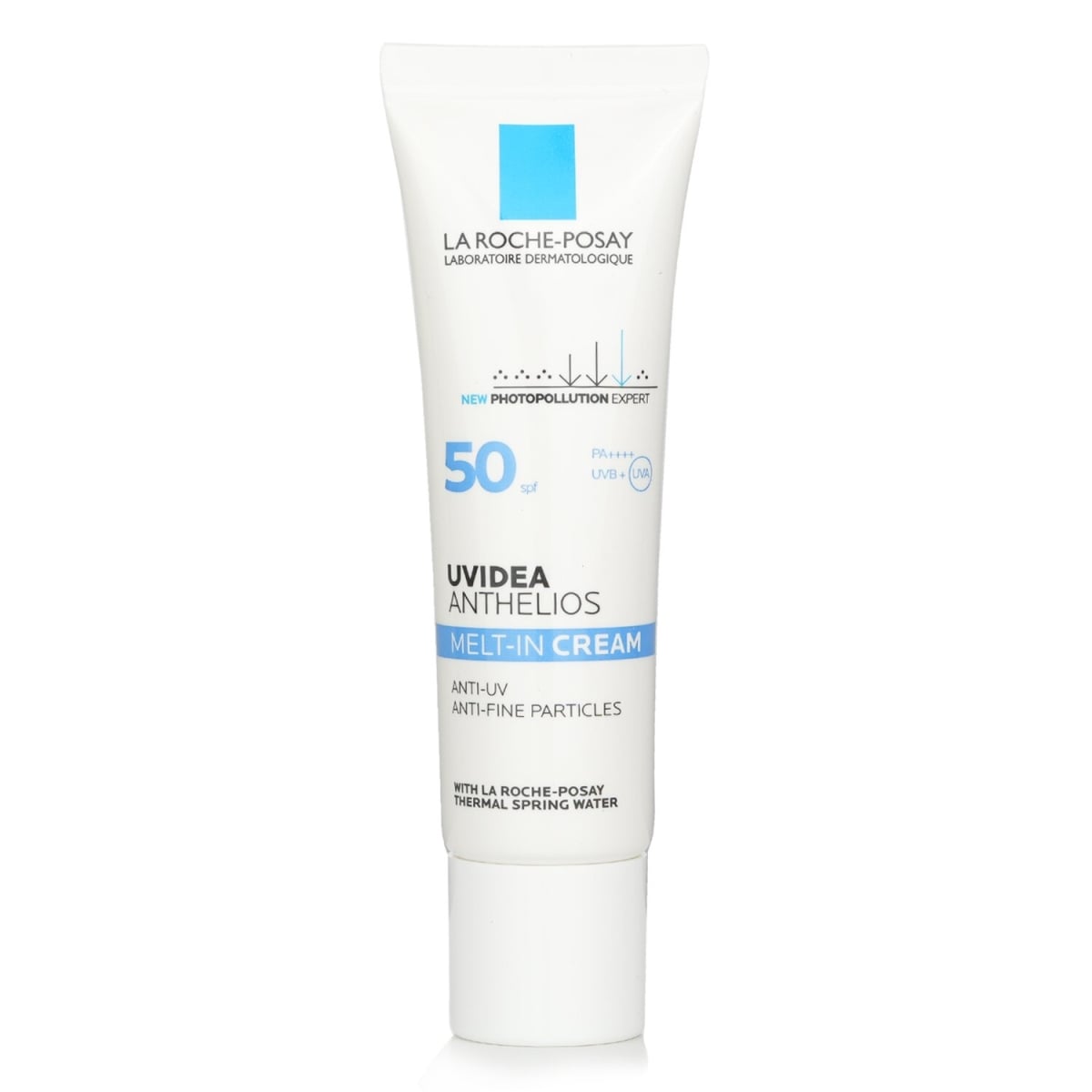



La Roche-Posay Sunscreen Makeup Base UVidea XL SPF50 PA++++ 30ml
La Roche-PosayAnalysis updated September 2026 · How Scout scores
At a glance
Summary
This sunscreen contains beneficial ingredients like glycerin, dimethicone, and titanium dioxide, which provide hydration and UV protection. However, the presence of denatured alcohol, which can be drying and irritating, along with TEA and phenoxyethanol, which have potential irritation and contamination risks, lowers its overall safety profile. The combination of these factors results in a mixed assessment, balancing beneficial components with some concerning ingredients.
Key ingredients 30
Shea Butter Oil Cake ExtractVery Good
Shea Butter Oil Cake Extract is derived from shea butter and is known for its moisturizing properties. It helps in nourishing and softening the skin. It is considered safe and beneficial for most skin types.
Risks
There are minimal risks, though it may cause allergic reactions in individuals sensitive to nuts.
Benefits
It provides excellent moisturizing and nourishing benefits to the skin.
TocopherolVery Good
Tocopherol, also known as Vitamin E, is an antioxidant that helps protect the skin from free radical damage. It is widely used in skincare products for its protective and moisturizing properties. It is considered safe and beneficial for most skin types.
Risks
There are minimal risks, though it may cause irritation in very sensitive individuals.
Benefits
Tocopherol provides antioxidant protection and helps maintain skin health.
GlycerinGood
Glycerin is a humectant that attracts moisture to the skin, keeping it hydrated. It is widely used in skincare products for its moisturizing properties. It is considered safe and beneficial for most skin types.
Risks
There are minimal risks associated with glycerin, though it may cause irritation in very sensitive individuals.
Benefits
Glycerin helps maintain skin hydration and improves skin barrier function.
WaterNeutral
Water is a common solvent used in cosmetics to dissolve other ingredients. It helps in the application and absorption of the product. It does not have any direct benefits or risks associated with its use.
Risks
There are no significant risks associated with water in cosmetics.
Benefits
Water helps in the even distribution of other ingredients.
Ethylhexyl MethoxysilicateNeutral
Ethylhexyl Methoxysilicate is used as a film-forming agent in sunscreens. It helps in creating a protective layer on the skin. It is generally considered safe for use in cosmetics.
Risks
There are no significant risks associated with this ingredient.
Benefits
It helps in forming a protective barrier on the skin.
Drometrizol TrisiloxaneNeutral
Drometrizol Trisiloxane is a UV filter that helps protect the skin from harmful UV rays. It is commonly used in sunscreens for its effectiveness. It is generally considered safe for use in cosmetics.
Risks
There are no significant risks associated with this ingredient.
Benefits
It provides effective protection against UV radiation.
Titanium DioxideNeutral
Standard formulation ingredient — neither beneficial nor harmful at typical use.
Risks
There are minimal risks, though inhalation of its powder form should be avoided.
Benefits
It offers effective protection against UV radiation.
Pentylene GlycolNeutral
Pentylene Glycol is used as a humectant and solvent in cosmetics. It helps in retaining moisture and improving the texture of the product. It is generally considered safe for use in cosmetics.
Risks
There are no significant risks associated with this ingredient.
Benefits
It helps in maintaining skin hydration.
Terephthalylidene Dicamphor Sulfonic AcidNeutral
This ingredient is a chemical UV filter that helps protect the skin from UV rays. It is commonly used in sunscreens for its effectiveness. It is generally considered safe for use in cosmetics.
Risks
There are no significant risks associated with this ingredient.
Benefits
It provides effective protection against UV radiation.
Hexyl Diethylamino Hydroxybenzoyl BenzoateNeutral
This ingredient is a chemical UV filter that helps protect the skin from UVA rays. It is effective in providing long-lasting sun protection. It is generally considered safe for use in cosmetics.
Risks
There are no significant risks associated with this ingredient.
Benefits
It offers effective protection against UVA radiation.
Bis-Ethylhexyloxyphenol Methoxyphenyl TriazineNeutral
This ingredient is a chemical UV filter that helps protect the skin from UV rays. It is effective in providing broad-spectrum sun protection. It is generally considered safe for use in cosmetics.
Risks
There are no significant risks associated with this ingredient.
Benefits
It provides effective protection against UV radiation.
Stearic AcidNeutral
Stearic Acid is a fatty acid used as an emulsifier and thickener in cosmetics. It helps in stabilizing formulations and improving texture. It is generally considered safe for use in cosmetics.
Risks
There are no significant risks associated with this ingredient.
Benefits
It helps in stabilizing and thickening formulations.
K Cetyl PhosphateNeutral
K Cetyl Phosphate is used as an emulsifier in cosmetics. It helps in blending oil and water components. It is generally considered safe for use in cosmetics.
Risks
There are no significant risks associated with this ingredient.
Benefits
It helps in stabilizing emulsions.
Aluminum HydroxideNeutral
Aluminum Hydroxide is used as a thickening agent and opacifier in cosmetics. It helps in improving the texture and appearance of products. It is generally considered safe for use in cosmetics.
Risks
There are no significant risks associated with this ingredient.
Benefits
It helps in improving product texture and appearance.
BG (Butylene Glycol)Neutral
Butylene Glycol is used as a humectant and solvent in cosmetics. It helps in retaining moisture and improving the texture of the product. It is generally considered safe for use in cosmetics.
Risks
There are no significant risks associated with this ingredient.
Benefits
It helps in maintaining skin hydration.
Caprylyl GlycolNeutral
Caprylyl Glycol is used as a humectant and skin conditioning agent in cosmetics. It helps in retaining moisture and improving the texture of the product. It is generally considered safe for use in cosmetics.
Risks
There are no significant risks associated with this ingredient.
Benefits
It helps in maintaining skin hydration.
CarbomerNeutral
Carbomer is used as a thickening agent in cosmetics. It helps in stabilizing formulations and improving texture. It is generally considered safe for use in cosmetics.
Risks
There are no significant risks associated with this ingredient.
Benefits
It helps in stabilizing and thickening formulations.
CetanolNeutral
Cetanol is a fatty alcohol used as an emollient and thickener in cosmetics. It helps in improving the texture and feel of products. It is generally considered safe for use in cosmetics.
Risks
There are no significant risks associated with this ingredient.
Benefits
It helps in improving product texture and feel.
EDTA-2NaNeutral
EDTA-2Na is used as a chelating agent in cosmetics. It helps in stabilizing formulations by binding metal ions. It is generally considered safe for use in cosmetics.
Risks
There are no significant risks associated with this ingredient.
Benefits
It helps in stabilizing formulations by binding metal ions.
Glyceryl StearateNeutral
Glyceryl Stearate is used as an emulsifier and emollient in cosmetics. It helps in blending oil and water components and improving texture. It is generally considered safe for use in cosmetics.
Risks
There are no significant risks associated with this ingredient.
Benefits
It helps in stabilizing emulsions and improving texture.
Palmitic AcidNeutral
Palmitic Acid is a fatty acid used as an emollient and thickener in cosmetics. It helps in improving the texture and feel of products. It is generally considered safe for use in cosmetics.
Risks
There are no significant risks associated with this ingredient.
Benefits
It helps in improving product texture and feel.
PEG-100 StearateNeutral
PEG-100 Stearate is used as an emulsifier in cosmetics. It helps in blending oil and water components. It is generally considered safe for use in cosmetics.
Risks
There are no significant risks associated with this ingredient.
Benefits
It helps in stabilizing emulsions.
Sodium Cocoyl SarcosineNeutral
Sodium Cocoyl Sarcosine is used as a surfactant and cleansing agent in cosmetics. It helps in improving the texture and feel of products. It is generally considered safe for use in cosmetics.
Risks
There are no significant risks associated with this ingredient.
Benefits
It helps in improving product texture and feel.
TromethamineNeutral
Tromethamine is used as a pH adjuster in cosmetics. It helps in stabilizing formulations by maintaining the desired pH level. It is generally considered safe for use in cosmetics.
Risks
There are no significant risks associated with this ingredient.
Benefits
It helps in stabilizing formulations by maintaining the desired pH level.
Xanthan GumNeutral
Xanthan Gum is used as a thickening agent in cosmetics. It helps in stabilizing formulations and improving texture. It is generally considered safe for use in cosmetics.
Risks
There are no significant risks associated with this ingredient.
Benefits
It helps in stabilizing and thickening formulations.
PG (Propylene Glycol)Bad
Processed additive flagged under Scout's ingredient doctrine.
Risks
In rare cases, it may cause skin irritation or allergic reactions.
Benefits
It helps in maintaining moisture levels in the skin.
DimethiconeBad
Occlusive silicone film-former — flagged under clean-beauty doctrine.
Risks
There are minimal risks, though it may cause breakouts in acne-prone skin.
Benefits
Dimethicone provides a smooth application and helps retain skin moisture.
TEA (Triethanolamine)Bad
Triethanolamine is used to adjust the pH of cosmetics. It can cause skin irritation and has potential contamination risks with nitrosamines. It is generally considered less favorable in skincare products.
Risks
It can cause skin irritation and has potential contamination risks.
Benefits
It helps in stabilizing the pH of the product.
PhenoxyethanolBad
Phenoxyethanol is used as a preservative in cosmetics. It can cause skin irritation and allergic reactions in some individuals. It is generally considered less favorable in skincare products.
Risks
It can cause skin irritation and allergic reactions.
Benefits
It helps in preserving the product by preventing microbial growth.
Denatured AlcoholVery Bad
Denatured Alcohol is used as a solvent and astringent in cosmetics. It can be drying and irritating to the skin, especially in high concentrations. It is generally considered less favorable in skincare products.
Risks
It can cause skin dryness and irritation, particularly in sensitive skin.
Benefits
It helps in quick drying of the product.
Get the full breakdown in the Scout appTake Scout shopping
Scan any product to see lab results, healthy alternatives, and your personalized analysis.
Download on theApp Store GET IT ONGoogle Play