
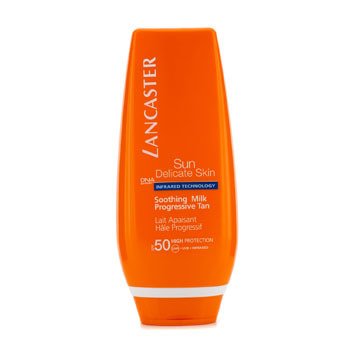
LancasterSun Care Ultra Soothing Protection (Delicate Skin) SPF50 125ml/4.2oz
Analysis updated July 2026 · How Scout scores
At a glance
Summary
This sunscreen contains a mix of both beneficial and concerning ingredients. It includes natural extracts like jasmine and bitter orange flower, which are positive, but also contains synthetic fragrance, which is a potential irritant. Additionally, the presence of chemical UV filters and other synthetic compounds contributes to a moderate processing level, impacting its overall safety profile.
Key ingredients 39
Caprylic/Capric TriglycerideGood
This ingredient is an emollient derived from coconut oil and glycerin. It helps to moisturize and soften the skin. It is well-tolerated and non-irritating.
Risks
Minimal risk of irritation or allergic reaction.
Benefits
Provides excellent skin conditioning and moisturizing properties.
BisabololGood
Bisabolol is a natural compound known for its soothing and anti-inflammatory properties. It helps to calm irritated skin and reduce redness. It is well-tolerated and beneficial for sensitive skin.
Risks
Minimal risk of irritation or allergic reaction.
Benefits
Provides soothing and anti-inflammatory benefits to the skin.
Hydrolyzed Citrus Aurantium Dulcis Fruit ExtractGood
This extract is derived from oranges and is known for its antioxidant properties. It helps to protect the skin from oxidative stress and environmental damage. It is beneficial for maintaining healthy skin.
Risks
Minimal risk of irritation or allergic reaction.
Benefits
Provides antioxidant benefits and helps to protect the skin.
Jasminum Officinale (Jasmine) Flower ExtractGood
Jasmine flower extract is known for its soothing and moisturizing properties. It helps to calm and hydrate the skin, making it suitable for sensitive skin. It is well-tolerated and beneficial for skin health.
Risks
Minimal risk of irritation or allergic reaction.
Benefits
Provides soothing and moisturizing benefits to the skin.
TocopherolGood
Tocopherol, also known as Vitamin E, is a powerful antioxidant. It helps to protect the skin from oxidative stress and environmental damage. It is beneficial for maintaining healthy skin.
Risks
Minimal risk of irritation or allergic reaction.
Benefits
Provides antioxidant benefits and helps to protect the skin.
GluconolactoneGood
Beneficial ingredient — whole-food or functional value in this product class.
Risks
Low risk of skin irritation.
Benefits
Provides exfoliating and moisturizing benefits to the skin.
Mica (Ci 77019)Good
Beneficial ingredient — whole-food or functional value in this product class.
Risks
Low risk of skin irritation.
Benefits
Provides shimmer and improves the appearance of the product.
GlycerinGood
Glycerin is a humectant used to attract moisture to the skin. It helps to improve skin hydration and maintain moisture balance. It is well-tolerated and beneficial for all skin types.
Risks
Minimal risk of irritation or allergic reaction.
Benefits
Provides excellent moisturizing and hydrating benefits to the skin.
Aqua/Water/EauNeutral
Water is a common solvent used in cosmetic formulations. It helps dissolve other ingredients and provides a base for the product. It does not have any direct benefits or risks.
Benefits
Provides a base for the formulation and helps in the application of the product.
PropanediolNeutral
Propanediol is used as a solvent and skin-conditioning agent. It helps improve the texture and feel of the product. It is generally considered safe for use in cosmetics.
Risks
May cause mild irritation in sensitive individuals.
Benefits
Improves skin hydration and enhances the absorption of other ingredients.
Isoamyl p-MethoxycinnamateNeutral
This ingredient is a UV filter used to protect the skin from UVB radiation. It is commonly used in sunscreens for its effectiveness. It is generally considered safe for use in cosmetics.
Risks
Potential for skin irritation in sensitive individuals.
Benefits
Provides protection against UVB rays, reducing the risk of sunburn.
Sodium ChlorideNeutral
Sodium chloride is used as a thickening agent in cosmetics. It helps to stabilize the formulation and improve texture. It is generally considered safe for use in cosmetics.
Risks
Excessive use may lead to dryness or irritation.
Benefits
Helps to stabilize the formulation and improve the texture of the product.
TribeheninNeutral
Tribehenin is used as an emollient and thickening agent in cosmetics. It helps to improve the texture and feel of the product. It is generally considered safe for use in cosmetics.
Risks
Low risk of skin irritation.
Benefits
Improves the texture and moisturizing properties of the product.
HydroxyacetophenoneNeutral
Hydroxyacetophenone is an antioxidant and preservative used in cosmetics. It helps to stabilize the formulation and protect it from degradation. It is generally considered safe for use in cosmetics.
Risks
Low risk of skin irritation.
Benefits
Provides antioxidant benefits and helps to stabilize the formulation.
Silica Dimethyl SilylateNeutral
Silica dimethyl silylate is used as a thickening agent and absorbent in cosmetics. It helps to improve the texture and mattify the skin. It is generally considered safe for use in cosmetics.
Risks
Low risk of skin irritation.
Benefits
Improves the texture and mattifying properties of the product.
Stearalkonium HectoriteNeutral
Stearalkonium hectorite is used as a thickening agent and stabilizer in cosmetics. It helps to improve the texture and consistency of the product. It is generally considered safe for use in cosmetics.
Risks
Low risk of skin irritation.
Benefits
Improves the texture and stability of the product.
Polyglyceryl-3 DiisostearateNeutral
Polyglyceryl-3 diisostearate is an emulsifier used to blend oil and water-based ingredients. It helps to stabilize the formulation and improve texture. It is generally considered safe for use in cosmetics.
Risks
Low risk of skin irritation.
Benefits
Helps to stabilize the formulation and improve texture.
TriethoxycaprylylsilaneNeutral
Triethoxycaprylylsilane is used as a surface modifier in cosmetics. It helps to improve the spreadability and adhesion of the product. It is generally considered safe for use in cosmetics.
Risks
Low risk of skin irritation.
Benefits
Improves the spreadability and adhesion of the product.
Pentylene GlycolNeutral
Pentylene glycol is used as a humectant and solvent in cosmetics. It helps to improve skin hydration and enhance the absorption of other ingredients. It is generally considered safe for use in cosmetics.
Risks
Low risk of skin irritation.
Benefits
Improves skin hydration and enhances the absorption of other ingredients.
Trisodium Ethylenediamine DisuccinateNeutral
Trisodium ethylenediamine disuccinate is a chelating agent used to stabilize cosmetic formulations. It helps to prevent the degradation of the product by binding metal ions. It is generally considered safe for use in cosmetics.
Risks
Low risk of skin irritation.
Benefits
Helps to stabilize the formulation and prevent degradation.
Citrus Aurantium Amara (Bitter Orange) Flower ExtractNeutral
Bitter orange flower extract is used for its fragrance and potential antioxidant properties. It helps to impart a pleasant scent to the product. It is generally considered safe for use in cosmetics.
Risks
Potential for skin irritation in sensitive individuals.
Benefits
Provides a pleasant scent and potential antioxidant benefits.
Dimethylmethoxy ChromanolNeutral
Dimethylmethoxy chromanol is an antioxidant used in cosmetics. It helps to protect the skin from oxidative stress and environmental damage. It is generally considered safe for use in cosmetics.
Risks
Low risk of skin irritation.
Benefits
Provides antioxidant benefits and helps to protect the skin.
Gossypium Hirsutum (Cotton) ExtractNeutral
Cotton extract is used for its soothing and conditioning properties. It helps to calm and soften the skin. It is generally considered safe for use in cosmetics.
Risks
Low risk of skin irritation.
Benefits
Provides soothing and conditioning benefits to the skin.
FarnesolNeutral
Farnesol is used as a fragrance ingredient and skin-conditioning agent. It helps to impart a pleasant scent and improve skin texture. It is generally considered safe for use in cosmetics.
Risks
Potential for skin irritation in sensitive individuals.
Benefits
Provides a pleasant scent and improves skin texture.
Calcium GluconateNeutral
Calcium gluconate is used as a skin-conditioning agent in cosmetics. It helps to improve skin texture and hydration. It is generally considered safe for use in cosmetics.
Risks
Low risk of skin irritation.
Benefits
Improves skin texture and hydration.
Titanium Dioxide (Ci 77891)Neutral
Titanium dioxide is a mineral sunscreen agent that provides broad-spectrum UV protection. It is effective in protecting the skin from both UVA and UVB rays. It is generally considered safe for use in cosmetics.
Risks
Potential for skin irritation in sensitive individuals.
Benefits
Provides broad-spectrum UV protection, reducing the risk of sunburn.
Iron Oxides (Ci 77491, Ci 77492, Ci 77499)Neutral
Iron oxides are used as colorants in cosmetics. They help to provide pigmentation and improve the appearance of the product. They are generally considered safe for use in cosmetics.
Risks
Low risk of skin irritation.
Benefits
Provides pigmentation and improves the appearance of the product.
Diisopropyl SebacateNeutral
Diisopropyl sebacate is used as an emollient and solvent in cosmetics. It helps to improve the texture and feel of the product. It is generally considered safe for use in cosmetics.
Risks
Low risk of skin irritation.
Benefits
Improves the texture and feel of the product.
Diisopropyl AdipateNeutral
Diisopropyl adipate is used as an emollient and solvent in cosmetics. It helps to improve the texture and feel of the product. It is generally considered safe for use in cosmetics.
Risks
Low risk of skin irritation.
Benefits
Improves the texture and feel of the product.
Butyl MethoxydibenzoylmethaneNeutral
Butyl methoxydibenzoylmethane is a UVA filter used in sunscreens. It helps to protect the skin from UVA radiation, which can cause premature aging. It is generally considered safe for use in cosmetics.
Risks
Potential for skin irritation in sensitive individuals.
Benefits
Provides protection against UVA rays, reducing the risk of premature aging.
Decyl CocoateNeutral
Decyl cocoate is used as an emollient and skin-conditioning agent in cosmetics. It helps to improve the texture and feel of the product. It is generally considered safe for use in cosmetics.
Risks
Low risk of skin irritation.
Benefits
Improves the texture and feel of the product.
SilicaNeutral
Silica is used as an absorbent and texturizing agent in cosmetics. It helps to improve the texture and mattify the skin. It is generally considered safe for use in cosmetics.
Risks
Low risk of skin irritation.
Benefits
Improves the texture and mattifying properties of the product.
Bisethylhexyloxyphenol Methoxyphenyl TriazineNeutral
This ingredient is a broad-spectrum UV filter used in sunscreens. It helps to protect the skin from both UVA and UVB radiation. It is generally considered safe for use in cosmetics.
Risks
Potential for skin irritation in sensitive individuals.
Benefits
Provides broad-spectrum UV protection, reducing the risk of sunburn and premature aging.
Ethylhexyl TriazoneNeutral
Ethylhexyl triazone is a UVB filter used in sunscreens. It helps to protect the skin from UVB radiation, which can cause sunburn. It is generally considered safe for use in cosmetics.
Risks
Potential for skin irritation in sensitive individuals.
Benefits
Provides protection against UVB rays, reducing the risk of sunburn.
Polyglyceryl-3 PolyricinoleateNeutral
Polyglyceryl-3 polyricinoleate is an emulsifier used to blend oil and water-based ingredients. It helps to stabilize the formulation and improve texture. It is generally considered safe for use in cosmetics.
Risks
Low risk of skin irritation.
Benefits
Helps to stabilize the formulation and improve texture.
Ethylhexyl SalicylateNeutral
Ethylhexyl salicylate is a UVB filter used in sunscreens. It helps to protect the skin from UVB radiation, which can cause sunburn. It is generally considered safe for use in cosmetics.
Risks
Potential for skin irritation in sensitive individuals.
Benefits
Provides protection against UVB rays, reducing the risk of sunburn.
Sodium BenzoateBad
Synthetic preservative that can form benzene in the presence of vitamin C.
Risks
May cause mild irritation in sensitive individuals.
Benefits
Helps to preserve the product and prevent microbial contamination.
DimethiconeBad
Occlusive silicone film-former — flagged under clean-beauty doctrine.
Risks
Low risk of skin irritation.
Benefits
Improves the texture and feel of the product and provides a protective barrier on the skin.
Parfum/FragranceVery Bad
Fragrance is used to impart a pleasant scent to cosmetics. However, it can cause allergic reactions and skin irritation in sensitive individuals. It is often criticized for its potential to cause adverse skin reactions.
Risks
High risk of skin irritation and allergic reactions.
Benefits
Provides a pleasant scent to the product.
Get the full breakdown in the Scout appTake Scout shopping
Scan any product to see lab results, healthy alternatives, and your personalized analysis.
Download on theApp Store GET IT ONGoogle Play