
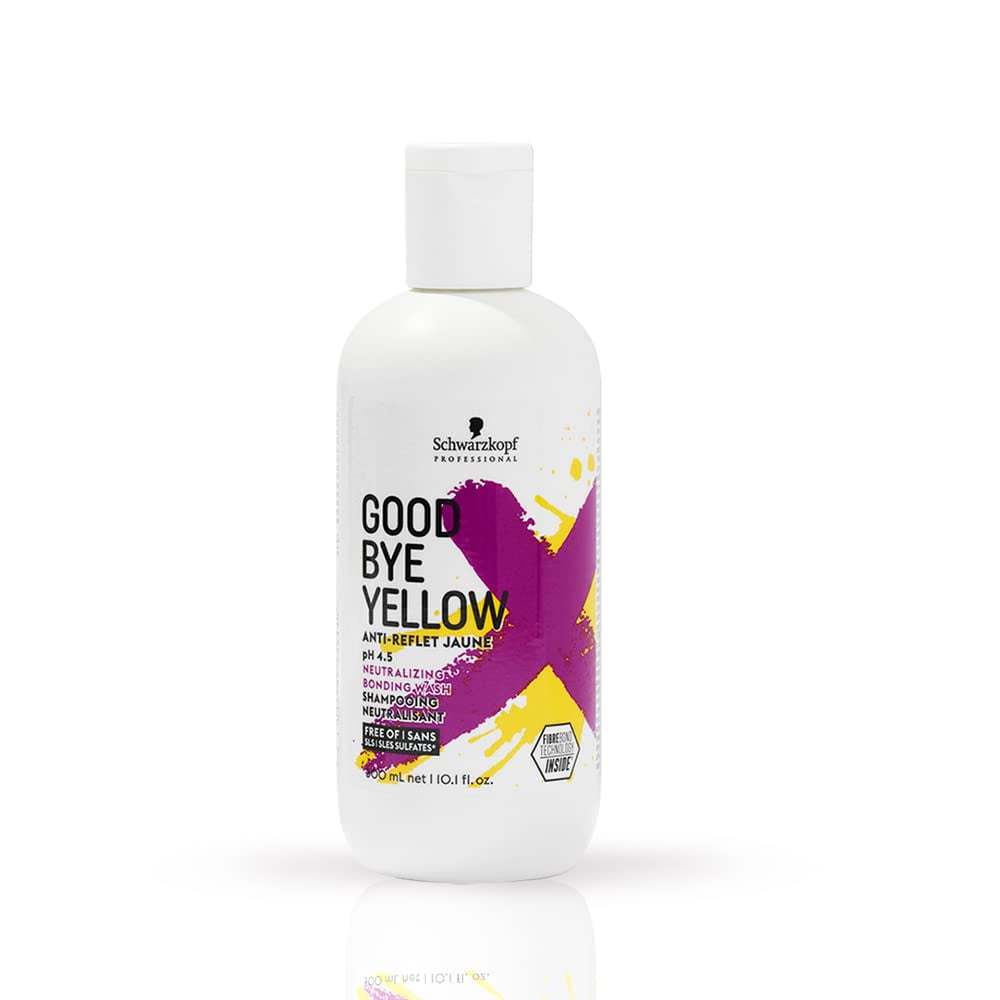

Schwarzkopf Goodbye Yellow Shampoo
Analysis updated July 2026 · How Scout scores
At a glance
Summary
This shampoo contains several beneficial ingredients such as gentle coconut-derived surfactants and Marula oil, which are known for their mildness and nourishing properties. However, the presence of sodium chloride, synthetic fragrance, and benzyl alcohol, which can be drying or irritating, affects its overall safety and suitability for sensitive scalps. The product is moderately processed, which further influences its rating.
Key ingredients 28
Coco-GlucosideVery Good
Coco-Glucoside is a non-ionic surfactant derived from coconut oil and glucose. It is known for its gentle cleansing properties and is suitable for sensitive skin. It is biodegradable and environmentally friendly.
Risks
There are no significant risks associated with Coco-Glucoside.
Benefits
It provides mild cleansing and is considered safe for use in natural and organic formulations.
Sclerocarya Birrea Seed OilVery Good
Sclerocarya Birrea Seed Oil, also known as Marula Oil, is rich in antioxidants and fatty acids. It provides deep hydration and nourishment to the hair and scalp. It is known for its ability to improve hair elasticity and shine.
Risks
There are no significant risks associated with Marula Oil.
Benefits
It deeply moisturizes and conditions the hair, enhancing its softness and manageability.
Sodium Methyl Cocoyl TaurateGood
Sodium Methyl Cocoyl Taurate is a gentle surfactant derived from coconut oil. It is known for its mildness and ability to cleanse without causing dryness. It is suitable for sensitive skin and hair types.
Risks
There are minimal risks associated with this ingredient, though it may cause mild irritation in very sensitive individuals.
Benefits
It effectively cleanses while maintaining the natural moisture balance of the hair and scalp.
PanthenolGood
Panthenol, also known as provitamin B5, is a moisturizing agent that helps to improve hair elasticity and strength. It penetrates the hair shaft to provide long-lasting hydration. It is widely used in hair care products for its conditioning benefits.
Risks
There are minimal risks associated with Panthenol.
Benefits
It enhances hair moisture retention, making it softer and more manageable.
AquaNeutral
Aqua, or water, is a common solvent used in cosmetic formulations. It acts as a base for the product, allowing other ingredients to dissolve and mix properly. It does not have any direct benefits or risks associated with its use.
Risks
There are no known risks associated with the use of water in cosmetic products.
Benefits
Water helps to dissolve and distribute other ingredients evenly throughout the product.
Cocamidopropyl BetaineNeutral
Standard formulation ingredient — neither beneficial nor harmful at typical use.
Risks
In rare cases, it may cause skin irritation or allergic reactions in sensitive individuals.
Benefits
It provides gentle cleansing and helps to create a rich lather, enhancing the user experience.
Sodium ChlorideNeutral
Standard formulation ingredient — neither beneficial nor harmful at typical use.
Risks
Excessive use can lead to dryness and irritation of the scalp.
Benefits
It helps to increase the viscosity of the shampoo, improving its texture and application.
Sodium C14-16 Olefin SulfonateNeutral
Sodium C14-16 Olefin Sulfonate is a surfactant used for its cleansing and foaming properties. It is effective at removing dirt and oil from the hair. However, it can be harsh on sensitive scalps.
Risks
It may cause dryness or irritation in some individuals, particularly those with sensitive skin.
Benefits
It provides effective cleansing and helps to create a rich lather.
PEG-120 Methyl Glucose DioleateNeutral
PEG-120 Methyl Glucose Dioleate is an emulsifier and thickener used to stabilize formulations. It helps to improve the texture and spreadability of the product. It is generally considered safe for use in cosmetics.
Risks
There are minimal risks, though it may cause irritation in very sensitive individuals.
Benefits
It enhances the texture and consistency of the shampoo, making it easier to apply.
Polyquaternium-10Neutral
Polyquaternium-10 is a conditioning agent that helps to reduce static and improve hair texture. It forms a protective film on the hair, enhancing its smoothness. It is commonly used in hair care products for its detangling properties.
Risks
There are minimal risks, though it may cause buildup with prolonged use.
Benefits
It improves hair manageability and reduces frizz, making it easier to style.
PEG-7 Glyceryl CocoateNeutral
PEG-7 Glyceryl Cocoate is an emollient and emulsifier derived from coconut oil. It helps to improve the texture and spreadability of the product. It is generally considered safe for use in cosmetics.
Risks
There are minimal risks, though it may cause irritation in very sensitive individuals.
Benefits
It enhances the texture and consistency of the shampoo, making it easier to apply.
Caprylyl/Capryl GlucosideNeutral
Caprylyl/Capryl Glucoside is a mild surfactant derived from plant-based fatty acids and glucose. It is used for its gentle cleansing properties and is suitable for sensitive skin. It is biodegradable and environmentally friendly.
Risks
There are no significant risks associated with this ingredient.
Benefits
It provides mild cleansing and is considered safe for use in natural and organic formulations.
Citric AcidNeutral
Citric Acid is used to adjust the pH of cosmetic formulations. It helps to maintain the stability and effectiveness of the product. It is generally considered safe for use in cosmetics.
Risks
In high concentrations, it may cause irritation to sensitive skin.
Benefits
It helps to balance the pH of the shampoo, ensuring it is gentle on the hair and scalp.
PEG-40 Hydrogenated Castor OilNeutral
PEG-40 Hydrogenated Castor Oil is an emulsifier and surfactant used to stabilize formulations. It helps to improve the texture and spreadability of the product. It is generally considered safe for use in cosmetics.
Risks
There are minimal risks, though it may cause irritation in very sensitive individuals.
Benefits
It enhances the texture and consistency of the shampoo, making it easier to apply.
Glycol DistearateNeutral
Glycol Distearate is an emollient and opacifying agent used to improve the texture and appearance of cosmetic products. It helps to create a pearlescent effect in shampoos. It is generally considered safe for use in cosmetics.
Risks
There are minimal risks, though it may cause irritation in very sensitive individuals.
Benefits
It enhances the visual appeal of the shampoo, giving it a luxurious appearance.
Coconut AcidNeutral
Coconut Acid is a fatty acid derived from coconut oil. It is used as a surfactant and cleansing agent in cosmetic formulations. It is generally considered safe for use in cosmetics.
Risks
There are minimal risks, though it may cause irritation in very sensitive individuals.
Benefits
It provides mild cleansing and helps to improve the texture of the product.
Laureth-4Neutral
Laureth-4 is an emulsifier and surfactant used to stabilize formulations and improve texture. It helps to create a smooth and even application of the product. It is generally considered safe for use in cosmetics.
Risks
There are minimal risks, though it may cause irritation in very sensitive individuals.
Benefits
It enhances the texture and consistency of the shampoo, making it easier to apply.
Hydrogenated Castor OilNeutral
Hydrogenated Castor Oil is an emollient used to improve the texture and spreadability of cosmetic products. It helps to condition and soften the hair. It is generally considered safe for use in cosmetics.
Risks
There are minimal risks, though it may cause irritation in very sensitive individuals.
Benefits
It provides conditioning benefits, enhancing the softness and manageability of the hair.
Magnesium CitrateNeutral
Magnesium Citrate is used as a pH adjuster and stabilizer in cosmetic formulations. It helps to maintain the stability and effectiveness of the product. It is generally considered safe for use in cosmetics.
Risks
There are minimal risks associated with this ingredient.
Benefits
It helps to balance the pH of the shampoo, ensuring it is gentle on the hair and scalp.
Succinic AcidNeutral
Succinic Acid is used as a pH adjuster and buffering agent in cosmetic formulations. It helps to maintain the stability and effectiveness of the product. It is generally considered safe for use in cosmetics.
Risks
There are minimal risks associated with this ingredient.
Benefits
It helps to balance the pH of the shampoo, ensuring it is gentle on the hair and scalp.
Acid Violet 43Neutral
Acid Violet 43 is a colorant used to impart a violet hue to the product. It is commonly used in shampoos to neutralize yellow tones in blonde or gray hair. It is generally considered safe for use in cosmetics.
Risks
There are minimal risks, though it may cause irritation in very sensitive individuals.
Benefits
It helps to enhance the appearance of blonde or gray hair by reducing yellow tones.
HC Blue No. 12Neutral
HC Blue No. 12 is a colorant used to impart a blue hue to the product. It is commonly used in shampoos to enhance color vibrancy. It is generally considered safe for use in cosmetics.
Risks
There are minimal risks, though it may cause irritation in very sensitive individuals.
Benefits
It helps to enhance the appearance of colored hair by adding vibrancy.
HC Blue No. 16Neutral
HC Blue No. 16 is a colorant used to impart a blue hue to the product. It is commonly used in shampoos to enhance color vibrancy. It is generally considered safe for use in cosmetics.
Risks
There are minimal risks, though it may cause irritation in very sensitive individuals.
Benefits
It helps to enhance the appearance of colored hair by adding vibrancy.
Lactic AcidNeutral
Lactic Acid is used as a pH adjuster and exfoliant in cosmetic formulations. It helps to maintain the stability and effectiveness of the product. It is generally considered safe for use in cosmetics.
Risks
In high concentrations, it may cause irritation to sensitive skin.
Benefits
It helps to balance the pH of the shampoo, ensuring it is gentle on the hair and scalp.
ParfumBad
Parfum, or fragrance, is used to impart a pleasant scent to the product. However, it can contain a mixture of undisclosed chemicals that may cause irritation or allergic reactions. It is often criticized for its lack of transparency.
Risks
It may cause skin irritation or allergic reactions in sensitive individuals.
Benefits
It provides a pleasant scent, enhancing the sensory experience of using the product.
Sodium BenzoateBad
Synthetic preservative that can form benzene in the presence of vitamin C.
Risks
There are minimal risks, though it may cause irritation in very sensitive individuals.
Benefits
It helps to preserve the product, ensuring its safety and efficacy over time.
Propylene GlycolBad
Processed additive flagged under Scout's ingredient doctrine.
Risks
There are minimal risks, though it may cause irritation in very sensitive individuals.
Benefits
It helps to retain moisture, enhancing the hydration of the hair and scalp.
Benzyl AlcoholBad
Benzyl Alcohol is used as a preservative and solvent in cosmetic formulations. It can be drying and irritating to the skin, especially in high concentrations. It is often criticized for its potential to cause allergic reactions.
Risks
It may cause skin irritation or allergic reactions in sensitive individuals.
Benefits
It helps to preserve the product, ensuring its safety and efficacy over time.
Get the full breakdown in the Scout appTake Scout shopping
Scan any product to see lab results, healthy alternatives, and your personalized analysis.
Download on theApp Store GET IT ONGoogle PlayAmazon pricing & content
Amazon price as of . Product prices and availability are accurate as of the date/time indicated and are subject to change. Any price and availability information displayed on Amazon.com at the time of purchase will apply to the purchase of this product.
CERTAIN CONTENT THAT APPEARS ON THIS SITE COMES FROM AMAZON. THIS CONTENT IS PROVIDED “AS IS” AND IS SUBJECT TO CHANGE OR REMOVAL AT ANY TIME.