
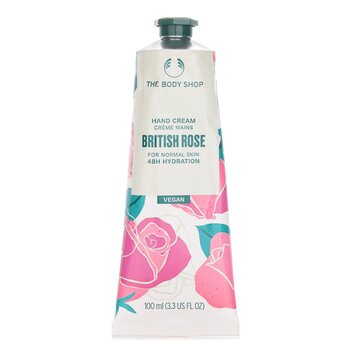



The Body ShopBritish Rose Hand Cream 100ml
Summary
The Body Shop British Rose Hand Cream contains a mix of natural and synthetic ingredients. While it includes beneficial components like rose extract and shea butter, it also features synthetic fragrance, which can be a skin irritant and is penalized. The product is moderately processed, which affects its overall rating, and the presence of synthetic additives further impacts its score.
At a glance
Key ingredients 30
Aqua/Water/Eau
Water is a universal solvent and is used as a base in many cosmetic formulations. It helps dissolve other ingredients and provides hydration. It is essential for the consistency and application of the product.
Risks
There are no significant risks associated with water in cosmetics.
Benefits
Water hydrates the skin and helps in the absorption of other beneficial ingredients.
C12-15 Alkyl Benzoate
C12-15 Alkyl Benzoate is an emollient that helps to soften and smooth the skin. It provides a silky feel and enhances the spreadability of the product. It is commonly used in lotions and creams for its moisturizing properties.
Risks
There are minimal risks, but it may cause irritation in very sensitive skin.
Benefits
It helps to improve skin texture and provides a non-greasy finish.
Parfum/Fragrance
Fragrance is added to cosmetics to provide a pleasant scent. It enhances the sensory experience of using the product. However, it is a common allergen and can cause skin irritation.
Risks
Fragrance can cause allergic reactions and skin irritation, especially in sensitive individuals.
Benefits
It provides a pleasant aroma, enhancing the user experience.
Betaine
Betaine is a natural osmolyte that helps maintain skin hydration. It is derived from sugar beets and is known for its moisturizing properties. It helps to protect the skin from environmental stress.
Risks
There are minimal risks associated with betaine.
Benefits
Betaine helps to improve skin hydration and provides a soothing effect.
Glycerin
Glycerin is a humectant that attracts moisture to the skin. It is widely used in skincare for its ability to hydrate and maintain skin moisture levels. It helps to improve skin barrier function.
Risks
There are minimal risks, but excessive use can lead to a sticky feeling.
Benefits
Glycerin effectively hydrates the skin and improves its smoothness.
Polysorbate 60
Polysorbate 60 is an emulsifier that helps to mix oil and water-based ingredients. It stabilizes formulations and ensures even distribution of ingredients. It is commonly used in creams and lotions.
Risks
It may cause irritation in sensitive skin types.
Benefits
It helps to maintain product consistency and enhances texture.
Benzyl Alcohol
Benzyl Alcohol is used as a preservative and solvent in cosmetics. It helps to prevent microbial growth and extend the shelf life of products. It also acts as a fragrance component.
Risks
It can cause skin irritation and allergic reactions in some individuals.
Benefits
It helps to preserve the product and maintain its efficacy.
Glyceryl Stearate
Glyceryl Stearate is an emulsifier and emollient that helps to stabilize formulations. It provides a smooth texture and enhances the moisturizing properties of the product. It is derived from glycerin and stearic acid.
Risks
There are minimal risks, but it may cause mild irritation in sensitive skin.
Benefits
It helps to improve skin texture and provides a creamy consistency.
PEG-100 Stearate
PEG-100 Stearate is an emulsifier that helps to blend oil and water-based ingredients. It stabilizes formulations and improves texture. It is commonly used in lotions and creams for its emulsifying properties.
Risks
There is a potential risk of contamination with 1,4-dioxane, a byproduct of ethoxylation.
Benefits
It helps to maintain product stability and enhances application.
Phenoxyethanol
Phenoxyethanol is a preservative used to prevent microbial growth in cosmetics. It is effective against a broad spectrum of microorganisms. It is commonly used as an alternative to parabens.
Risks
It can cause skin irritation and allergic reactions in some individuals.
Benefits
It helps to preserve the product and maintain its safety.
Butyrospermum Parkii Butter/Butyrospermum Parkii (Shea) Butter
Shea Butter is a natural fat extracted from the nuts of the shea tree. It is known for its moisturizing and anti-inflammatory properties. It helps to soften and protect the skin.
Risks
There are minimal risks, but it may cause allergic reactions in individuals with nut allergies.
Benefits
Shea Butter deeply moisturizes the skin and improves its elasticity.
Acrylates/C10-30 Alkyl Acrylate Crosspolymer
This ingredient is used as a thickening agent and stabilizer in cosmetic formulations. It helps to create a gel-like consistency and improve product texture. It is commonly used in lotions and creams.
Risks
There are minimal risks, but it may cause irritation in sensitive skin.
Benefits
It helps to enhance product texture and provides a smooth application.
Bertholletia Excelsa Seed Oil
Bertholletia Excelsa Seed Oil, also known as Brazil Nut Oil, is rich in fatty acids and vitamins. It provides deep hydration and nourishment to the skin. It is known for its emollient properties.
Risks
There are minimal risks, but it may cause allergic reactions in individuals with nut allergies.
Benefits
It helps to improve skin hydration and provides a silky feel.
Sclerocarya Birrea Seed Oil
Sclerocarya Birrea Seed Oil, also known as Marula Oil, is rich in antioxidants and fatty acids. It provides intense hydration and helps to improve skin elasticity. It is known for its anti-aging properties.
Risks
There are minimal risks, but it may cause allergic reactions in sensitive individuals.
Benefits
It helps to nourish the skin and reduce the appearance of fine lines.
Sodium Hydroxide
Sodium Hydroxide is used to adjust the pH of cosmetic formulations. It helps to maintain the stability and efficacy of the product. It is commonly used in small amounts for pH regulation.
Risks
In high concentrations, it can be corrosive and cause skin irritation.
Benefits
It helps to ensure the product is at the correct pH for skin compatibility.
Benzyl Salicylate
Benzyl Salicylate is used as a fragrance ingredient and UV light absorber. It helps to enhance the scent of the product and protect it from UV degradation. It is commonly used in perfumes and lotions.
Risks
It can cause allergic reactions and skin irritation in sensitive individuals.
Benefits
It provides a pleasant scent and helps to stabilize the product.
Limonene
Limonene is a fragrance ingredient derived from citrus oils. It provides a fresh, citrus scent and is used to enhance the aroma of cosmetic products. It is commonly used in perfumes and lotions.
Risks
It can cause skin irritation and allergic reactions, especially when oxidized.
Benefits
It provides a refreshing scent and enhances the sensory experience.
Disodium EDTA
Disodium EDTA is a chelating agent that helps to stabilize cosmetic formulations. It binds to metal ions and prevents them from affecting the product's stability and efficacy. It is commonly used in lotions and creams.
Risks
There are minimal risks, but it may cause irritation in sensitive skin.
Benefits
It helps to maintain product stability and extend shelf life.
Citronellol
Citronellol is a fragrance ingredient with a floral scent. It is used to enhance the aroma of cosmetic products and is commonly found in perfumes and lotions. It is derived from essential oils such as rose and geranium.
Risks
It can cause skin irritation and allergic reactions in sensitive individuals.
Benefits
It provides a pleasant floral scent and enhances the sensory experience.
Geraniol
Geraniol is a fragrance ingredient with a rose-like scent. It is used to enhance the aroma of cosmetic products and is commonly found in perfumes and lotions. It is derived from essential oils such as rose and citronella.
Risks
It can cause skin irritation and allergic reactions in sensitive individuals.
Benefits
It provides a pleasant floral scent and enhances the sensory experience.
PEG-30 Dipolyhydroxystearate
PEG-30 Dipolyhydroxystearate is an emulsifier that helps to blend oil and water-based ingredients. It stabilizes formulations and improves texture. It is commonly used in lotions and creams for its emulsifying properties.
Risks
There is a potential risk of contamination with 1,4-dioxane, a byproduct of ethoxylation.
Benefits
It helps to maintain product stability and enhances application.
Trideceth-6
Trideceth-6 is a surfactant and emulsifier used in cosmetic formulations. It helps to blend oil and water-based ingredients and improve texture. It is commonly used in lotions and creams.
Risks
There is a potential risk of contamination with 1,4-dioxane, a byproduct of ethoxylation.
Benefits
It helps to maintain product stability and enhances application.
Rose Extract
Rose Extract is derived from rose petals and is known for its soothing and anti-inflammatory properties. It provides a pleasant scent and is used to enhance the aroma of cosmetic products. It is commonly used in lotions and creams.
Risks
There are minimal risks, but it may cause allergic reactions in sensitive individuals.
Benefits
It helps to soothe the skin and provides a pleasant floral scent.
Linalool
Linalool is a fragrance ingredient with a floral scent. It is used to enhance the aroma of cosmetic products and is commonly found in perfumes and lotions. It is derived from essential oils such as lavender and coriander.
Risks
It can cause skin irritation and allergic reactions in sensitive individuals.
Benefits
It provides a pleasant floral scent and enhances the sensory experience.
Alpha-Isomethyl Ionone
Alpha-Isomethyl Ionone is a fragrance ingredient with a floral scent. It is used to enhance the aroma of cosmetic products and is commonly found in perfumes and lotions. It is known for its long-lasting fragrance properties.
Risks
It can cause skin irritation and allergic reactions in sensitive individuals.
Benefits
It provides a long-lasting floral scent and enhances the sensory experience.
Citric Acid
Citric Acid is used to adjust the pH of cosmetic formulations. It helps to maintain the stability and efficacy of the product. It is commonly used in small amounts for pH regulation.
Risks
In high concentrations, it can cause skin irritation.
Benefits
It helps to ensure the product is at the correct pH for skin compatibility.
Sodium Benzoate
Sodium Benzoate is a preservative used to prevent microbial growth in cosmetics. It is effective against a broad spectrum of microorganisms. It is commonly used as a preservative in lotions and creams.
Risks
There are minimal risks, but it may cause irritation in sensitive skin.
Benefits
It helps to preserve the product and maintain its safety.
Potassium Sorbate
Potassium Sorbate is a preservative used to prevent microbial growth in cosmetics. It is effective against a broad spectrum of microorganisms. It is commonly used as a preservative in lotions and creams.
Risks
There are minimal risks, but it may cause irritation in sensitive skin.
Benefits
It helps to preserve the product and maintain its safety.
Ci 14700/Red 4
Ci 14700, also known as Red 4, is a synthetic dye used to add color to cosmetic products. It provides a vibrant red hue and is commonly used in lotions and creams. It is approved for use in cosmetics by regulatory agencies.
Risks
There are minimal risks, but it may cause irritation in sensitive skin.
Benefits
It provides a vibrant color and enhances the visual appeal of the product.
Ci 19140/Yellow 5
Ci 19140, also known as Yellow 5, is a synthetic dye used to add color to cosmetic products. It provides a bright yellow hue and is commonly used in lotions and creams. It is approved for use in cosmetics by regulatory agencies.
Risks
There are minimal risks, but it may cause irritation in sensitive skin.
Benefits
It provides a bright color and enhances the visual appeal of the product.
Processing
Processed Foods
Get the full breakdown in the Scout app
Scan any product to see lab results, healthy alternatives, and your personalized analysis.
Download on theApp Store