
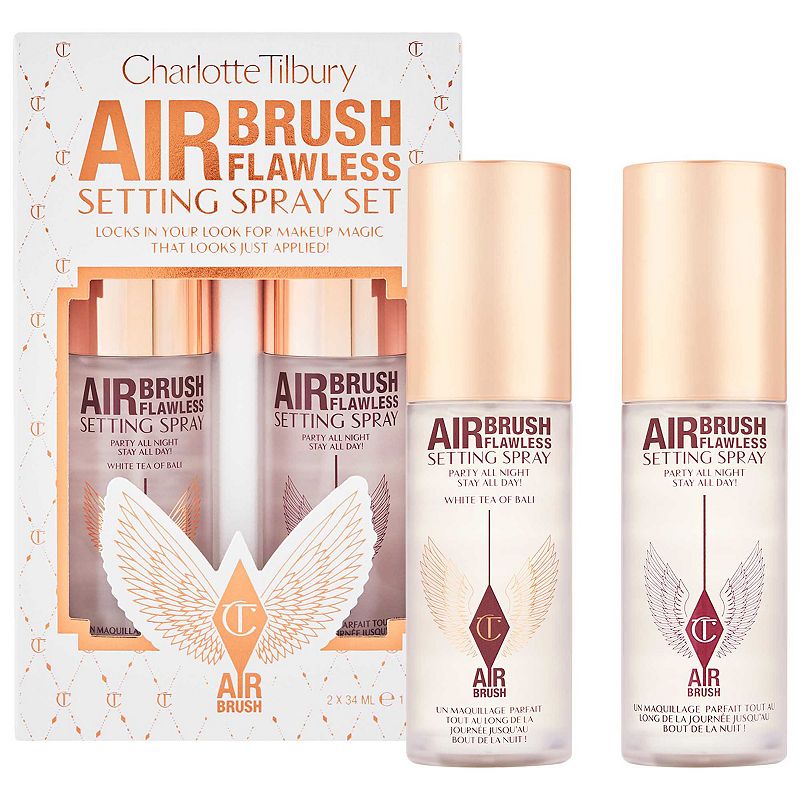

Charlotte Tilbury Mini Airbrush Flawless Setting Spray Duo Set, Size: 1.1 FL Oz, Multicolor
Analysis updated August 2026 · How Scout scores
At a glance
Summary
This setting spray contains beneficial ingredients like aloe vera, glycerin, and green tea extract, which provide moisturizing and antioxidant benefits. However, the presence of fragrance and phenoxyethanol, both of which can cause skin irritation, detracts from its overall safety profile. The product is moderately processed, which further impacts its rating.
Key ingredients 22
Aloe Barbadensis Leaf Juice PowderVery Good
Aloe vera is known for its soothing and moisturizing properties. It is beneficial for calming irritated skin.
Risks
Rarely, some individuals may experience allergic reactions.
Benefits
Provides hydration and soothes the skin, reducing redness and irritation.
Camellia Oleifera Leaf ExtractVery Good
Also known as green tea extract, it is rich in antioxidants and has anti-inflammatory properties. It is beneficial for protecting the skin from environmental damage.
Risks
Minimal risk of irritation or allergic reaction.
Benefits
Helps to reduce inflammation and protect against free radical damage.
GlycerinGood
Glycerin is a humectant that attracts moisture to the skin, helping to keep it hydrated. It is widely used in skincare for its moisturizing properties.
Risks
Generally safe, but excessive use can lead to a sticky feeling.
Benefits
Enhances skin hydration and improves skin barrier function.
Caprylic/Capric TriglycerideGood
This ingredient is derived from coconut oil and glycerin, and is used as an emollient. It helps to smooth and soften the skin.
Risks
Very low risk of irritation or allergic reaction.
Benefits
Provides a lightweight, non-greasy moisturizing effect.
Leuconostoc/Radish Root Ferment FiltrateGood
This is a natural preservative derived from fermented radish root. It is effective in inhibiting the growth of harmful bacteria.
Risks
Low risk of irritation or allergic reaction.
Benefits
Provides natural antimicrobial properties, enhancing product safety.
TocopherolGood
Tocopherol, also known as Vitamin E, is an antioxidant that helps protect the skin from free radical damage. It is beneficial for maintaining skin health.
Risks
Rarely, it may cause mild irritation in sensitive individuals.
Benefits
Protects the skin from oxidative stress and improves skin barrier function.
Aqua/Water/EauNeutral
Water is a common solvent used in cosmetics to dissolve other ingredients. It does not provide any direct benefits or risks in the formulation.
Risks
There are no significant risks associated with water in cosmetics.
Benefits
Water helps in the even distribution of other ingredients.
Amp-Acrylates/Allyl Methacrylate CopolymerNeutral
This copolymer is used as a film-forming agent to help products adhere to the skin. It is generally considered safe for use in cosmetics.
Risks
May cause mild irritation in sensitive individuals.
Benefits
Provides a smooth, even finish and helps in product longevity.
PVPNeutral
PVP is a synthetic polymer used as a binder and film-former in cosmetics. It is widely used and considered safe.
Risks
Can cause mild irritation if used in high concentrations.
Benefits
Helps in film formation and improves product adherence.
Pistacia Lentiscus GumNeutral
This natural resin is used for its film-forming and adhesive properties. It is generally considered safe in cosmetics.
Risks
May cause mild irritation in sensitive individuals.
Benefits
Improves product texture and adhesion to the skin.
Pentylene GlycolNeutral
Pentylene glycol is used as a solvent and skin-conditioning agent. It is generally considered safe for use in cosmetics.
Risks
May cause mild irritation in sensitive skin.
Benefits
Enhances skin hydration and improves product texture.
Polysorbate 20Neutral
Polysorbate 20 is an emulsifier that helps to mix oil and water-based ingredients. It is commonly used in cosmetics and is considered safe.
Risks
Potential for mild irritation in sensitive individuals.
Benefits
Improves product stability and texture.
PropanediolNeutral
Propanediol is a glycol used as a solvent and skin-conditioning agent. It is generally regarded as safe for use in cosmetics.
Risks
Low risk of skin irritation.
Benefits
Enhances skin hydration and improves product spreadability.
EthylhexylglycerinNeutral
Ethylhexylglycerin is used as a preservative and skin-conditioning agent. It is considered safe for use in cosmetics.
Risks
May cause mild irritation in sensitive skin.
Benefits
Provides antimicrobial properties and enhances skin feel.
Caprylyl GlycolNeutral
Caprylyl glycol is used as a skin-conditioning agent and preservative. It is generally considered safe for use in cosmetics.
Risks
Low risk of irritation or allergic reaction.
Benefits
Enhances skin hydration and provides antimicrobial properties.
Citric AcidNeutral
Citric acid is used to adjust the pH of cosmetics and as a preservative. It is generally considered safe for use in cosmetics.
Risks
Can cause mild irritation if used in high concentrations.
Benefits
Helps maintain product stability and pH balance.
Hydrogenated LecithinNeutral
Hydrogenated lecithin is used as an emulsifier and skin-conditioning agent. It is generally considered safe for use in cosmetics.
Risks
Low risk of irritation or allergic reaction.
Benefits
Improves product texture and enhances skin hydration.
Phenethyl AlcoholNeutral
Phenethyl alcohol is used as a fragrance and preservative in cosmetics. It is generally considered safe for use.
Risks
May cause mild irritation in sensitive skin.
Benefits
Provides a pleasant scent and antimicrobial properties.
HexamethylindanopyranNeutral
Hexamethylindanopyran is a synthetic fragrance ingredient. It is used to impart a pleasant scent to cosmetics.
Risks
Potential for skin irritation or allergic reactions.
Benefits
Enhances the fragrance profile of the product.
Potassium SorbateBad
Synthetic preservative — flagged in daily-use products.
Risks
May cause mild irritation in sensitive skin.
Benefits
Helps to extend the shelf life of the product by preventing microbial growth.
PhenoxyethanolBad
Phenoxyethanol is a preservative that can cause skin irritation and allergic reactions in some individuals. It is a common allergen in cosmetics.
Risks
Potential for skin irritation and allergic reactions.
Benefits
Provides effective preservation against microbial growth.
Parfum (Fragrance)Very Bad
Fragrance is often a mixture of various chemicals and can cause skin irritation or allergic reactions. It is a common allergen in cosmetics.
Risks
High risk of causing allergic reactions and skin irritation.
Benefits
Provides a pleasant scent to the product.
Get the full breakdown in the Scout appTake Scout shopping
Scan any product to see lab results, healthy alternatives, and your personalized analysis.
Download on theApp Store GET IT ONGoogle PlayAmazon pricing & content
Amazon price as of . Product prices and availability are accurate as of the date/time indicated and are subject to change. Any price and availability information displayed on Amazon.com at the time of purchase will apply to the purchase of this product.
CERTAIN CONTENT THAT APPEARS ON THIS SITE COMES FROM AMAZON. THIS CONTENT IS PROVIDED “AS IS” AND IS SUBJECT TO CHANGE OR REMOVAL AT ANY TIME.