
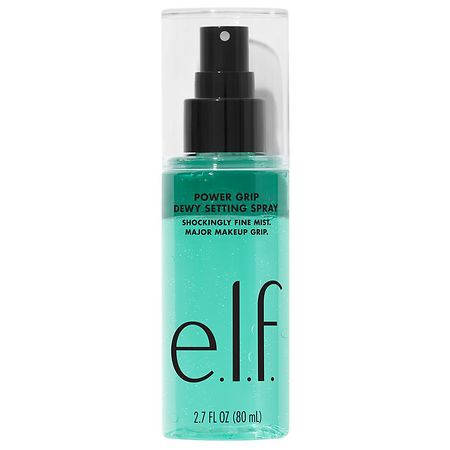
e.l.f. Power Grip Dewy Setting Spray - 2.7 fl oz: Paraben-Free, Phthalate-Free, Vegan, Normal Skin
Analysis updated September 2026 · How Scout scores
At a glance
Summary
This setting spray contains a variety of beneficial ingredients such as aloe vera, squalane, and hyaluronic acid, which are known for their hydrating and soothing properties. However, the presence of synthetic dyes like Blue 1 and Yellow 5, which can cause allergic reactions in some individuals, slightly detracts from its overall safety profile. The product is mostly composed of natural and skin-friendly ingredients, making it a generally safe choice for normal skin types.
Key ingredients 35
Aloe Barbadensis Leaf JuiceVery Good
Aloe Vera is known for its soothing and hydrating properties. It is widely used for its ability to calm irritated skin.
Risks
Rarely, it may cause allergic reactions in sensitive individuals.
Benefits
Aloe Vera provides hydration and has anti-inflammatory properties.
Hydrolyzed Sodium HyaluronateVery Good
This is a form of hyaluronic acid that penetrates the skin to provide deep hydration. It is known for its ability to retain moisture.
Risks
There are no significant risks associated with this ingredient.
Benefits
It provides intense hydration and helps to plump the skin.
SqualaneVery Good
Squalane is a highly effective emollient and natural antioxidant. It is known for its ability to mimic the skin's natural oils.
Risks
There are no significant risks associated with squalane.
Benefits
It helps to moisturize and protect the skin from environmental damage.
Camellia Sinensis Seed OilVery Good
This oil is rich in antioxidants and provides nourishing benefits to the skin. It is derived from green tea seeds.
Risks
There are minimal risks, though it may cause irritation in very sensitive skin.
Benefits
It provides antioxidant protection and helps to nourish the skin.
Moringa Oleifera Seed OilVery Good
Moringa oil is rich in vitamins and antioxidants, providing nourishing benefits to the skin. It is known for its moisturizing properties.
Risks
There are minimal risks, though it may cause irritation in very sensitive skin.
Benefits
It helps to nourish and hydrate the skin.
Aloe Barbadensis Flower ExtractVery Good
Derived from the aloe plant, this extract is known for its soothing and hydrating properties. It is beneficial for calming irritated skin.
Risks
Rarely, it may cause allergic reactions in sensitive individuals.
Benefits
It provides hydration and has anti-inflammatory properties.
Simmondsia Chinensis (Jojoba) Seed OilVery Good
Jojoba oil is a natural emollient that closely resembles the skin's natural sebum. It is highly moisturizing and non-comedogenic.
Risks
There are no significant risks associated with jojoba oil.
Benefits
It helps to moisturize and balance the skin's oil production.
Helianthus Annuus (Sunflower) Seed OilVery Good
Sunflower seed oil is rich in vitamins and fatty acids, providing nourishing benefits to the skin. It is known for its moisturizing properties.
Risks
There are no significant risks associated with sunflower seed oil.
Benefits
It helps to nourish and hydrate the skin.
TocopherolVery Good
Tocopherol, or Vitamin E, is a powerful antioxidant that helps to protect the skin from environmental damage. It is widely used in skincare for its protective benefits.
Risks
There are no significant risks associated with tocopherol.
Benefits
It helps to protect and nourish the skin.
Caprylic/Capric TriglycerideGood
This ingredient is derived from coconut oil and glycerin, acting as an emollient and skin-replenishing agent. It is well-tolerated by most skin types.
Risks
There are minimal risks associated with this ingredient.
Benefits
It helps to moisturize and replenish the skin barrier.
GlycerinGood
Glycerin is a humectant that attracts moisture to the skin. It is a common ingredient in skincare for its hydrating properties.
Risks
There are no significant risks associated with glycerin.
Benefits
It helps to maintain skin hydration and improve skin barrier function.
Melia Azadirachta Flower ExtractGood
This extract is known for its antibacterial and anti-inflammatory properties. It is derived from the neem tree.
Risks
There are minimal risks, though it may cause irritation in very sensitive skin.
Benefits
It helps to soothe and protect the skin.
Melia Azadirachta Leaf ExtractGood
Neem leaf extract is known for its antibacterial and anti-inflammatory properties. It is commonly used in skincare for its soothing effects.
Risks
There are minimal risks, though it may cause irritation in very sensitive skin.
Benefits
It helps to calm and protect the skin.
Corallina Officinalis ExtractGood
This extract is derived from red algae and is known for its mineral-rich composition. It provides antioxidant benefits.
Risks
There are minimal risks, though it may cause irritation in very sensitive skin.
Benefits
It helps to protect the skin from environmental stressors.
Ocimum Sanctum Leaf ExtractGood
Also known as holy basil, this extract is known for its antioxidant and anti-inflammatory properties. It is used to soothe and protect the skin.
Risks
There are minimal risks, though it may cause irritation in very sensitive skin.
Benefits
It helps to calm and protect the skin.
Melia Azadirachta Bark ExtractGood
Neem bark extract is known for its antibacterial and anti-inflammatory properties. It is used to soothe and protect the skin.
Risks
There are minimal risks, though it may cause irritation in very sensitive skin.
Benefits
It helps to calm and protect the skin.
Curcuma Longa (Turmeric) Root ExtractGood
Turmeric extract is known for its anti-inflammatory and antioxidant properties. It is used to brighten and soothe the skin.
Risks
There are minimal risks, though it may cause irritation in very sensitive skin.
Benefits
It helps to brighten and protect the skin.
Ocimum Basilicum (Basil) Flower/Leaf ExtractGood
Basil extract is known for its antioxidant and anti-inflammatory properties. It is used to soothe and protect the skin.
Risks
There are minimal risks, though it may cause irritation in very sensitive skin.
Benefits
It helps to calm and protect the skin.
Water (Aqua)Neutral
Water is a common solvent used in cosmetics to dissolve other ingredients. It is essential for the formulation but does not provide direct benefits or risks.
Risks
There are no significant risks associated with water in cosmetics.
Benefits
Water helps in the application and absorption of other beneficial ingredients.
Isononyl IsononanoateNeutral
Isononyl Isononanoate is an emollient that helps to soften and smooth the skin. It is generally considered safe for use in cosmetics.
Risks
There are minimal risks, though it may cause irritation in very sensitive skin.
Benefits
It provides a silky feel and helps to lock in moisture.
Coccinia Indica Fruit ExtractNeutral
This extract is derived from the ivy gourd and is used for its potential antioxidant properties. It is less commonly used in cosmetics.
Risks
There are minimal risks, though it may cause irritation in very sensitive skin.
Benefits
It may provide antioxidant benefits to the skin.
Solanum Melongena (Eggplant) Fruit ExtractNeutral
Eggplant extract is used for its potential antioxidant properties. It is not commonly used in cosmetics.
Risks
There are minimal risks, though it may cause irritation in very sensitive skin.
Benefits
It may provide antioxidant benefits to the skin.
Hydroxyethyl UreaNeutral
Hydroxyethyl urea is a humectant that helps to attract moisture to the skin. It is generally considered safe for use in cosmetics.
Risks
There are minimal risks, though it may cause irritation in very sensitive skin.
Benefits
It helps to maintain skin hydration.
1,2-HexanediolNeutral
1,2-Hexanediol is a synthetic preservative and moisture-binding agent. It is generally considered safe for use in cosmetics.
Risks
There are minimal risks, though it may cause irritation in very sensitive skin.
Benefits
It helps to preserve the product and maintain moisture.
PVPNeutral
PVP is a film-forming agent used to provide hold and texture in cosmetic products. It is generally considered safe for use.
Risks
There are minimal risks, though it may cause irritation in very sensitive skin.
Benefits
It helps to provide hold and texture to the product.
HydroxyacetophenoneNeutral
Hydroxyacetophenone is an antioxidant and preservative booster. It is used to enhance the stability of cosmetic formulations.
Risks
There are minimal risks, though it may cause irritation in very sensitive skin.
Benefits
It helps to stabilize and protect the product.
Diethylhexyl SyringylidenemalonateNeutral
This ingredient is used as a UV filter and antioxidant in cosmetics. It helps to protect the product from degradation.
Risks
There are minimal risks, though it may cause irritation in very sensitive skin.
Benefits
It helps to protect the product and enhance its stability.
Sodium ChlorideNeutral
Sodium chloride, or table salt, is used as a thickening agent in cosmetics. It is generally considered safe for use.
Risks
There are minimal risks, though it may cause irritation in very sensitive skin.
Benefits
It helps to thicken the product and improve texture.
Citric AcidNeutral
Citric acid is used to adjust the pH of cosmetic products. It is commonly used for its effectiveness in maintaining product stability.
Risks
There are minimal risks, though it may cause irritation in very sensitive skin.
Benefits
It helps to maintain the stability and effectiveness of the product.
ArginineNeutral
Arginine is an amino acid used for its moisturizing properties. It is generally considered safe for use in cosmetics.
Risks
There are minimal risks, though it may cause irritation in very sensitive skin.
Benefits
It helps to moisturize and condition the skin.
Potassium SorbateBad
Synthetic preservative — flagged in daily-use products.
Risks
There are minimal risks, though it may cause irritation in very sensitive skin.
Benefits
It helps to preserve the product and extend its shelf life.
Sodium BenzoateBad
Synthetic preservative that can form benzene in the presence of vitamin C.
Risks
There are minimal risks, though it may cause irritation in very sensitive skin.
Benefits
It helps to preserve the product and extend its shelf life.
Disodium EDTABad
Processed additive flagged under Scout's ingredient doctrine.
Risks
There are minimal risks, though it may cause irritation in very sensitive skin.
Benefits
It helps to stabilize the product and enhance its effectiveness.
Blue 1 (CI 42090)Bad
Blue 1 is a synthetic dye used to impart color to cosmetics. It is approved for use but may cause allergic reactions in some individuals.
Risks
There is a risk of allergic reactions and skin irritation.
Benefits
It provides color to the product.
Yellow 5 (CI 19140)Very Bad
Yellow 5 is a synthetic dye used to impart color to cosmetics. It is approved for use but may cause allergic reactions in some individuals.
Risks
There is a risk of allergic reactions and skin irritation.
Benefits
It provides color to the product.
Get the full breakdown in the Scout appTake Scout shopping
Scan any product to see lab results, healthy alternatives, and your personalized analysis.
Download on theApp Store GET IT ONGoogle PlayAmazon pricing & content
Amazon price as of . Product prices and availability are accurate as of the date/time indicated and are subject to change. Any price and availability information displayed on Amazon.com at the time of purchase will apply to the purchase of this product.
CERTAIN CONTENT THAT APPEARS ON THIS SITE COMES FROM AMAZON. THIS CONTENT IS PROVIDED “AS IS” AND IS SUBJECT TO CHANGE OR REMOVAL AT ANY TIME.