


At a glance
Summary
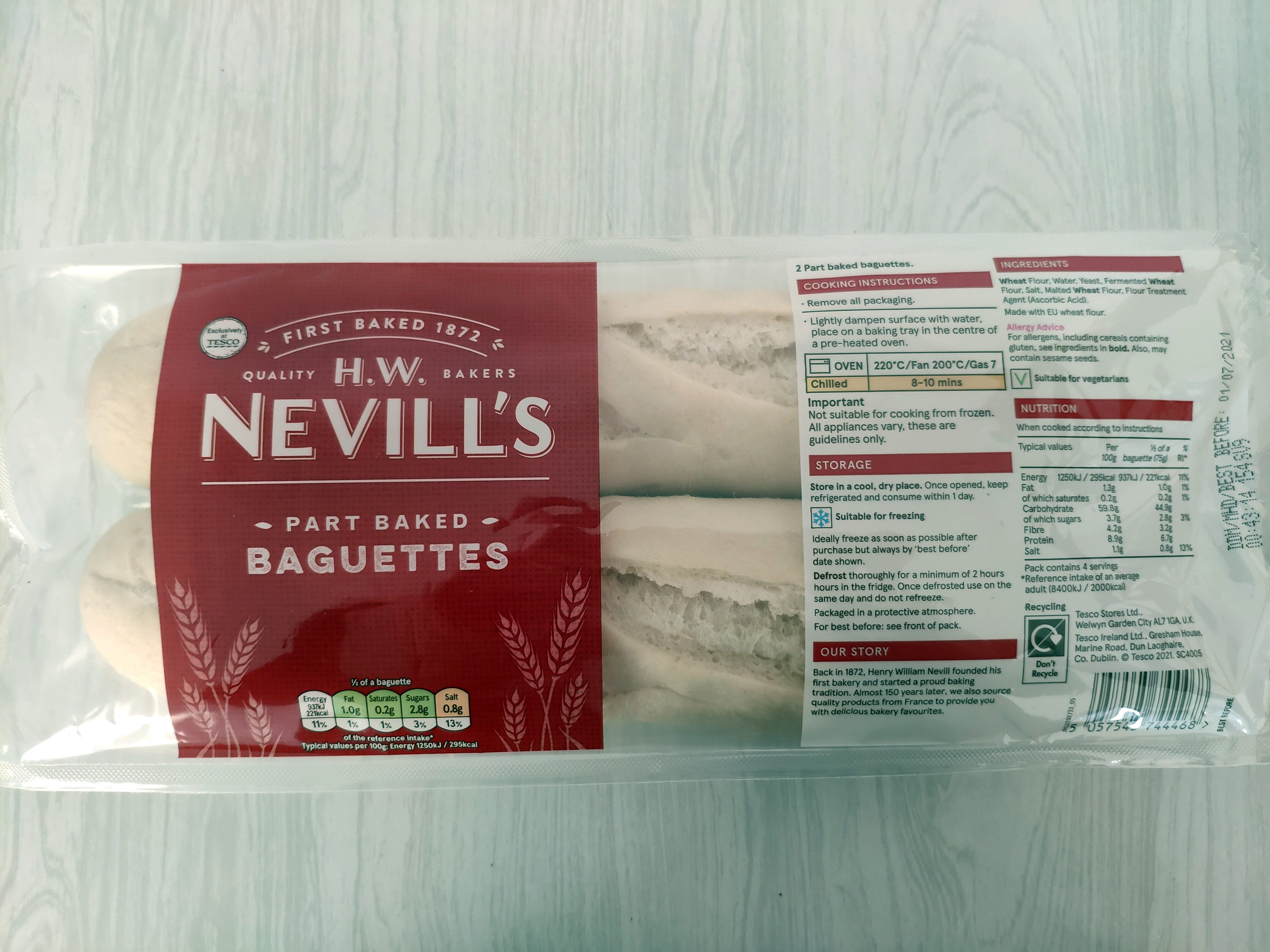
The part-baked baguettes have a relatively clean ingredient list with basic components like wheat flour, water, and yeast, and only one additive, ascorbic acid, which is generally considered safe. However, the product is processed, which limits its score potential. The presence of added salt and the processing level prevent it from achieving a higher rating, despite the absence of harmful ingredients.
Key ingredients 7
Ascorbic AcidGood
Vitamin C — beneficial even when serving as a preservative.
Benefits
Improves dough strength and bread volume, acting as an antioxidant.
WaterNeutral
Water is a fundamental ingredient in bread, necessary for hydration and dough formation. It acts as a solvent for other ingredients and helps in gluten development. The quality of water can affect the final texture and taste of the bread.
Benefits
Essential for dough consistency and gluten formation, contributing to the bread's texture.
YeastNeutral
Yeast is a microorganism used in bread-making to ferment sugars, producing carbon dioxide that leavens the dough. It enhances the flavor and texture of the bread. The fermentation process can also improve the digestibility of the bread.
Benefits
Contributes to the leavening and flavor development in bread, making it light and airy.
Fermented Wheat FlourNeutral
Fermented wheat flour is used to enhance the flavor and texture of bread. The fermentation process can increase the bioavailability of nutrients and improve digestibility. It may also contribute to a more complex flavor profile in the final product.
Benefits
Improves flavor and digestibility of the bread through natural fermentation processes.
SaltNeutral
Salt is used in bread to enhance flavor and control yeast activity. It also strengthens the gluten network, contributing to the bread's texture. Excessive salt intake can lead to health issues such as hypertension.
Risks
High sodium intake can contribute to hypertension and cardiovascular issues.
Benefits
Enhances flavor and strengthens gluten structure in bread.
Malted Wheat FlourNeutral
Malted wheat flour is used to improve the flavor and color of bread. It contains enzymes that can break down starches into sugars, aiding in fermentation. This ingredient can enhance the sweetness and browning of the crust.
Benefits
Enhances flavor and color, contributing to a more appealing bread product.
Wheat FlourBad
Refined grain flour stripped of bran and germ.
Risks
Refined wheat flour can contribute to blood sugar spikes and may lack essential nutrients compared to whole grain alternatives.
Benefits
Provides essential carbohydrates for energy and is a key component in traditional bread-making.
Processing
Processed Foods
Get the full breakdown in the Scout appTake Scout shopping
Scan any product to see lab results, healthy alternatives, and your personalized analysis.
Download on theApp Store GET IT ONGoogle Play