
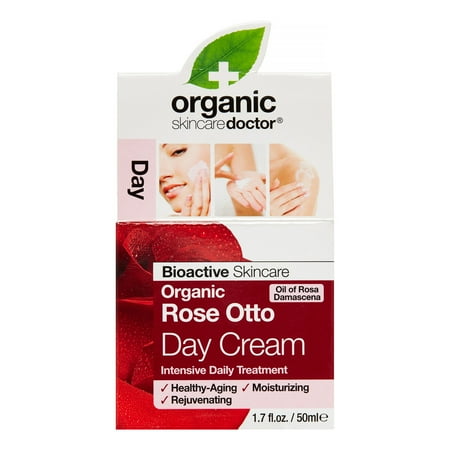

Organic Doctor Rose Otto Day Cream, 1.7 Fl Oz
Analysis updated August 2026 · How Scout scores
At a glance
Summary
This moisturizer features a predominantly natural and beneficial ingredient list, including aloe vera, shea butter, and argan oil, which are known for their moisturizing and soothing properties. The presence of fragrance is a minor concern due to potential skin irritation, but the overall formulation is minimally processed and rich in skin-nourishing botanicals, contributing to a high score.
Key ingredients 31
Aloe Barbadensis Leaf JuiceVery Good
Aloe vera is known for its soothing and moisturizing properties, making it beneficial for skin hydration. It contains antioxidants and vitamins that can help protect the skin.
Risks
Rarely, it may cause skin irritation or allergic reactions in sensitive individuals.
Benefits
It helps to soothe and hydrate the skin, reducing inflammation and promoting healing.
Rosa Damascena Flower WaterVery Good
Rose water is known for its soothing and anti-inflammatory properties. It can help to calm irritated skin and provide a pleasant fragrance.
Risks
Some individuals may experience allergic reactions or irritation.
Benefits
It provides hydration and has a calming effect on the skin, reducing redness and irritation.
Butyrospermum Parkii (Shea) ButterVery Good
Shea butter is a natural fat extracted from the nuts of the shea tree. It is highly moisturizing and contains vitamins A and E.
Risks
Rarely, it may cause allergic reactions in individuals with nut allergies.
Benefits
It deeply moisturizes the skin and helps to improve elasticity and smoothness.
Oryza Sativa (Rice) Bran OilVery Good
Rice bran oil is rich in antioxidants, vitamins, and fatty acids, making it beneficial for skin nourishment. It helps to improve skin texture and tone.
Risks
Generally safe, but may cause mild irritation in sensitive skin.
Benefits
It provides deep hydration and helps to protect the skin from environmental damage.
Borago Officinalis Seed OilVery Good
Borage seed oil is high in gamma-linolenic acid (GLA), which is beneficial for maintaining healthy skin. It helps to reduce inflammation and improve skin barrier function.
Risks
May cause mild irritation or allergic reactions in sensitive individuals.
Benefits
It helps to soothe and repair the skin, reducing redness and improving hydration.
Argania Spinosa Kernel OilVery Good
Argan oil is rich in essential fatty acids and vitamin E, making it highly nourishing for the skin. It helps to moisturize and improve skin elasticity.
Risks
Rarely, it may cause allergic reactions in individuals with nut allergies.
Benefits
It provides deep hydration and helps to protect the skin from environmental damage.
Rosa Damascena Flower ExtractVery Good
Rose extract is known for its soothing and anti-inflammatory properties. It helps to calm irritated skin and provide a pleasant fragrance.
Risks
Some individuals may experience allergic reactions or irritation.
Benefits
It provides hydration and has a calming effect on the skin, reducing redness and irritation.
Calendula Officinalis Flower ExtractVery Good
Calendula extract is known for its anti-inflammatory and healing properties. It helps to soothe and repair the skin.
Risks
Generally safe, but may cause mild irritation in sensitive skin.
Benefits
It helps to reduce inflammation and promote healing, improving skin health.
Chamomilla Recutita (Matricaria) Flower ExtractVery Good
Chamomile extract is known for its soothing and anti-inflammatory properties. It helps to calm irritated skin and reduce redness.
Risks
Some individuals may experience allergic reactions or irritation.
Benefits
It provides soothing relief to irritated skin and helps to reduce inflammation.
Rosa Damascena Flower OilVery Good
Rose oil is known for its soothing and anti-inflammatory properties. It helps to calm irritated skin and provide a pleasant fragrance.
Risks
Some individuals may experience allergic reactions or irritation.
Benefits
It provides hydration and has a calming effect on the skin, reducing redness and irritation.
GlycerinGood
Glycerin is a humectant that attracts moisture to the skin, helping to keep it hydrated. It is widely used in skincare for its moisturizing properties.
Risks
Generally considered safe, but in rare cases, it may cause irritation if used in high concentrations.
Benefits
It helps to maintain skin hydration by drawing moisture from the environment into the skin.
Caprylic/Capric TriglycerideGood
This ingredient is an emollient that helps to smooth and soften the skin. It is derived from coconut oil and glycerin.
Risks
Generally safe, but may cause mild irritation in sensitive individuals.
Benefits
It helps to improve the texture of the skin by providing a lightweight, non-greasy moisturizing effect.
Tocopheryl AcetateGood
Tocopheryl Acetate is a form of vitamin E, known for its antioxidant properties. It helps to protect the skin from free radical damage.
Risks
Generally safe, but may cause mild irritation in sensitive skin.
Benefits
It helps to nourish and protect the skin, improving its overall health and appearance.
Ascorbic AcidGood
Ascorbic acid, or vitamin C, is a powerful antioxidant that helps to brighten the skin and reduce signs of aging. It promotes collagen production and protects against free radical damage.
Risks
May cause mild irritation or redness in sensitive skin.
Benefits
It helps to brighten the skin and reduce the appearance of fine lines and wrinkles.
WaterNeutral
Water is a common solvent used in cosmetics to dissolve other ingredients. It helps in the formulation of the product.
Risks
There are no significant risks associated with water in cosmetics.
Benefits
It acts as a base for the formulation, allowing other ingredients to be evenly distributed.
Dicaprylyl EtherNeutral
Dicaprylyl Ether is used as an emollient and solvent in cosmetics. It helps to improve the spreadability of the product.
Risks
There are minimal risks associated with this ingredient, though it may cause mild irritation in sensitive skin.
Benefits
It provides a silky feel to the skin and enhances the application of the product.
Cetearyl AlcoholNeutral
Cetearyl Alcohol is a fatty alcohol used as an emollient and thickening agent. It helps to stabilize and thicken formulations.
Risks
Generally safe, but may cause irritation in very sensitive skin types.
Benefits
It helps to soften the skin and improve the texture of the product.
Glyceryl StearateNeutral
Glyceryl Stearate is an emulsifier that helps to blend oil and water components in formulations. It also acts as a lubricant on the skin's surface.
Risks
Considered safe for use, but may cause mild irritation in sensitive individuals.
Benefits
It helps to maintain the stability of the product and provides a smooth feel to the skin.
Cetearyl GlucosideNeutral
Cetearyl Glucoside is an emulsifier derived from coconut oil and sugar. It helps to blend oil and water components in formulations.
Risks
Considered safe, but may cause mild irritation in sensitive skin.
Benefits
It helps to stabilize the product and improve its texture.
Sodium Stearoyl GlutamateNeutral
Sodium Stearoyl Glutamate is an emulsifier used to stabilize formulations. It is derived from plant-based sources.
Risks
Generally considered safe, with minimal risk of irritation.
Benefits
It helps to maintain the stability of the product and improve its texture.
Xanthan GumNeutral
Xanthan Gum is a thickening agent used to stabilize and thicken formulations. It is derived from natural sources.
Risks
Considered safe, but may cause mild irritation in sensitive skin.
Benefits
It helps to improve the texture and consistency of the product.
Chondrus Crispus (Carrageenan) ExtractNeutral
Carrageenan is used as a thickening and stabilizing agent in cosmetics. It is derived from red seaweed.
Risks
Generally safe, but may cause irritation in sensitive skin.
Benefits
It helps to improve the texture and stability of the product.
Menyanthes Trifoliata Leaf ExtractNeutral
This extract is used for its antioxidant properties, helping to protect the skin from environmental damage. It is derived from the bogbean plant.
Risks
Considered safe, with minimal risk of irritation.
Benefits
It helps to protect the skin from oxidative stress and improve its resilience.
Passiflora Incarnata ExtractNeutral
Passionflower extract is used for its calming and soothing properties. It is rich in antioxidants and helps to protect the skin.
Risks
Generally safe, but may cause mild irritation in sensitive skin.
Benefits
It helps to soothe and protect the skin, reducing inflammation and promoting relaxation.
Tilia Europaea Flower ExtractNeutral
Linden flower extract is used for its soothing and anti-inflammatory properties. It helps to calm and hydrate the skin.
Risks
Considered safe, with minimal risk of irritation.
Benefits
It helps to soothe and hydrate the skin, reducing redness and irritation.
Pelargonium Graveolens OilNeutral
Geranium oil is used for its aromatic properties and potential skin benefits. It may help to balance oil production and improve skin health.
Risks
May cause irritation or allergic reactions in sensitive individuals.
Benefits
It provides a pleasant fragrance and may help to balance skin oil levels.
Eugenia Caryophyllata (Clove) Flower OilNeutral
Clove oil is known for its antimicrobial properties and is used for its fragrance. It may help to reduce acne-causing bacteria.
Risks
Can cause irritation or allergic reactions, especially in sensitive skin.
Benefits
It provides a warm, spicy fragrance and may help to reduce acne-causing bacteria.
Citric AcidNeutral
Citric Acid is used to adjust the pH of cosmetics and as a preservative. It is derived from citrus fruits and is generally considered safe.
Risks
May cause mild irritation in sensitive skin, especially in high concentrations.
Benefits
It helps to maintain the stability and effectiveness of the product by adjusting its pH.
Sodium BenzoateBad
Synthetic preservative that can form benzene in the presence of vitamin C.
Risks
May cause mild irritation in sensitive skin, especially in high concentrations.
Benefits
It helps to preserve the product and extend its shelf life by preventing microbial growth.
Potassium SorbateBad
Synthetic preservative — flagged in daily-use products.
Risks
May cause mild irritation or allergic reactions in sensitive skin.
Benefits
It helps to preserve the product and extend its shelf life by preventing microbial growth.
FragranceVery Bad
Fragrance is often added to cosmetics for a pleasant scent, but it can cause skin irritation and allergic reactions. It is a common sensitizer in skincare products.
Risks
May cause allergic reactions, irritation, or sensitization, especially in sensitive skin.
Benefits
Provides a pleasant scent to the product, enhancing user experience.
Get the full breakdown in the Scout appTake Scout shopping
Scan any product to see lab results, healthy alternatives, and your personalized analysis.
Download on theApp Store GET IT ONGoogle PlayAmazon pricing & content
Amazon price as of . Product prices and availability are accurate as of the date/time indicated and are subject to change. Any price and availability information displayed on Amazon.com at the time of purchase will apply to the purchase of this product.
CERTAIN CONTENT THAT APPEARS ON THIS SITE COMES FROM AMAZON. THIS CONTENT IS PROVIDED “AS IS” AND IS SUBJECT TO CHANGE OR REMOVAL AT ANY TIME.