
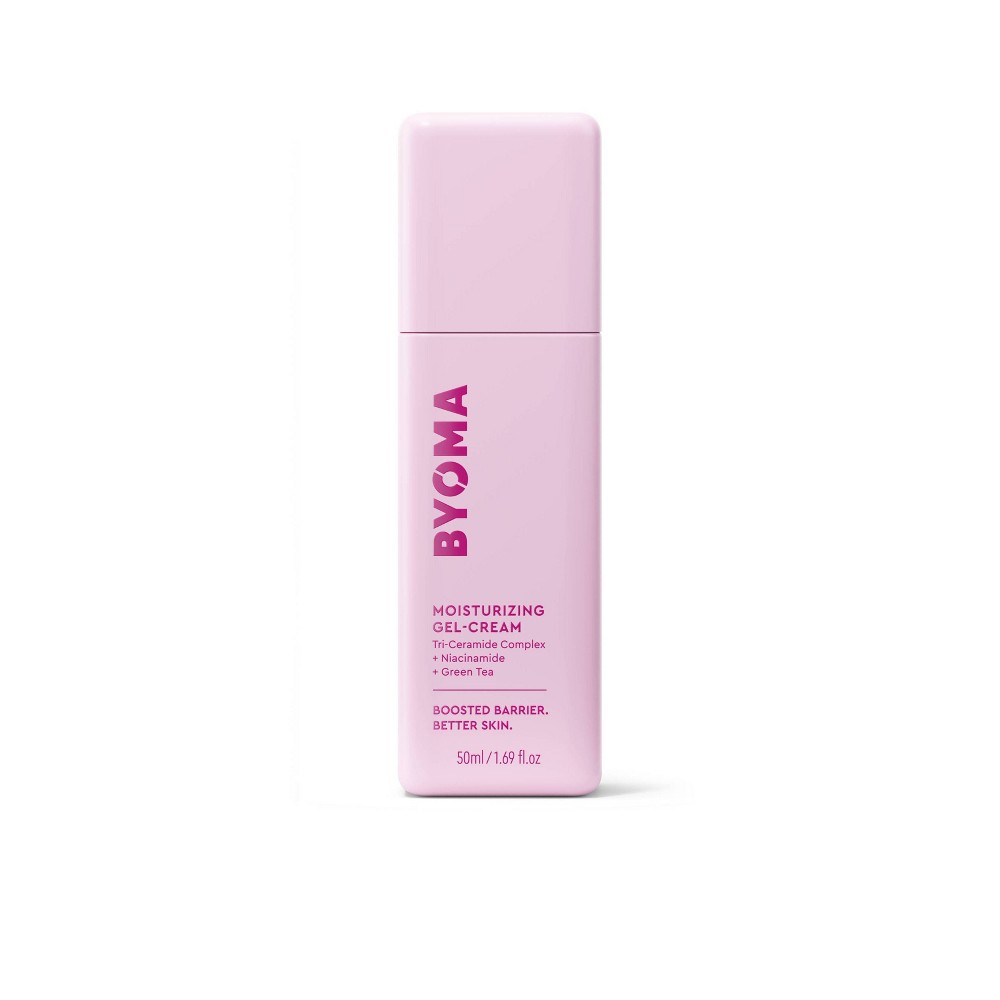

BYOMA Gel Cream Moisturizer - 1.69 fl oz
Analysis updated August 2026 · How Scout scores
At a glance
Summary
This moisturizer contains a range of beneficial ingredients such as glycerin, niacinamide, and ceramides, which are known for their hydrating and skin barrier-enhancing properties. The inclusion of green tea extract provides antioxidant benefits, while lactic acid offers gentle exfoliation. The product is processed, but the ingredient list is relatively clean with no major harmful additives, allowing it to achieve a high score within the processed category.
Key ingredients 23
Camellia Sinensis Leaf ExtractVery Good
Camellia Sinensis Leaf Extract, or green tea extract, is rich in antioxidants and has anti-inflammatory properties. It helps to protect the skin from environmental damage and reduce signs of aging. It is highly valued in skincare for its protective and soothing effects.
Risks
There are minimal risks; it is generally well-tolerated.
Benefits
Green tea extract helps to protect the skin from oxidative stress and soothe irritation.
PanthenolVery Good
Panthenol, or provitamin B5, is a humectant that helps to hydrate and soothe the skin. It is known for its ability to improve skin barrier function and reduce irritation. It is highly regarded in skincare for its moisturizing and calming properties.
Risks
There are minimal risks; it is generally well-tolerated.
Benefits
Panthenol helps to hydrate the skin, improve barrier function, and reduce irritation.
GlycerinGood
Glycerin is a humectant that attracts moisture to the skin, helping to keep it hydrated. It is widely used in skincare products for its moisturizing properties. It is considered safe and beneficial for most skin types.
Risks
There are minimal risks associated with glycerin; it is generally well-tolerated.
Benefits
Glycerin helps to maintain skin hydration and improve skin barrier function.
Caprylic/Capric TriglycerideGood
Caprylic/Capric Triglyceride is an emollient derived from coconut oil and glycerin. It helps to smooth and soften the skin. It is non-greasy and easily absorbed, making it a popular ingredient in moisturizers.
Risks
There are minimal risks; it is generally considered safe for use in cosmetics.
Benefits
It provides a lightweight, non-greasy moisturizing effect and enhances the spreadability of the product.
NiacinamideGood
Niacinamide is a form of Vitamin B3 that offers multiple skin benefits, including improving skin tone and texture. It is known for its anti-inflammatory properties and ability to reduce the appearance of pores. It is highly regarded in skincare for its versatility and effectiveness.
Risks
There are minimal risks; it is generally well-tolerated by most skin types.
Benefits
Niacinamide helps to improve skin barrier function, reduce redness, and enhance overall skin appearance.
Ceramide NPGood
Ceramide NP is a lipid that helps to restore and maintain the skin's natural barrier. It is essential for retaining moisture and protecting the skin from environmental damage. It is beneficial for dry and sensitive skin types.
Risks
There are minimal risks; it is generally considered safe and beneficial.
Benefits
Ceramide NP helps to strengthen the skin barrier and improve hydration levels.
CholesterolGood
Cholesterol is a lipid that works with ceramides to enhance the skin's barrier function. It helps to retain moisture and improve skin elasticity. It is beneficial for maintaining healthy skin.
Risks
There are minimal risks; it is generally well-tolerated.
Benefits
Cholesterol helps to improve skin hydration and barrier function.
PhytosphingosineGood
Phytosphingosine is a lipid that helps to maintain the skin's barrier and has anti-inflammatory properties. It is beneficial for reducing redness and irritation. It supports overall skin health.
Risks
There are minimal risks; it is generally considered safe.
Benefits
Phytosphingosine helps to calm the skin and improve barrier function.
AquaNeutral
Aqua, or water, is a common solvent used in cosmetics to dissolve other ingredients. It is essential for the formulation of creams and lotions. It does not provide direct benefits or risks.
Risks
There are no significant risks associated with water in cosmetic formulations.
Benefits
Water helps in the dispersion of other ingredients and provides a base for the moisturizer.
Pentaerythrityl TetraethylhexanoateNeutral
Pentaerythrityl Tetraethylhexanoate is an emollient that provides a smooth application and enhances the texture of the product. It is used to improve the feel of the moisturizer. It does not have significant direct benefits or risks.
Risks
There are no significant risks associated with this ingredient in cosmetic formulations.
Benefits
It helps to improve the texture and application of the moisturizer.
Polyglyceryl-3 Methylglucose DistearateNeutral
This ingredient is an emulsifier that helps to blend oil and water components in the formulation. It stabilizes the product and ensures a uniform texture. It is generally considered safe for use in cosmetics.
Risks
There are minimal risks associated with this emulsifier.
Benefits
It helps to maintain the stability and consistency of the moisturizer.
Stearic AcidNeutral
Stearic Acid is a fatty acid used as an emulsifier and thickener in cosmetics. It helps to stabilize formulations and improve texture. It does not have significant direct benefits or risks.
Risks
There are minimal risks associated with its use in cosmetics.
Benefits
It helps to improve the texture and stability of the moisturizer.
Oleic AcidNeutral
Oleic Acid is a fatty acid that acts as an emollient and helps to soften the skin. It is used to enhance the texture of skincare products. It does not have significant direct benefits or risks.
Risks
There are minimal risks; it is generally considered safe.
Benefits
It helps to improve the texture and moisturizing properties of the product.
Lactic AcidNeutral
Standard formulation ingredient — neither beneficial nor harmful at typical use.
Risks
There is a potential for irritation, especially in sensitive skin types.
Benefits
Lactic Acid helps to exfoliate the skin, improve texture, and promote a brighter complexion.
Hydrogenated LecithinNeutral
Hydrogenated Lecithin is an emulsifier that helps to blend ingredients and improve product texture. It is used to stabilize formulations. It does not have significant direct benefits or risks.
Risks
There are minimal risks associated with its use in cosmetics.
Benefits
It helps to improve the texture and stability of the moisturizer.
Cetearyl AlcoholNeutral
Cetearyl Alcohol is a fatty alcohol used as an emollient and thickener in cosmetics. It helps to improve the texture and consistency of products. It is generally considered safe and non-irritating.
Risks
There are minimal risks; it is generally well-tolerated.
Benefits
It helps to improve the texture and moisturizing properties of the product.
CarbomerNeutral
Carbomer is a thickening agent used to stabilize and improve the texture of cosmetic formulations. It helps to create a smooth and consistent product. It does not have significant direct benefits or risks.
Risks
There are minimal risks associated with its use in cosmetics.
Benefits
It helps to improve the texture and stability of the moisturizer.
Xanthan GumNeutral
Xanthan Gum is a thickening agent used to stabilize and improve the texture of cosmetic formulations. It helps to create a smooth and consistent product. It does not have significant direct benefits or risks.
Risks
There are minimal risks associated with its use in cosmetics.
Benefits
It helps to improve the texture and stability of the moisturizer.
TromethamineNeutral
Tromethamine is a pH adjuster used to maintain the stability of cosmetic formulations. It helps to ensure the product remains effective and safe for use. It does not have significant direct benefits or risks.
Risks
There are minimal risks associated with its use in cosmetics.
Benefits
It helps to maintain the stability and effectiveness of the moisturizer.
1,2-HexanediolNeutral
1,2-Hexanediol is a solvent and preservative used to enhance the stability and shelf-life of cosmetic products. It helps to prevent microbial growth. It does not have significant direct benefits or risks.
Risks
There are minimal risks associated with its use in cosmetics.
Benefits
It helps to enhance the stability and shelf-life of the moisturizer.
Caprylyl GlycolNeutral
Caprylyl Glycol is a humectant and preservative that helps to hydrate the skin and enhance product stability. It is used to improve the texture and shelf-life of cosmetics. It does not have significant direct benefits or risks.
Risks
There are minimal risks associated with its use in cosmetics.
Benefits
It helps to hydrate the skin and enhance the stability of the moisturizer.
HydroxyacetophenoneNeutral
Hydroxyacetophenone is an antioxidant and preservative used to enhance the stability and shelf-life of cosmetic products. It helps to protect the formulation from degradation. It does not have significant direct benefits or risks.
Risks
There are minimal risks associated with its use in cosmetics.
Benefits
It helps to enhance the stability and shelf-life of the moisturizer.
Caprylhydroxamic AcidNeutral
Caprylhydroxamic Acid is a preservative used to prevent microbial growth in cosmetic formulations. It helps to ensure the product remains safe for use. It does not have significant direct benefits or risks.
Risks
There are minimal risks associated with its use in cosmetics.
Benefits
It helps to enhance the safety and shelf-life of the moisturizer.
Get the full breakdown in the Scout appTake Scout shopping
Scan any product to see lab results, healthy alternatives, and your personalized analysis.
Download on theApp Store GET IT ONGoogle PlayAmazon pricing & content
Amazon price as of . Product prices and availability are accurate as of the date/time indicated and are subject to change. Any price and availability information displayed on Amazon.com at the time of purchase will apply to the purchase of this product.
CERTAIN CONTENT THAT APPEARS ON THIS SITE COMES FROM AMAZON. THIS CONTENT IS PROVIDED “AS IS” AND IS SUBJECT TO CHANGE OR REMOVAL AT ANY TIME.