
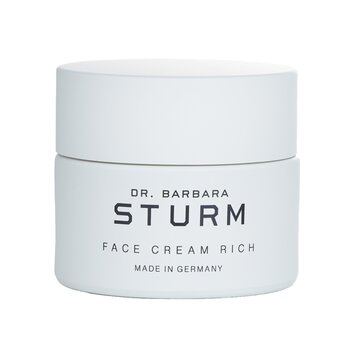

Dr. Barbara Sturm Face Cream Rich For Women
Analysis updated September 2026 · How Scout scores
At a glance
Summary
This moisturizer contains a variety of beneficial natural ingredients such as shea butter, avocado oil, and grape seed oil, which provide excellent moisturizing and antioxidant properties. The presence of phenoxyethanol as a preservative is a minor concern due to potential irritation, but it is balanced by the overall high-quality, natural composition of the product. The formulation is minimally processed with a clean label, contributing to its high rating.
Key ingredients 35
butyrospermum parkii (shea) butterVery Good
Shea butter is a natural fat extracted from the nuts of the shea tree. It is known for its moisturizing and anti-inflammatory properties. It helps to soothe and nourish dry skin.
Risks
Rarely, it may cause allergic reactions in individuals with nut allergies.
Benefits
Shea butter deeply moisturizes and protects the skin, enhancing its softness.
vitis vinifera (grape) seed oilVery Good
Grape seed oil is a natural oil rich in antioxidants and fatty acids. It is known for its moisturizing and anti-inflammatory properties. It helps to protect and nourish the skin.
Risks
May cause allergic reactions in individuals sensitive to grapes.
Benefits
Grape seed oil hydrates and protects the skin, enhancing its elasticity.
persea gratissima (avocado) oilVery Good
Avocado oil is a natural oil rich in vitamins and fatty acids. It is known for its moisturizing and nourishing properties. It helps to improve skin elasticity and barrier function.
Risks
May cause allergic reactions in individuals sensitive to avocados.
Benefits
Avocado oil deeply nourishes and hydrates the skin, enhancing its softness.
panthenolVery Good
Panthenol is a form of vitamin B5 known for its moisturizing and soothing properties. It helps to improve skin hydration and reduce inflammation. It is beneficial for maintaining healthy skin.
Risks
There are minimal risks associated with panthenol in skincare.
Benefits
It hydrates and soothes the skin, enhancing its overall health.
olea europaea (olive) fruit oilVery Good
Olive fruit oil is a natural oil rich in antioxidants and fatty acids. It is known for its moisturizing and nourishing properties. It helps to protect and soften the skin.
Risks
May cause allergic reactions in individuals sensitive to olives.
Benefits
Olive oil deeply nourishes and hydrates the skin, enhancing its softness.
ureaGood
Urea is a humectant that helps to retain moisture in the skin. It is known for its hydrating properties and ability to improve skin barrier function. It can also help to exfoliate dead skin cells.
Risks
High concentrations may cause irritation in sensitive skin.
Benefits
Urea effectively hydrates and smooths the skin, enhancing its overall appearance.
glycerinGood
Glycerin is a powerful humectant that attracts moisture to the skin. It is widely used in skincare for its hydrating properties. It helps to maintain the skin's moisture balance.
Risks
There are minimal risks associated with glycerin in skincare.
Benefits
Glycerin provides deep hydration and helps to improve skin texture.
zea mays (corn) germ oilGood
Corn germ oil is a natural oil rich in fatty acids and vitamin E. It is used for its moisturizing and antioxidant properties. It helps to nourish and protect the skin.
Risks
May cause allergic reactions in individuals sensitive to corn.
Benefits
Corn germ oil hydrates and protects the skin, improving its resilience.
lactobacillus/portulaca oleracea ferment extractGood
This ferment extract is used for its soothing and anti-inflammatory properties. It helps to calm and balance the skin's microbiome. It is beneficial for sensitive and irritated skin.
Risks
There are minimal risks associated with this ingredient.
Benefits
It soothes and calms the skin, reducing redness and irritation.
tocopheryl acetateGood
Tocopheryl acetate is a form of vitamin E used for its antioxidant properties. It helps to protect the skin from free radical damage. It is beneficial for maintaining skin health.
Risks
Rarely, it may cause skin irritation in sensitive individuals.
Benefits
It provides antioxidant protection and supports skin health.
phytosterolsGood
Phytosterols are plant-derived compounds known for their anti-inflammatory properties. They help to soothe and protect the skin. They are beneficial for maintaining skin barrier function.
Risks
There are minimal risks associated with phytosterols in skincare.
Benefits
They soothe and protect the skin, enhancing its resilience.
leuconostoc/radish root ferment filtrateGood
This ferment filtrate is used for its antimicrobial and moisturizing properties. It helps to protect the skin and maintain its moisture balance. It is beneficial for sensitive and irritated skin.
Risks
There are minimal risks associated with this ingredient.
Benefits
It protects and hydrates the skin, enhancing its overall health.
baicalinGood
Baicalin is a flavonoid with antioxidant and anti-inflammatory properties. It helps to protect the skin from environmental stressors. It is beneficial for maintaining healthy skin.
Risks
There are minimal risks associated with baicalin in skincare.
Benefits
It provides antioxidant protection and soothes the skin.
ascorbyl palmitateGood
Ascorbyl palmitate is a stable form of vitamin C used for its antioxidant properties. It helps to protect the skin from free radical damage. It is beneficial for brightening and evening skin tone.
Risks
Rarely, it may cause skin irritation in sensitive individuals.
Benefits
It provides antioxidant protection and supports skin radiance.
ascorbic acidGood
Ascorbic acid is a form of vitamin C known for its antioxidant properties. It helps to protect the skin from free radical damage and brighten the complexion. It is beneficial for improving skin tone and texture.
Risks
May cause skin irritation in sensitive individuals if used in high concentrations.
Benefits
It provides antioxidant protection and enhances skin radiance.
aqua/water/eauNeutral
Water is a common solvent used in cosmetics to dissolve other ingredients. It does not provide direct benefits or risks in skincare formulations. It serves as a base for the formulation.
Risks
There are no direct risks associated with water in skincare products.
Benefits
Water helps in the dispersion of other ingredients and provides a hydrating base.
octyldodecanolNeutral
Octyldodecanol is a fatty alcohol used as an emollient and thickening agent in cosmetics. It helps to improve the texture and spreadability of products. It is generally considered safe for use in skincare.
Risks
In rare cases, it may cause skin irritation or allergic reactions.
Benefits
It provides a smooth application and helps to soften the skin.
decyl oleateNeutral
Decyl oleate is an ester used as an emollient and skin conditioning agent. It helps to improve the texture and feel of skincare products. It is generally considered safe for use.
Risks
May cause mild irritation in sensitive skin types.
Benefits
It provides a smooth application and enhances skin softness.
c12 15 alkyl benzoateNeutral
C12-15 alkyl benzoate is an ester used as an emollient and thickening agent. It helps to improve the texture and spreadability of skincare products. It is generally considered safe for use.
Risks
May cause mild irritation in sensitive skin types.
Benefits
It provides a smooth application and enhances product stability.
cetearyl alcoholNeutral
Cetearyl alcohol is a fatty alcohol used as an emollient and emulsifier. It helps to stabilize and thicken formulations. It is generally considered safe and non-irritating.
Risks
Rarely, it may cause skin irritation in sensitive individuals.
Benefits
It improves product texture and provides a moisturizing effect.
hydrogenated vegetable glyceridesNeutral
Hydrogenated vegetable glycerides are used as emollients and thickeners in cosmetics. They help to improve the texture and consistency of products. They are generally considered safe for use.
Risks
May cause mild irritation in sensitive skin types.
Benefits
They provide a smooth application and enhance skin softness.
sorbitolNeutral
Sorbitol is a sugar alcohol used as a humectant and thickening agent. It helps to retain moisture in the skin. It is generally considered safe for use in cosmetics.
Risks
May cause mild irritation in sensitive skin types.
Benefits
It helps to hydrate the skin and improve product texture.
propanediolNeutral
Propanediol is a glycol used as a solvent and humectant in cosmetics. It helps to improve the texture and spreadability of products. It is generally considered safe for use.
Risks
May cause mild irritation in sensitive skin types.
Benefits
It enhances product texture and provides a moisturizing effect.
potassium cetyl phosphateNeutral
Potassium cetyl phosphate is an emulsifier used to stabilize formulations. It helps to blend oil and water-based ingredients. It is generally considered safe for use.
Risks
May cause mild irritation in sensitive skin types.
Benefits
It stabilizes formulations and improves product consistency.
hydrogenated palm glyceridesNeutral
Hydrogenated palm glycerides are used as emollients and thickeners in cosmetics. They help to improve the texture and consistency of products. They are generally considered safe for use.
Risks
May cause mild irritation in sensitive skin types.
Benefits
They provide a smooth application and enhance skin softness.
carbomerNeutral
Carbomer is a thickening agent used to stabilize and thicken formulations. It helps to improve the texture and consistency of products. It is generally considered safe for use.
Risks
May cause mild irritation in sensitive skin types.
Benefits
It stabilizes formulations and improves product consistency.
xanthan gumNeutral
Xanthan gum is a natural thickening agent used to stabilize formulations. It helps to improve the texture and consistency of products. It is generally considered safe for use.
Risks
May cause mild irritation in sensitive skin types.
Benefits
It stabilizes formulations and improves product consistency.
ethylhexylglycerinNeutral
Ethylhexylglycerin is a preservative and skin conditioning agent. It helps to enhance the efficacy of other preservatives. It is generally considered safe for use.
Risks
May cause mild irritation in sensitive skin types.
Benefits
It helps to preserve the product and enhance skin softness.
alcoholNeutral
Alcohol is used as a solvent and preservative in cosmetics. It helps to dissolve other ingredients and enhance product penetration. It can be drying to the skin if used in high concentrations.
Risks
May cause skin dryness and irritation in sensitive individuals.
Benefits
It helps to dissolve ingredients and enhance product efficacy.
caprylic/capric triglycerideNeutral
Caprylic/capric triglyceride is an emollient derived from coconut oil and glycerin. It helps to improve the texture and spreadability of skincare products. It is generally considered safe for use.
Risks
May cause mild irritation in sensitive skin types.
Benefits
It provides a smooth application and enhances skin softness.
pantolactoneNeutral
Pantolactone is used as a humectant and conditioning agent in cosmetics. It helps to retain moisture in the skin. It is generally considered safe for use.
Risks
May cause mild irritation in sensitive skin types.
Benefits
It helps to hydrate the skin and improve product texture.
citric acidNeutral
Citric acid is used as a pH adjuster and exfoliant in cosmetics. It helps to balance the acidity of formulations. It can also provide mild exfoliation benefits.
Risks
May cause skin irritation in sensitive individuals if used in high concentrations.
Benefits
It helps to balance product pH and provides mild exfoliation.
dimethiconeBad
Occlusive silicone film-former — flagged under clean-beauty doctrine.
Risks
May cause mild irritation in sensitive skin types.
Benefits
It provides a smooth application and helps to lock in moisture.
phenoxyethanolBad
Phenoxyethanol is a preservative used to prevent microbial growth in cosmetics. It is effective but can cause irritation in some individuals. It is a common alternative to parabens.
Risks
May cause skin irritation and allergic reactions in sensitive individuals.
Benefits
It helps to preserve the product and extend its shelf life.
potassium sorbateBad
Synthetic preservative — flagged in daily-use products.
Risks
May cause skin irritation and allergic reactions in sensitive individuals.
Benefits
It helps to preserve the product and extend its shelf life.
Get the full breakdown in the Scout appTake Scout shopping
Scan any product to see lab results, healthy alternatives, and your personalized analysis.
Download on theApp Store GET IT ONGoogle PlayAmazon pricing & content
Amazon price as of . Product prices and availability are accurate as of the date/time indicated and are subject to change. Any price and availability information displayed on Amazon.com at the time of purchase will apply to the purchase of this product.
CERTAIN CONTENT THAT APPEARS ON THIS SITE COMES FROM AMAZON. THIS CONTENT IS PROVIDED “AS IS” AND IS SUBJECT TO CHANGE OR REMOVAL AT ANY TIME.