
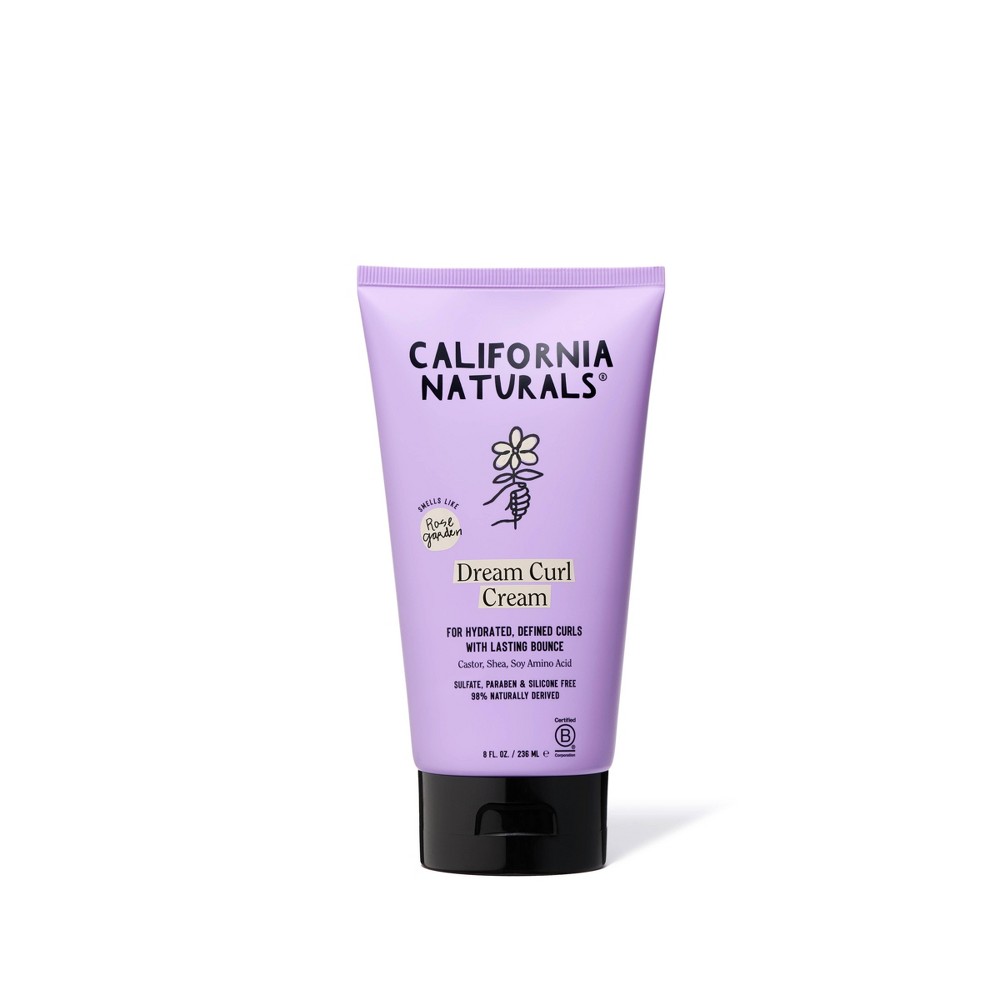

California Naturals Dream Curl Cream - 8oz
Analysis updated August 2026 · How Scout scores
At a glance
Summary
This product features a variety of beneficial natural oils and butters, such as shea butter, jojoba oil, and argan oil, which are known for their moisturizing and skin-nourishing properties. The inclusion of Vitamin B5 and rice ferment filtrate further enhances its hydrating and conditioning benefits. However, the presence of 'aroma' as a fragrance component may pose a risk of irritation for sensitive skin, slightly impacting the overall ingredient safety score.
Key ingredients 32
Butyrospermum Parkii (Shea) ButterVery Good
Shea butter is a natural fat extracted from the nuts of the shea tree. It is known for its moisturizing and anti-inflammatory properties. It is beneficial for dry and sensitive skin.
Risks
Rarely, shea butter can cause allergic reactions in individuals with nut allergies.
Benefits
Shea butter deeply moisturizes the skin and can help soothe irritation and inflammation.
Helianthus Annuus (Sunflower) Seed OilVery Good
Sunflower seed oil is a natural oil rich in fatty acids and vitamin E. It is known for its moisturizing and antioxidant properties. It is beneficial for maintaining skin barrier function.
Risks
There is a low risk of allergic reactions, particularly in individuals with sunflower seed allergies.
Benefits
Sunflower seed oil helps to moisturize and protect the skin, providing antioxidant benefits.
Panthenol (Vitamin B5)Very Good
Panthenol is a form of vitamin B5 that acts as a moisturizer and skin conditioner. It helps to improve skin hydration and elasticity. It is well-tolerated and beneficial for most skin types.
Risks
Panthenol is generally safe, with minimal risk of irritation.
Benefits
It enhances skin hydration, reduces inflammation, and promotes healing.
Ricinus Communis (Castor) Seed OilVery Good
Castor seed oil is a natural oil known for its moisturizing and anti-inflammatory properties. It is often used to soothe and hydrate the skin. It is beneficial for dry and irritated skin.
Risks
There is a low risk of allergic reactions, particularly in individuals with castor oil allergies.
Benefits
Castor seed oil deeply moisturizes the skin and can help reduce inflammation.
Simmondsia Chinensis (Jojoba) Seed OilVery Good
Jojoba seed oil is a natural oil that closely resembles the skin's natural sebum. It is known for its moisturizing and balancing properties. It is beneficial for all skin types, including oily and acne-prone skin.
Risks
There is a low risk of allergic reactions, but it is generally well-tolerated.
Benefits
Jojoba seed oil helps to balance oil production and moisturize the skin without clogging pores.
Argania Spinosa (Argan) Kernel OilVery Good
Argan kernel oil is a natural oil rich in fatty acids and vitamin E. It is known for its moisturizing and antioxidant properties. It is beneficial for maintaining skin elasticity and hydration.
Risks
There is a low risk of allergic reactions, particularly in individuals with nut allergies.
Benefits
Argan oil helps to moisturize and protect the skin, providing antioxidant benefits.
GlycerinGood
Glycerin is a humectant that attracts moisture to the skin, helping to keep it hydrated. It is widely used in skincare for its moisturizing properties. It is considered safe and beneficial for most skin types.
Risks
There are minimal risks associated with glycerin, though it may cause irritation in very sensitive skin.
Benefits
Glycerin helps to maintain skin hydration and improve skin barrier function.
Saccharomyces/Rice Ferment FiltrateGood
Rice ferment filtrate is used for its moisturizing and brightening properties. It is derived from fermented rice and is rich in amino acids and vitamins. It is beneficial for improving skin texture and tone.
Risks
There is a low risk of irritation, but it is generally well-tolerated.
Benefits
It helps to hydrate the skin and improve its overall appearance.
Hydrolyzed Rice ProteinGood
Hydrolyzed rice protein is used for its conditioning and strengthening properties. It helps to improve hair elasticity and reduce breakage. It is beneficial for maintaining healthy hair.
Risks
There are minimal risks associated with this ingredient.
Benefits
It enhances hair strength and resilience, reducing damage.
Hibiscus Sabdariffa Fruit ExtractGood
Hibiscus extract is rich in antioxidants and is known for its anti-aging and moisturizing properties. It helps to improve skin elasticity and hydration. It is beneficial for maintaining youthful and healthy skin.
Risks
There is a low risk of allergic reactions, but it is generally well-tolerated.
Benefits
Hibiscus extract helps to hydrate the skin and reduce the appearance of fine lines.
Soy Amino AcidsGood
Soy amino acids are used for their conditioning and strengthening properties. They help to improve hair texture and manageability. They are beneficial for maintaining healthy hair.
Risks
There are minimal risks associated with this ingredient.
Benefits
They enhance hair strength and resilience, reducing damage.
Sodium HyaluronateGood
Sodium hyaluronate is a form of hyaluronic acid known for its excellent moisturizing properties. It helps to retain moisture in the skin, improving hydration and elasticity. It is beneficial for all skin types, especially dry and aging skin.
Risks
There are minimal risks associated with sodium hyaluronate.
Benefits
It provides intense hydration and helps to plump the skin, reducing the appearance of fine lines.
Aqua/Water/EauNeutral
Water is a universal solvent used as a base in many cosmetic products. It helps dissolve other ingredients and provides hydration. It is generally considered safe and non-irritating.
Risks
There are no significant risks associated with water in cosmetics.
Benefits
Water helps to hydrate the skin and acts as a carrier for other beneficial ingredients.
Cetyl AlcoholNeutral
Cetyl alcohol is a fatty alcohol used as an emollient and thickener in cosmetics. It helps to soften the skin and improve product texture. It is generally considered safe and non-irritating.
Risks
In rare cases, cetyl alcohol can cause skin irritation or allergic reactions.
Benefits
Cetyl alcohol helps to soften and smooth the skin, enhancing the feel of cosmetic products.
Stearyl AlcoholNeutral
Stearyl alcohol is a fatty alcohol used as an emollient and thickener. It helps to stabilize and improve the texture of cosmetic formulations. It is generally safe and non-irritating.
Risks
Stearyl alcohol may cause irritation in sensitive individuals.
Benefits
It provides a smooth, creamy texture to products and helps to soften the skin.
Behentrimonium ChlorideNeutral
Behentrimonium chloride is a conditioning agent that helps to detangle and soften hair. It is commonly used in hair care products for its conditioning properties. It is generally considered safe in low concentrations.
Risks
High concentrations can cause irritation, but it is typically used in safe amounts.
Benefits
It improves hair manageability and reduces static and frizz.
SorbitolNeutral
Sorbitol is a sugar alcohol used as a humectant and thickener in cosmetics. It helps to retain moisture in the skin. It is considered safe and non-irritating.
Risks
Sorbitol is generally safe, but excessive use can lead to skin irritation.
Benefits
It helps to maintain skin hydration and improve product texture.
HydroxypropylgluconamideNeutral
Hydroxypropylgluconamide is used as a conditioning agent in hair care products. It helps to improve hair texture and manageability. It is generally considered safe for use in cosmetics.
Risks
There are minimal risks associated with this ingredient.
Benefits
It enhances hair smoothness and reduces frizz.
Hydroxypropylammonium GluconateNeutral
Hydroxypropylammonium gluconate is used as a conditioning agent in hair care products. It helps to improve hair texture and manageability. It is generally considered safe for use in cosmetics.
Risks
There are minimal risks associated with this ingredient.
Benefits
It enhances hair smoothness and reduces frizz.
Melia Azadirachta Flower ExtractNeutral
Melia azadirachta flower extract is used for its soothing and anti-inflammatory properties. It is derived from the neem tree and is known for its skin-calming effects. It is generally considered safe for use in cosmetics.
Risks
There is a low risk of allergic reactions, but it is generally well-tolerated.
Benefits
It helps to soothe and calm irritated skin.
Coccinia Indica Fruit ExtractNeutral
Coccinia indica fruit extract is used for its antioxidant and skin-soothing properties. It is derived from the ivy gourd plant and is known for its calming effects on the skin. It is generally considered safe for use in cosmetics.
Risks
There is a low risk of allergic reactions, but it is generally well-tolerated.
Benefits
It helps to soothe and protect the skin from environmental stressors.
PullulanNeutral
Pullulan is a polysaccharide used as a film-forming agent in cosmetics. It helps to create a smooth, even texture on the skin. It is generally considered safe and non-irritating.
Risks
There are minimal risks associated with pullulan.
Benefits
It provides a smooth texture and helps to improve the appearance of the skin.
EthylhexylglycerinNeutral
Ethylhexylglycerin is used as a preservative and skin-conditioning agent. It helps to enhance the efficacy of other preservatives and improve skin feel. It is generally considered safe for use in cosmetics.
Risks
There is a low risk of skin irritation, but it is generally well-tolerated.
Benefits
It helps to preserve the product and improve skin texture.
ErythritolNeutral
Erythritol is a sugar alcohol used as a humectant and skin-conditioning agent. It helps to retain moisture in the skin. It is generally considered safe and non-irritating.
Risks
There are minimal risks associated with erythritol.
Benefits
It helps to maintain skin hydration and improve product texture.
Citric AcidNeutral
Citric acid is used to adjust the pH of cosmetic formulations. It is also known for its exfoliating properties. It is generally considered safe for use in cosmetics.
Risks
High concentrations can cause skin irritation, but it is typically used in safe amounts.
Benefits
It helps to balance the pH of products and can provide mild exfoliation.
Xanthan GumNeutral
Xanthan gum is a thickening agent used to stabilize cosmetic formulations. It helps to improve product texture and consistency. It is generally considered safe and non-irritating.
Risks
There are minimal risks associated with xanthan gum.
Benefits
It provides a smooth texture and helps to stabilize formulations.
Sclerotium GumNeutral
Sclerotium gum is a thickening agent used to stabilize cosmetic formulations. It helps to improve product texture and consistency. It is generally considered safe and non-irritating.
Risks
There are minimal risks associated with sclerotium gum.
Benefits
It provides a smooth texture and helps to stabilize formulations.
Cetrimonium ChlorideBad
Processed additive flagged under Scout's ingredient doctrine.
Risks
High concentrations can cause irritation, but it is typically used in safe amounts.
Benefits
It improves hair smoothness and reduces frizz.
Sodium BenzoateBad
Synthetic preservative that can form benzene in the presence of vitamin C.
Risks
There is a low risk of skin irritation, but it is generally well-tolerated.
Benefits
It helps to preserve the product and extend its shelf life.
Potassium SorbateBad
Synthetic preservative — flagged in daily-use products.
Risks
There is a low risk of skin irritation, but it is generally well-tolerated.
Benefits
It helps to preserve the product and extend its shelf life.
LecithinBad
Processed additive flagged under Scout's ingredient doctrine.
Risks
There is a low risk of allergic reactions, but it is generally well-tolerated.
Benefits
It helps to stabilize formulations and improve skin texture.
AromaBad
Aroma is a term used to describe added fragrances in cosmetic products. Fragrances can cause skin irritation and allergic reactions in sensitive individuals. They are often criticized for their potential to cause skin sensitization.
Risks
Fragrances can cause skin irritation and allergic reactions, especially in sensitive individuals.
Benefits
Aroma can enhance the sensory experience of using a product.
Get the full breakdown in the Scout appTake Scout shopping
Scan any product to see lab results, healthy alternatives, and your personalized analysis.
Download on theApp Store GET IT ONGoogle Play