
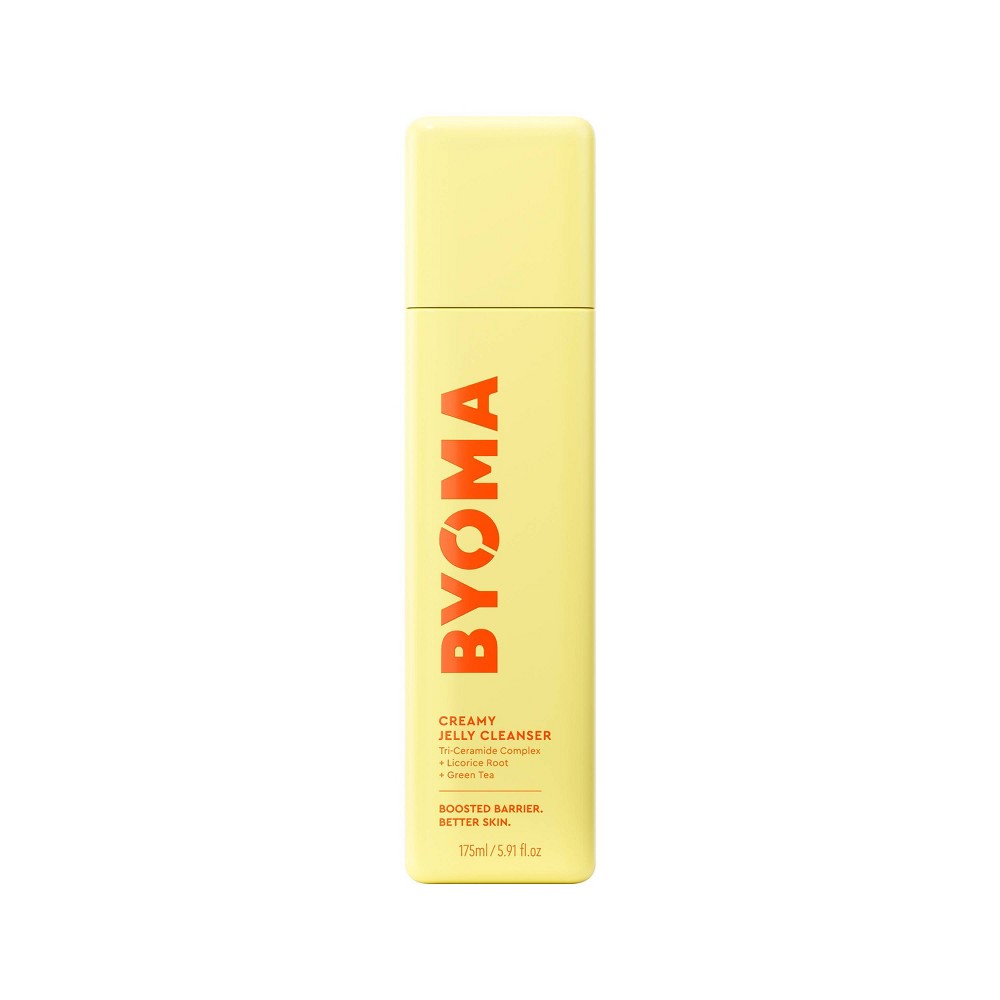

BYOMA Creamy Jelly Face Cleanser - Unscented - 5.91 fl oz
Analysis updated August 2026 · How Scout scores
At a glance
Summary
This face cleanser contains beneficial ingredients like glycerin, green tea extract, ceramide NP, and licorice root extract, which provide hydration, antioxidant protection, and skin-soothing benefits. However, the presence of sodium lauryl sulfoacetate and cocamide methyl MEA, which are moderately processed surfactants, slightly lowers the score. Additionally, the inclusion of phenoxyethanol as a preservative, while common, adds to the processing level, preventing a higher rating.
Key ingredients 28
Camellia Sinensis Leaf ExtractVery Good
Camellia Sinensis Leaf Extract, or green tea extract, is rich in antioxidants that help to protect the skin from environmental damage. It has anti-inflammatory properties that can soothe irritated skin. It is a beneficial ingredient for maintaining healthy skin.
Risks
Generally considered safe with minimal risk of irritation.
Benefits
Offers antioxidant protection and soothes the skin, reducing inflammation.
Glycyrrhiza Glabra (Licorice) Root ExtractVery Good
Licorice Root Extract is known for its skin-soothing and brightening properties. It helps to reduce redness and hyperpigmentation, making it beneficial for uneven skin tone. It is generally well-tolerated and suitable for sensitive skin.
Risks
Rarely causes irritation or allergic reactions.
Benefits
Soothes the skin and helps to even out skin tone by reducing hyperpigmentation.
GlycerinGood
Glycerin is a powerful humectant that attracts moisture to the skin, helping to keep it hydrated. It is widely used in skincare products for its excellent moisturizing properties. It is generally well-tolerated and suitable for all skin types.
Risks
Rarely causes irritation or allergic reactions.
Benefits
Provides deep hydration and helps to maintain the skin's moisture balance.
Ceramide NPGood
Ceramide NP is a lipid that helps to restore the skin's natural barrier, preventing moisture loss. It is essential for maintaining healthy, hydrated skin. It is well-tolerated and beneficial for all skin types.
Benefits
Strengthens the skin barrier and enhances moisture retention.
Decyl GlucosideGood
Beneficial ingredient — whole-food or functional value in this product class.
Benefits
Provides gentle cleansing without irritating the skin.
Tocopheryl AcetateGood
Beneficial ingredient — whole-food or functional value in this product class.
Benefits
Provides antioxidant protection and moisturizes the skin.
AquaNeutral
Aqua, or water, is a common solvent used in cosmetics to dissolve other ingredients. It is essential for the formulation but does not provide direct skin benefits. It is generally considered safe and non-irritating.
Risks
There are no significant risks associated with water in cosmetic formulations.
Benefits
Water helps to hydrate the skin by acting as a vehicle for other moisturizing ingredients.
Cocamidopropyl BetaineNeutral
Cocamidopropyl Betaine is a mild surfactant derived from coconut oil, used to create foam and cleanse the skin. It is generally well-tolerated but can cause irritation in some individuals. It is often used in formulations for its gentle cleansing properties.
Risks
May cause skin irritation or allergic reactions in sensitive individuals.
Benefits
Provides gentle cleansing and foaming properties without stripping the skin's natural oils.
Disodium Laureth SulfosuccinateNeutral
Disodium Laureth Sulfosuccinate is a mild surfactant used in cleansing products. It is less irritating than traditional sulfates and is often used in formulations for sensitive skin. It helps to remove dirt and oil effectively.
Risks
May cause mild irritation in very sensitive skin types.
Benefits
Offers effective cleansing with a lower risk of irritation compared to harsher sulfates.
Cocamide Methyl MEANeutral
Cocamide Methyl MEA is a surfactant and foam booster derived from coconut oil. It helps to stabilize foam and improve the texture of cleansing products. It is generally considered safe for use in cosmetics.
Risks
Potential for mild skin irritation in sensitive individuals.
Benefits
Enhances the foaming and cleansing properties of the product.
Sodium Lauryl SulfoacetateNeutral
Sodium Lauryl Sulfoacetate is a mild surfactant used for its cleansing and foaming properties. It is considered less irritating than sodium lauryl sulfate. It is often used in products for sensitive skin.
Risks
May cause mild irritation in sensitive skin types.
Benefits
Provides effective cleansing with a lower irritation potential compared to harsher sulfates.
Sodium ChlorideNeutral
Sodium Chloride, or table salt, is used to thicken the consistency of cosmetic products. It is generally safe and non-irritating in small amounts. It helps to stabilize the formulation.
Risks
Excessive use can lead to dryness or irritation.
Benefits
Helps to improve the texture and stability of the product.
Sodium Methyl Cocoyl TaurateNeutral
Sodium Methyl Cocoyl Taurate is a mild surfactant derived from coconut oil. It is used for its gentle cleansing properties and is suitable for sensitive skin. It helps to create a creamy lather.
Risks
May cause mild irritation in very sensitive individuals.
Benefits
Provides gentle cleansing with a creamy lather, suitable for sensitive skin.
CholesterolNeutral
Cholesterol is a lipid that helps to maintain the skin's barrier function. It works synergistically with ceramides to improve skin hydration. It is generally well-tolerated and beneficial for dry skin.
Benefits
Supports the skin's barrier and improves moisture retention.
PhytosphingosineNeutral
Phytosphingosine is a lipid that helps to maintain the skin's natural barrier and has anti-inflammatory properties. It is beneficial for soothing irritated skin and improving overall skin health. It is generally well-tolerated.
Benefits
Helps to soothe inflammation and support the skin's barrier function.
Stearic AcidNeutral
Stearic Acid is a fatty acid used as an emulsifier and thickener in cosmetic formulations. It helps to stabilize products and improve their texture. It is generally considered safe and non-irritating.
Benefits
Improves product stability and texture.
Oleic AcidNeutral
Oleic Acid is a fatty acid that helps to moisturize and soften the skin. It is often used in formulations to enhance the penetration of other active ingredients. It is generally considered safe and non-irritating.
Benefits
Moisturizes the skin and enhances the absorption of other ingredients.
Caprylic/Capric TriglycerideNeutral
Caprylic/Capric Triglyceride is an emollient derived from coconut oil and glycerin. It helps to moisturize and condition the skin, leaving it soft and smooth. It is generally well-tolerated and suitable for all skin types.
Benefits
Provides lightweight moisture and improves skin texture.
Hydrogenated LecithinNeutral
Hydrogenated Lecithin is an emulsifier that helps to stabilize cosmetic formulations. It also has moisturizing properties that benefit the skin. It is generally considered safe and non-irritating.
Benefits
Stabilizes formulations and provides moisturizing benefits.
Butylene GlycolNeutral
Butylene Glycol is a humectant that helps to retain moisture in the skin. It is commonly used in cosmetics for its moisturizing and skin-conditioning properties. It is generally considered safe but can cause irritation in some individuals.
Risks
May cause skin irritation or allergic reactions in sensitive individuals.
Benefits
Helps to hydrate the skin by attracting and retaining moisture.
AllantoinNeutral
Allantoin is a skin-soothing agent that helps to calm irritation and promote healing. It is often used in products for sensitive or irritated skin. It is generally well-tolerated and beneficial for maintaining healthy skin.
Benefits
Soothes and calms irritated skin, promoting healing.
Lactic AcidNeutral
Lactic Acid is an alpha hydroxy acid (AHA) used for its exfoliating and skin-renewing properties. It helps to improve skin texture and tone by promoting cell turnover. It is generally well-tolerated but can cause irritation in sensitive skin.
Risks
May cause irritation or sensitivity, especially in higher concentrations.
Benefits
Exfoliates the skin, improving texture and promoting a more even skin tone.
Caprylyl GlycolNeutral
Caprylyl Glycol is a skin-conditioning agent that helps to moisturize and soften the skin. It also has antimicrobial properties that enhance the preservation of cosmetic formulations. It is generally considered safe and non-irritating.
Benefits
Moisturizes the skin and helps to preserve the product.
Caprylhydroxamic AcidNeutral
Caprylhydroxamic Acid is a preservative used to prevent microbial growth in cosmetic formulations. It is effective at low concentrations and is generally considered safe. It helps to ensure the product remains free from harmful microorganisms.
Benefits
Provides effective preservation, maintaining product safety.
Propylene GlycolBad
Processed additive flagged under Scout's ingredient doctrine.
Risks
May cause skin irritation or allergic reactions in sensitive individuals.
Benefits
Helps to hydrate the skin by attracting and retaining moisture.
Sodium BenzoateBad
Synthetic preservative that can form benzene in the presence of vitamin C.
Risks
May cause irritation in sensitive skin types.
Benefits
Prevents microbial growth, ensuring product safety and longevity.
Potassium SorbateBad
Synthetic preservative — flagged in daily-use products.
Risks
May cause irritation in sensitive skin types.
Benefits
Prevents spoilage and extends the shelf life of the product.
PhenoxyethanolBad
Processed additive flagged under Scout's ingredient doctrine.
Risks
May cause irritation or allergic reactions in sensitive individuals.
Benefits
Prevents bacterial growth, ensuring product safety and extending shelf life.
Get the full breakdown in the Scout appTake Scout shopping
Scan any product to see lab results, healthy alternatives, and your personalized analysis.
Download on theApp Store GET IT ONGoogle PlayAmazon pricing & content
Amazon price as of . Product prices and availability are accurate as of the date/time indicated and are subject to change. Any price and availability information displayed on Amazon.com at the time of purchase will apply to the purchase of this product.
CERTAIN CONTENT THAT APPEARS ON THIS SITE COMES FROM AMAZON. THIS CONTENT IS PROVIDED “AS IS” AND IS SUBJECT TO CHANGE OR REMOVAL AT ANY TIME.