


At a glance
Summary
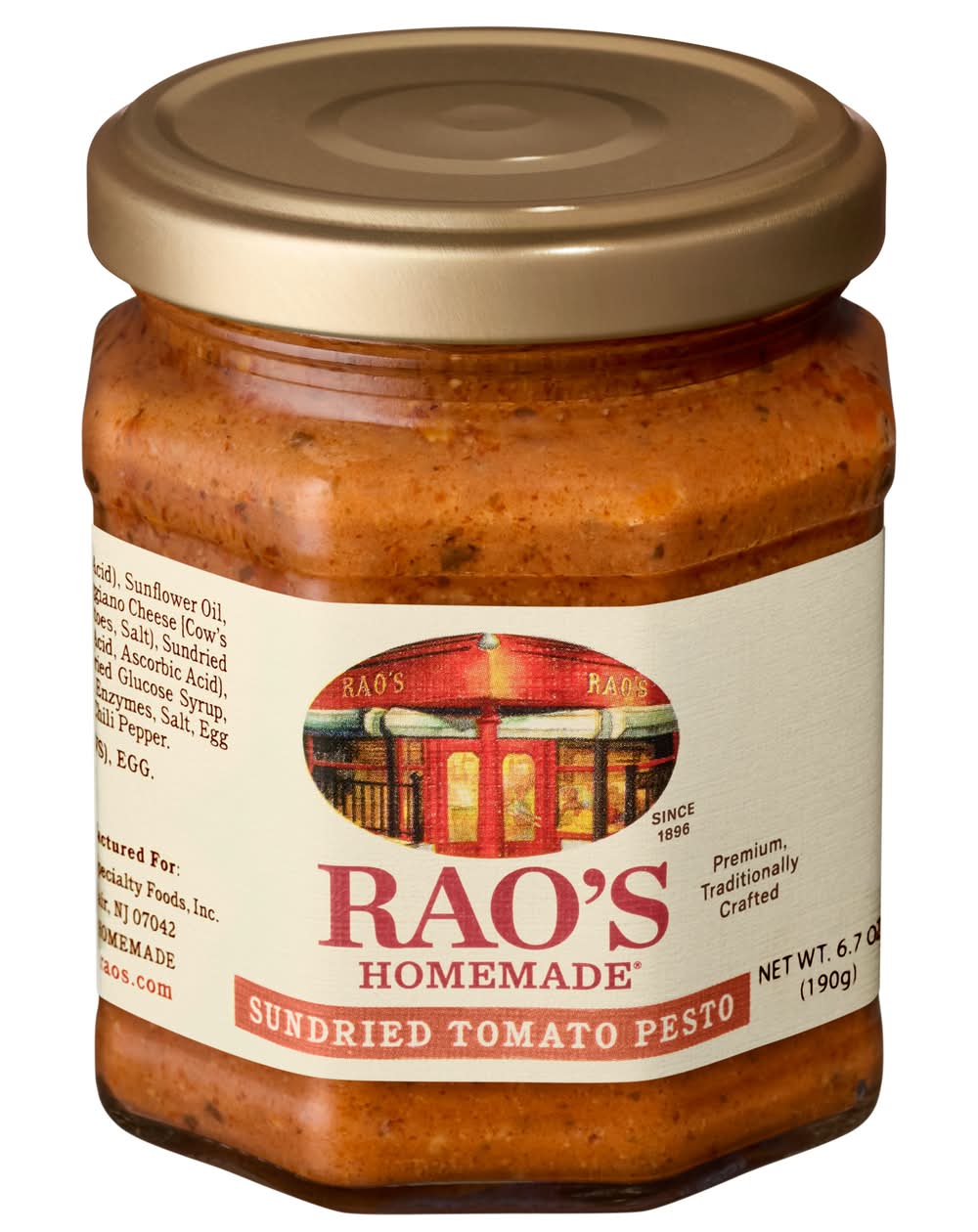
This sun-dried tomato pesto features high-quality ingredients such as extra virgin olive oil, basil, and pine nuts, which contribute beneficial nutrients and healthy fats. The product is moderately processed, containing a few additives like lactic acid and ascorbic acid, but it avoids major harmful ingredients like seed oils or artificial additives. The presence of natural ingredients and minimal additives supports a relatively high score within its category.
Key ingredients 13
Extra virgin olive oilVery Good
High-quality monounsaturated fat with anti-inflammatory properties. Contains antioxidants that support heart health. Cold-pressed extraction preserves beneficial compounds.
Benefits
Rich in monounsaturated fats that support heart health and provide anti-inflammatory properties. Contains antioxidants like vitamin E and polyphenols that may reduce oxidative stress.
Rehydrated sun-dried tomatoesGood
Sun-dried tomatoes are rich in vitamins and antioxidants, particularly lycopene, which supports heart health. The rehydration process helps retain their nutritional value while making them easier to blend into pesto. They provide a concentrated source of flavor and nutrients compared to fresh tomatoes.
Benefits
High in antioxidants like lycopene, which may reduce the risk of chronic diseases. Provides a rich source of vitamins A and C.
BasilGood
Basil is a fresh herb that adds flavor and aroma to the pesto. It contains essential oils with anti-inflammatory and antibacterial properties. Basil is also a source of vitamins A, K, and C.
Benefits
Rich in antioxidants and essential oils that may support immune health and reduce inflammation.
Pine nutsGood
Pine nuts are a nutrient-dense seed providing healthy fats, protein, and essential minerals. They are a good source of magnesium and vitamin E, supporting heart health. Pine nuts add a creamy texture and nutty flavor to the pesto.
Risks
Potential allergen for individuals with nut allergies.
Benefits
Rich in healthy fats and antioxidants, supporting cardiovascular health and reducing inflammation.
Garlic puréeGood
Garlic purée adds flavor and potential health benefits to the pesto. It contains allicin, which has antimicrobial and anti-inflammatory properties. The purée form makes it easy to incorporate into recipes.
Benefits
Contains compounds that may support cardiovascular health and immune function.
Tomato puréeNeutral
Tomato purée is a concentrated form of tomatoes, providing a rich source of flavor and nutrients. It is typically made by cooking and straining tomatoes, which retains most of the vitamins and minerals. However, it lacks the fiber content found in whole tomatoes.
Benefits
Provides a concentrated source of vitamins A and C, and enhances the flavor profile of the pesto.
Tomato pulpNeutral
Tomato pulp is used to add texture and flavor to the pesto. It is made from the flesh of tomatoes, retaining some fiber and nutrients. However, it is less nutrient-dense than whole tomatoes.
Benefits
Contributes to the texture and flavor of the pesto, providing some vitamins and minerals.
Pecorino Romano cheese PDONeutral
Pecorino Romano is a hard, salty cheese made from sheep's milk, adding umami flavor to the pesto. It is a source of calcium and protein but also high in sodium. The PDO designation ensures traditional production methods.
Risks
High sodium content may be a concern for individuals with hypertension.
Benefits
Provides calcium and protein, contributing to bone health and muscle maintenance.
Parmigiano Reggiano cheese PDONeutral
Parmigiano Reggiano is a hard cheese known for its rich flavor and nutritional content. It is a good source of calcium and protein but also contains high sodium levels. The PDO status ensures quality and traditional production methods.
Risks
High sodium content may pose risks for those with high blood pressure.
Benefits
Rich in calcium and protein, supporting bone health and muscle function.
Concentrated lemon juiceNeutral
Concentrated lemon juice adds acidity and flavor to the pesto. It is a source of vitamin C but lacks the fiber and other nutrients found in whole lemons. The concentration process may reduce some nutritional benefits.
Benefits
Provides vitamin C, which supports immune function and acts as an antioxidant.
SaltNeutral
Salt is used to enhance the flavor of the pesto. It is a necessary mineral for bodily functions but should be consumed in moderation. Excessive intake can lead to health issues such as hypertension.
Risks
High sodium intake can contribute to high blood pressure and cardiovascular issues.
Benefits
Essential for maintaining fluid balance and nerve function.
Acidity regulators (lactic acid, citric acid)Neutral
Acidity regulators like lactic acid and citric acid are used to maintain the pH and stability of the pesto. They are generally recognized as safe and naturally occur in various foods. These acids help preserve the product and enhance flavor.
Benefits
Help preserve the product and maintain its flavor profile.
Antioxidant (ascorbic acid)Neutral
Ascorbic acid, also known as vitamin C, is used as an antioxidant to prevent oxidation and preserve the color of the pesto. It is a water-soluble vitamin essential for collagen synthesis and immune function. As an additive, it helps maintain the quality of the product.
Benefits
Acts as an antioxidant and supports immune health.
Processing
Processed Foods
Get the full breakdown in the Scout appTake Scout shopping
Scan any product to see lab results, healthy alternatives, and your personalized analysis.
Download on theApp Store GET IT ONGoogle Play