
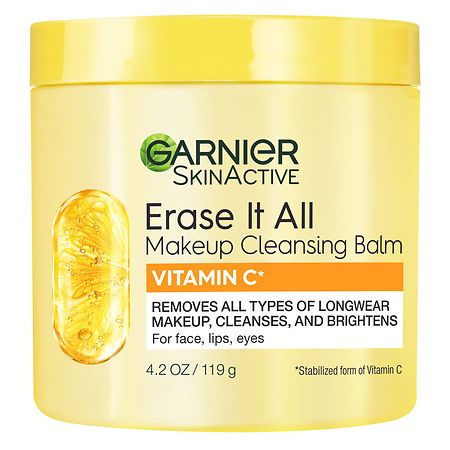

Garnier Makeup Cleansing Balm Vitamin C - 4.2oz
Analysis updated September 2026 · How Scout scores
At a glance
Summary
This cleansing balm contains beneficial ingredients like shea butter, jojoba seed oil, and tocopherol, which are known for their moisturizing and antioxidant properties. However, the presence of polyethylene and multiple PEG compounds indicates a higher level of processing, which can be concerning due to potential skin irritation and environmental impact. Additionally, the inclusion of synthetic colorant Yellow 5 Lake and phenoxyethanol as a preservative further affects the overall ingredient safety profile.
Key ingredients 17
Butyrospermum Parkii Butter / Shea ButterVery Good
Shea Butter is a natural fat extracted from the nuts of the shea tree, known for its moisturizing properties. It is rich in vitamins and fatty acids, making it beneficial for skin health. It is widely used in cosmetics for its nourishing and hydrating effects.
Risks
There is a minimal risk of allergic reactions for individuals with nut allergies.
Benefits
It deeply moisturizes and nourishes the skin, improving elasticity and softness.
Simmondsia Chinensis Seed Oil / Jojoba Seed OilVery Good
Jojoba Seed Oil is a natural oil extracted from the seeds of the jojoba plant, known for its moisturizing and skin-soothing properties. It closely resembles the skin's natural sebum, making it an excellent moisturizer. It is widely used in cosmetics for its nourishing and protective effects.
Risks
There is a minimal risk of allergic reactions.
Benefits
It hydrates and balances the skin, providing a protective barrier.
TocopherolVery Good
Tocopherol, also known as Vitamin E, is a powerful antioxidant that helps to protect the skin from free radical damage. It is widely used in cosmetics for its skin conditioning and protective properties. It is considered safe and beneficial for skin health.
Risks
There is a minimal risk of allergic reactions.
Benefits
It provides antioxidant protection and improves skin health.
Ascorbyl PalmitateGood
Ascorbyl Palmitate is a stable form of Vitamin C used in cosmetics for its antioxidant properties. It helps to protect the skin from oxidative stress and improve skin tone. It is generally considered safe and beneficial for skin health.
Risks
There is a minimal risk of skin irritation for sensitive individuals.
Benefits
It provides antioxidant protection and enhances skin radiance.
Ethylhexyl PalmitateNeutral
Ethylhexyl Palmitate is an ester of 2-ethylhexyl alcohol and palmitic acid, commonly used as an emollient. It helps to soften and smooth the skin. It is generally considered safe for use in cosmetics.
Risks
There is a low risk of skin irritation for sensitive individuals.
Benefits
It provides a smooth application and helps to improve the texture of the skin.
PEG-20 Glyceryl TriisostearateNeutral
PEG-20 Glyceryl Triisostearate is an emulsifier that helps to blend oil and water-based ingredients. It is commonly used in cleansing products. It is generally considered safe for use in cosmetics.
Risks
There is a potential risk of contamination with ethylene oxide and 1,4-dioxane.
Benefits
It improves the consistency and effectiveness of cleansing products.
PEG-30 DipolyhydroxystearateNeutral
PEG-30 Dipolyhydroxystearate is an emulsifying agent that helps to mix oil and water components. It is commonly used in cleansing products. It is generally considered safe for use in cosmetics.
Risks
There is a potential risk of contamination with ethylene oxide and 1,4-dioxane.
Benefits
It enhances the texture and stability of cosmetic formulations.
Caprylyl GlycolNeutral
Caprylyl Glycol is a humectant and skin conditioning agent used in cosmetics. It helps to retain moisture and improve the texture of the skin. It is generally considered safe for use in cosmetics.
Risks
There is a low risk of skin irritation for sensitive individuals.
Benefits
It enhances the moisturizing properties of cosmetic products.
Polysorbate 20Neutral
Polysorbate 20 is an emulsifier used to mix oil and water components in cosmetics. It helps to stabilize formulations and improve texture. It is generally considered safe for use in cosmetics.
Risks
There is a potential risk of contamination with ethylene oxide and 1,4-dioxane.
Benefits
It enhances the texture and stability of cosmetic products.
OctyldodecanolNeutral
Octyldodecanol is a fatty alcohol used as an emollient and thickening agent in cosmetics. It helps to soften and smooth the skin. It is generally considered safe for use in cosmetics.
Risks
There is a low risk of skin irritation for sensitive individuals.
Benefits
It provides a smooth application and improves the texture of the skin.
CI 19140 / Yellow 5 LakeNeutral
CI 19140, also known as Yellow 5 Lake, is a synthetic dye used to impart color to cosmetic products. It is approved for use in cosmetics by regulatory agencies. It is generally considered safe for use in cosmetics.
Risks
There is a potential risk of allergic reactions in sensitive individuals.
Benefits
It provides vibrant color to cosmetic formulations.
PPG-26-Buteth-26Neutral
PPG-26-Buteth-26 is a synthetic polymer used as a surfactant and emulsifier in cosmetics. It helps to improve the texture and stability of formulations. It is generally considered safe for use in cosmetics.
Risks
There is a potential risk of skin irritation for sensitive individuals.
Benefits
It enhances the texture and stability of cosmetic products.
PEG-40 Hydrogenated Castor OilNeutral
PEG-40 Hydrogenated Castor Oil is an emulsifier and surfactant used in cosmetics. It helps to blend oil and water components and improve texture. It is generally considered safe for use in cosmetics.
Risks
There is a potential risk of contamination with ethylene oxide and 1,4-dioxane.
Benefits
It enhances the texture and stability of cosmetic formulations.
Aqua / Water / EauNeutral
Water is a universal solvent used as a base in many cosmetic formulations. It helps to dissolve other ingredients and provide hydration. It is essential for the formulation of most cosmetic products.
Risks
There are no significant risks associated with water in cosmetics.
Benefits
It provides hydration and acts as a solvent for other ingredients.
Citric AcidNeutral
Citric Acid is a weak organic acid used to adjust the pH of cosmetic formulations. It helps to maintain the stability and effectiveness of the product. It is generally considered safe for use in cosmetics.
Risks
There is a low risk of skin irritation for sensitive individuals.
Benefits
It helps to maintain the stability and effectiveness of cosmetic formulations.
PhenoxyethanolBad
Processed additive flagged under Scout's ingredient doctrine.
Risks
High concentrations can cause skin irritation and allergic reactions.
Benefits
It effectively preserves the product, extending its shelf life.
PolyethyleneVery Bad
Heavily flagged ingredient class under Scout's doctrine.
Risks
Microplastic pollution is a concern with polyethylene use.
Benefits
It enhances the texture and stability of cosmetic products.
Get the full breakdown in the Scout appTake Scout shopping
Scan any product to see lab results, healthy alternatives, and your personalized analysis.
Download on theApp Store GET IT ONGoogle PlayAmazon pricing & content
Amazon price as of . Product prices and availability are accurate as of the date/time indicated and are subject to change. Any price and availability information displayed on Amazon.com at the time of purchase will apply to the purchase of this product.
CERTAIN CONTENT THAT APPEARS ON THIS SITE COMES FROM AMAZON. THIS CONTENT IS PROVIDED “AS IS” AND IS SUBJECT TO CHANGE OR REMOVAL AT ANY TIME.