
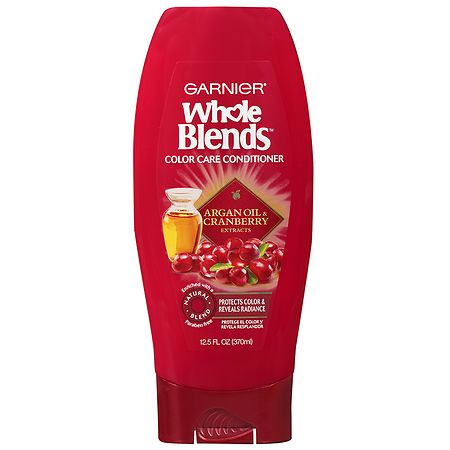

Garnier Whole Blends Conditioner with Argan Oil & Cranberry Extracts 12.5 FL OZ
Analysis updated September 2026 · How Scout scores
At a glance
Summary
This conditioner contains beneficial ingredients like argan oil, cranberry seed oil, and aloe vera, which provide nourishment and hydration to the hair. However, the presence of drying alcohols such as isopropyl alcohol and benzyl alcohol, along with synthetic fragrance, can potentially cause dryness and irritation. These factors, combined with the inclusion of some synthetic additives, influence the overall rating.
Key ingredients 26
ARGANIA SPINOSA KERNEL OILVery Good
Argan oil is rich in essential fatty acids and vitamin E, providing deep conditioning and nourishment to hair. It helps improve hair elasticity and shine. It is highly regarded for its moisturizing properties.
Risks
There are minimal risks, though it may cause greasiness if over-applied.
Benefits
It deeply conditions and enhances hair health and shine.
BEHENTRIMONIUM CHLORIDEGood
Behentrimonium chloride is a conditioning agent that helps detangle and soften hair. It is effective in reducing static and frizz. It is generally regarded as safe for use in hair care products.
Risks
In rare cases, it may cause mild irritation to sensitive scalps.
Benefits
It enhances hair manageability and provides a smooth feel.
GLYCERINGood
Glycerin is a humectant that attracts moisture to the hair and skin. It helps maintain hydration and prevents dryness. It is widely used and considered safe in cosmetic formulations.
Risks
Overuse can lead to a sticky feel, especially in humid conditions.
Benefits
It provides lasting moisture and improves hair elasticity.
VACCINIUM MACROCARPON (CRANBERRY) SEED OILGood
Cranberry seed oil is rich in antioxidants and essential fatty acids. It helps protect hair from environmental damage and provides nourishment. It is considered beneficial for maintaining healthy hair.
Risks
There are minimal risks associated with cranberry seed oil.
Benefits
It offers antioxidant protection and enhances hair vitality.
ALOE BARBADENSIS / ALOE BARBADENSIS LEAF JUICEGood
Aloe vera is known for its soothing and moisturizing properties. It helps hydrate the hair and scalp, reducing irritation. It is widely used and considered safe in hair care products.
Risks
There are minimal risks, though some may experience mild allergic reactions.
Benefits
It provides hydration and soothes the scalp.
AQUA / WATER / EAUNeutral
Water is the primary solvent in many cosmetic products. It helps dissolve other ingredients and provides a base for the formulation. It is generally considered safe and non-reactive.
Risks
There are no significant risks associated with water in cosmetic formulations.
Benefits
Water helps in the even distribution of other ingredients and provides hydration.
CETEARYL ALCOHOLNeutral
Standard formulation ingredient — neither beneficial nor harmful at typical use.
Risks
There are minimal risks, though some individuals may experience mild irritation.
Benefits
It provides moisture and improves the texture of hair products.
CETYL ESTERSNeutral
Cetyl esters are used as emollients and thickeners in cosmetic products. They help improve the texture and spreadability of formulations. They are generally considered safe and non-irritating.
Risks
There are minimal risks associated with cetyl esters.
Benefits
They enhance the smoothness and application of the product.
DODECENENeutral
Dodecene is a hydrocarbon used as an emollient and texture enhancer. It helps improve the spreadability of products. It is generally considered safe for use in cosmetics.
Risks
There are minimal risks associated with dodecene.
Benefits
It improves the texture and application of the product.
POLOXAMER 407Neutral
Poloxamer 407 is a surfactant and emulsifier used to stabilize formulations. It helps improve the consistency and performance of products. It is generally considered safe for use in cosmetics.
Risks
There are minimal risks associated with poloxamer 407.
Benefits
It enhances product stability and consistency.
ISOPROPYL ALCOHOLNeutral
Standard formulation ingredient — neither beneficial nor harmful at typical use.
Risks
It can lead to dryness and irritation of the scalp and hair.
Benefits
It helps dissolve other ingredients and improve product texture.
ISOPROPYL MYRISTATENeutral
Isopropyl myristate is an emollient that helps improve the texture and absorption of products. It provides a smooth feel and enhances spreadability. It is generally considered safe for use in cosmetics.
Risks
There are minimal risks, though it may cause mild irritation in sensitive individuals.
Benefits
It enhances the texture and absorption of the product.
CITRIC ACIDNeutral
Citric acid is used to adjust the pH of cosmetic formulations. It helps maintain the stability and effectiveness of the product. It is generally considered safe for use in cosmetics.
Risks
There are minimal risks, though it may cause mild irritation in sensitive individuals.
Benefits
It helps maintain product stability and pH balance.
LAURYL PEG/PPG-18/18 METHICONENeutral
This ingredient is a silicone-based compound used to improve the texture and spreadability of products. It provides a smooth feel and enhances shine. It is generally considered safe for use in cosmetics.
Risks
There are minimal risks, though it may cause buildup with prolonged use.
Benefits
It enhances shine and smoothness of the hair.
ISOSTEARYL ALCOHOLNeutral
Isostearyl alcohol is a fatty alcohol used as an emollient and thickener. It helps improve the texture and spreadability of products. It is generally considered safe for use in cosmetics.
Risks
There are minimal risks associated with isostearyl alcohol.
Benefits
It enhances the texture and application of the product.
BENZOPHENONE-4Neutral
Benzophenone-4 is a UV filter used to protect hair from sun damage. It helps prevent color fading and damage from UV exposure. It is generally considered safe for use in cosmetics.
Risks
There are minimal risks, though it may cause mild irritation in sensitive individuals.
Benefits
It provides UV protection and helps maintain hair color.
CHLORHEXIDINE DIGLUCONATENeutral
Chlorhexidine digluconate is an antimicrobial agent used to prevent microbial growth in cosmetic products. It helps maintain product safety and stability. It is generally considered safe for use in cosmetics.
Risks
There are minimal risks, though it may cause mild irritation in sensitive individuals.
Benefits
It helps maintain product safety and prevent contamination.
CITRONELLOLNeutral
Citronellol is a naturally occurring terpene alcohol found in many essential oils. It is used for its fragrance and is generally considered safe in low concentrations. However, it can cause allergic reactions in sensitive individuals.
Risks
It may cause allergic reactions in sensitive individuals.
Benefits
It provides a pleasant floral scent.
HEXYL CINNAMALNeutral
Hexyl cinnamal is a fragrance ingredient used for its floral scent. It is generally considered safe in low concentrations but can cause allergic reactions in sensitive individuals. It is commonly used in personal care products.
Risks
It may cause allergic reactions in sensitive individuals.
Benefits
It provides a pleasant floral scent.
BHTBad
Processed additive flagged under Scout's ingredient doctrine.
Risks
There are minimal risks, though it may cause mild irritation in sensitive individuals.
Benefits
It helps preserve product stability and extend shelf life.
PHENOXYETHANOLBad
Processed additive flagged under Scout's ingredient doctrine.
Risks
There are minimal risks, though it may cause mild irritation in sensitive individuals.
Benefits
It helps maintain product safety and prevent contamination.
LINALOOLBad
Processed additive flagged under Scout's ingredient doctrine.
Risks
It may cause allergic reactions in sensitive individuals.
Benefits
It provides a pleasant floral scent.
LIMONENEBad
Processed additive flagged under Scout's ingredient doctrine.
Risks
It may cause allergic reactions in sensitive individuals.
Benefits
It provides a fresh citrus scent.
BENZYL ALCOHOLBad
Benzyl alcohol is a drying alcohol that can cause irritation and dryness. It is used as a preservative and solvent in cosmetic products. It is generally not recommended for frequent use in hair care products.
Risks
It can cause dryness and irritation of the scalp and hair.
Benefits
It helps preserve the product and improve texture.
ETHYLHEXYL METHOXYCINNAMATEVery Bad
Heavily flagged ingredient class under Scout's doctrine.
Risks
There are minimal risks, though it may cause mild irritation in sensitive individuals.
Benefits
It provides UV protection and helps maintain hair color.
PARFUM / FRAGRANCEVery Bad
Synthetic fragrances can cause irritation and allergic reactions in sensitive individuals. They are often composed of undisclosed chemicals that may have adverse effects. It is generally recommended to avoid synthetic fragrances in personal care products.
Risks
It can cause irritation and allergic reactions.
Benefits
It provides a pleasant scent to the product.
Get the full breakdown in the Scout appTake Scout shopping
Scan any product to see lab results, healthy alternatives, and your personalized analysis.
Download on theApp Store GET IT ONGoogle PlayAmazon pricing & content
Amazon price as of . Product prices and availability are accurate as of the date/time indicated and are subject to change. Any price and availability information displayed on Amazon.com at the time of purchase will apply to the purchase of this product.
CERTAIN CONTENT THAT APPEARS ON THIS SITE COMES FROM AMAZON. THIS CONTENT IS PROVIDED “AS IS” AND IS SUBJECT TO CHANGE OR REMOVAL AT ANY TIME.