
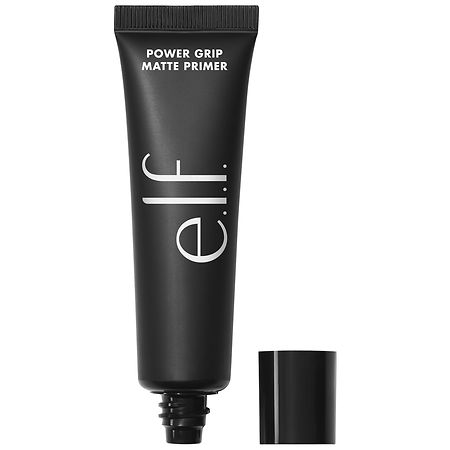


e.l.f. Power Grip Matte Primer - 0.87 fl oz: Paraben-Free, Vegan, Hydroquinone-Free, Gel Form
Analysis updated September 2026 · How Scout scores
At a glance
Summary
This primer contains beneficial ingredients like niacinamide, glycerin, and tocopherol, which provide hydration and antioxidant protection. However, the presence of PEG compounds and synthetic polymers indicates a moderate level of processing, which slightly impacts the overall safety profile. The absence of harsh surfactants and parabens is positive, but the inclusion of phenoxyethanol as a preservative requires cautious use for sensitive skin types.
Key ingredients 16
GlycerinGood
Glycerin is a humectant that attracts moisture to the skin, helping to keep it hydrated. It is widely used in skincare products for its moisturizing properties. It is generally considered safe and beneficial for most skin types.
Risks
There are minimal risks, though it can cause irritation in very sensitive skin.
Benefits
Glycerin helps to maintain skin hydration and improve skin barrier function.
NiacinamideGood
Niacinamide is a form of Vitamin B3 that is known for its anti-inflammatory and skin-brightening properties. It helps to improve skin texture and reduce the appearance of pores. It is highly regarded in skincare for its multiple benefits.
Risks
There are minimal risks, though it can cause mild irritation in very sensitive skin.
Benefits
Niacinamide helps to improve skin elasticity, enhance barrier function, and even out skin tone.
TocopherolGood
Tocopherol, also known as Vitamin E, is an antioxidant that helps to protect the skin from free radical damage. It is widely used in skincare products for its moisturizing and protective properties. It is generally considered safe and beneficial for most skin types.
Risks
There are minimal risks, though it can cause irritation in very sensitive skin.
Benefits
Tocopherol helps to moisturize the skin and protect it from environmental damage.
Water (Aqua)Neutral
Water is a common solvent used in cosmetics to dissolve other ingredients. It helps in forming the base of the product. It does not have any direct benefits or risks associated with its use in cosmetics.
Risks
There are no significant risks associated with water in cosmetics.
Benefits
Water helps in the application and spreadability of the product.
SilicaNeutral
Silica is used in cosmetics for its oil-absorbing properties and to provide a matte finish. It is commonly used in primers and powders. It is generally considered safe for use in cosmetics.
Risks
Inhalation of silica particles can be harmful, but this is not a concern in topical applications.
Benefits
Silica helps to control oil and shine, providing a smooth, matte finish.
Butylene GlycolNeutral
Butylene Glycol is a solvent and conditioning agent that helps to improve the texture of the product. It is commonly used in cosmetics for its ability to enhance the penetration of other ingredients. It is generally considered safe for use in cosmetics.
Risks
It can cause irritation in sensitive skin types.
Benefits
Butylene Glycol helps to improve the spreadability and absorption of the product.
PEG-150 DistearateNeutral
PEG-150 Distearate is an emulsifier that helps to stabilize and thicken cosmetic formulations. It is commonly used in skincare products to improve texture. It is generally considered safe for use in cosmetics.
Risks
There is a potential risk of contamination with ethylene oxide and 1,4-dioxane.
Benefits
It helps to create a stable and uniform product texture.
Backhousia Citriodora Leaf ExtractNeutral
Backhousia Citriodora Leaf Extract is derived from lemon myrtle and is used for its fragrance and potential antimicrobial properties. It is less commonly used in cosmetics but is generally considered safe. It may provide a pleasant scent to the product.
Risks
There is a potential risk of skin irritation or allergic reactions in sensitive individuals.
Benefits
It may offer antimicrobial benefits and a natural fragrance.
EthylhexylglycerinNeutral
Ethylhexylglycerin is a conditioning agent and preservative enhancer used in cosmetics. It helps to improve the efficacy of preservatives and provides a smooth feel to the product. It is generally considered safe for use in cosmetics.
Risks
There is a potential risk of skin irritation in sensitive individuals.
Benefits
It enhances the preservation of the product and provides a smooth application.
Caprylyl GlycolNeutral
Caprylyl Glycol is a skin conditioning agent that also acts as a preservative. It helps to improve the texture and stability of the product. It is generally considered safe for use in cosmetics.
Risks
There is a potential risk of skin irritation in sensitive individuals.
Benefits
It helps to condition the skin and enhance the preservation of the product.
Potassium LaurateNeutral
Potassium Laurate is a surfactant and cleansing agent used in cosmetics. It helps to emulsify and stabilize formulations. It is generally considered safe for use in cosmetics.
Risks
There is a potential risk of skin irritation in sensitive individuals.
Benefits
It helps to stabilize and emulsify the product.
Ammonium Acryloyldimethyltaurate/VP CopolymerNeutral
This copolymer is used as a thickening and stabilizing agent in cosmetics. It helps to improve the texture and consistency of the product. It is generally considered safe for use in cosmetics.
Risks
There are minimal risks associated with its use in cosmetics.
Benefits
It helps to thicken and stabilize the product, improving its texture.
PEG-240/HDI Copolymer Bis-Decyltetradeceth-20 EtherNeutral
This ingredient is used as a film-forming agent and emulsifier in cosmetics. It helps to improve the texture and stability of the product. It is generally considered safe for use in cosmetics.
Risks
There is a potential risk of contamination with ethylene oxide and 1,4-dioxane.
Benefits
It helps to form a film on the skin, improving product stability and texture.
Polysorbate 80Bad
Processed additive flagged under Scout's ingredient doctrine.
Risks
There is a potential risk of skin irritation in sensitive individuals.
Benefits
It helps to maintain the consistency and stability of the product.
PhenoxyethanolBad
Processed additive flagged under Scout's ingredient doctrine.
Risks
There is a potential risk of skin irritation in sensitive individuals.
Benefits
It helps to preserve the product and prevent microbial contamination.
Disodium EDTABad
Processed additive flagged under Scout's ingredient doctrine.
Risks
There is a potential risk of skin irritation in sensitive individuals.
Benefits
It helps to stabilize the product and enhance its shelf life.
Get the full breakdown in the Scout appTake Scout shopping
Scan any product to see lab results, healthy alternatives, and your personalized analysis.
Download on theApp Store GET IT ONGoogle Play