
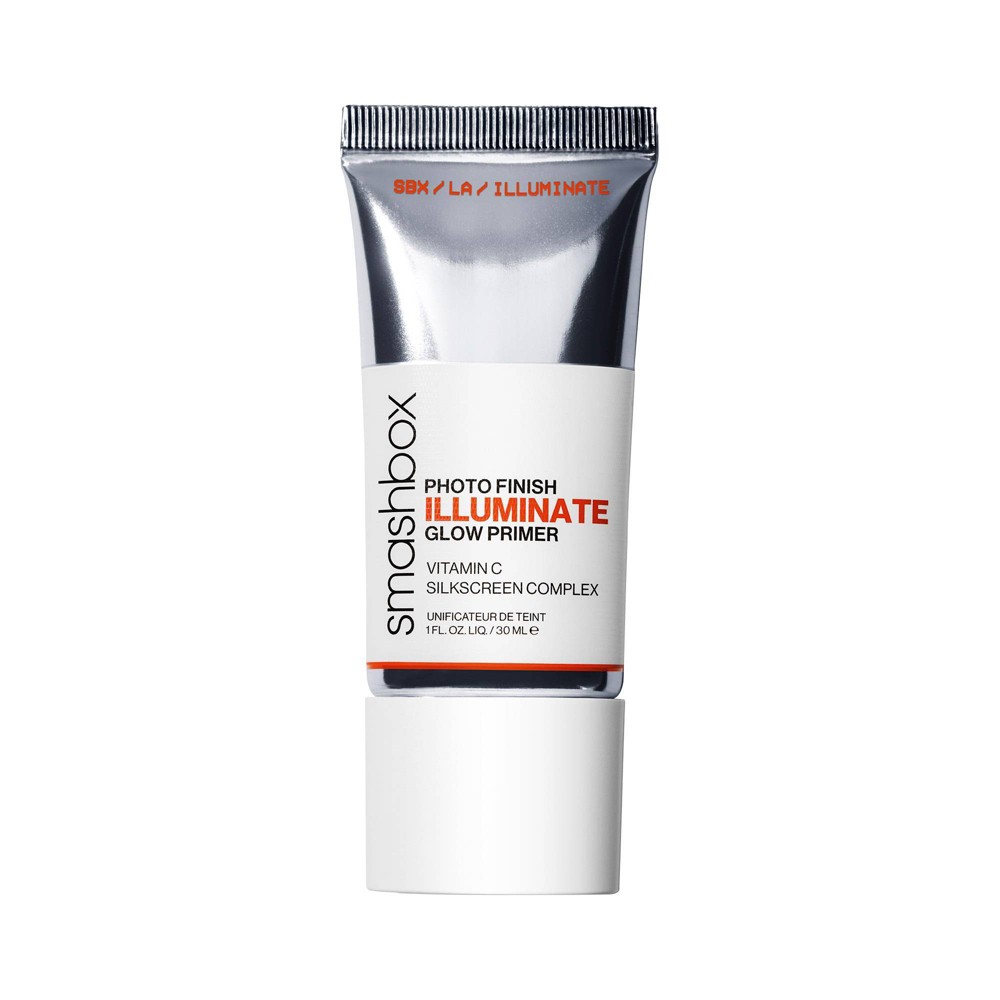

Smashbox Photo Finish Illuminate Glow Primer - 1 fl oz - Ulta Beauty: Paraben-Free, Alcohol-Free, Vegan, Contains Vitamin C
Analysis updated August 2026 · How Scout scores
At a glance
Summary
This primer contains several beneficial ingredients such as wheat germ extract, lactobacillus ferment, and various fruit extracts that provide antioxidant and nourishing properties. However, the presence of BHT, which is associated with potential health concerns, and sodium hydroxide, which can be irritating, detracts from its overall safety profile. Additionally, the inclusion of PEG and PPG compounds indicates a moderate level of processing, which further impacts the score.
Key ingredients 41
SqualaneVery Good
Squalane is a highly effective moisturizer that mimics the skin's natural oils. It helps to hydrate and protect the skin without clogging pores.
Risks
Generally considered safe with minimal risk of irritation.
Benefits
Provides deep hydration and protection for the skin.
Triticum Vulgare (Wheat) Germ ExtractGood
Wheat germ extract is rich in vitamins and minerals that can nourish the skin. It is known for its antioxidant properties, which help protect the skin from environmental damage.
Risks
May cause allergic reactions in individuals sensitive to wheat.
Benefits
Provides nourishment and antioxidant protection to the skin.
Lactobacillus FermentGood
Lactobacillus ferment is a probiotic ingredient that helps balance the skin's microbiome. It can improve skin barrier function and reduce inflammation.
Risks
Generally considered safe, but may cause irritation in very sensitive skin.
Benefits
Supports a healthy skin microbiome and reduces inflammation.
Passiflora Edulis Seed OilGood
Passiflora edulis seed oil is rich in essential fatty acids and antioxidants. It helps to nourish and protect the skin.
Risks
May cause allergic reactions in individuals sensitive to passion fruit.
Benefits
Nourishes and protects the skin with essential fatty acids and antioxidants.
Rosa Hybrid Flower ExtractGood
Rosa hybrid flower extract is known for its soothing and antioxidant properties. It helps to calm the skin and protect it from environmental stressors.
Risks
May cause irritation in sensitive skin.
Benefits
Soothes and protects the skin with antioxidant properties.
Lycium Chinense Fruit ExtractGood
Lycium chinense fruit extract, also known as goji berry extract, is rich in antioxidants. It helps to protect the skin from oxidative stress and improve its appearance.
Risks
May cause irritation in sensitive skin.
Benefits
Provides antioxidant protection and improves skin appearance.
Vaccinium Macrocarpon (Cranberry) Fruit ExtractGood
Cranberry fruit extract is rich in antioxidants and vitamins. It helps to protect the skin from environmental damage and improve its texture.
Risks
May cause irritation in sensitive skin.
Benefits
Protects the skin with antioxidants and improves texture.
Vaccinium Angustifolium (Blueberry) Fruit ExtractGood
Blueberry fruit extract is high in antioxidants and vitamins. It helps to protect the skin from free radicals and improve its overall health.
Risks
May cause irritation in sensitive skin.
Benefits
Provides antioxidant protection and enhances skin health.
Tocopheryl AcetateGood
Tocopheryl acetate is a form of vitamin E that acts as an antioxidant. It helps to protect the skin from oxidative damage and improve its appearance.
Risks
May cause irritation in sensitive skin.
Benefits
Protects the skin with antioxidant properties and improves appearance.
NiacinamideGood
Niacinamide is a form of vitamin B3 that offers multiple skin benefits. It helps to improve skin texture, reduce inflammation, and enhance barrier function.
Risks
Generally well-tolerated, but may cause mild irritation in very sensitive skin.
Benefits
Improves skin texture, reduces inflammation, and strengthens the skin barrier.
Sodium HyaluronateGood
Sodium hyaluronate is a form of hyaluronic acid that provides intense hydration. It helps to plump the skin and reduce the appearance of fine lines.
Risks
Generally safe, but may cause irritation in very sensitive skin.
Benefits
Deeply hydrates and plumps the skin, reducing fine lines.
Sodium PolyaspartateNeutral
Sodium polyaspartate is a humectant that helps retain moisture in the skin. It is derived from aspartic acid, an amino acid.
Benefits
Helps maintain skin hydration.
TrehaloseNeutral
Trehalose is a sugar that acts as a moisturizer and antioxidant. It helps protect the skin from dehydration and environmental stress.
Risks
Generally safe, but excessive use may lead to stickiness on the skin.
Benefits
Provides moisture and antioxidant protection.
SorbitolNeutral
Sorbitol is a sugar alcohol used as a humectant to retain moisture in the skin. It is commonly used in skincare products for its hydrating properties.
Risks
May cause irritation in sensitive skin when used in high concentrations.
Benefits
Helps keep the skin hydrated.
Hydrolyzed Yeast ProteinNeutral
Hydrolyzed yeast protein is used for its conditioning properties. It can help improve the texture and appearance of the skin.
Risks
Generally safe, but may cause irritation in sensitive individuals.
Benefits
Improves skin texture and appearance.
Yeast Extract\Faex\Extrait De LevureNeutral
Yeast extract is rich in vitamins and minerals that can benefit the skin. It is often used for its moisturizing and soothing properties.
Risks
May cause irritation in sensitive skin.
Benefits
Provides vitamins and minerals that nourish the skin.
Isopropyl IsostearateNeutral
Isopropyl isostearate is an emollient that helps to soften and smooth the skin. It is commonly used in cosmetics for its ability to improve skin feel.
Risks
May cause acne or irritation in some individuals with sensitive skin.
Benefits
Improves skin softness and smoothness.
PEG-100 StearateNeutral
PEG-100 stearate is an emulsifier that helps blend ingredients together. It is commonly used in skincare products to improve texture.
Risks
May cause irritation in sensitive skin and has potential contamination concerns.
Benefits
Helps stabilize and improve the texture of formulations.
PPG-15 Stearyl EtherNeutral
PPG-15 stearyl ether is an emollient that provides a smooth feel to the skin. It is used to enhance the texture of cosmetic products.
Risks
May cause irritation in sensitive skin.
Benefits
Improves the texture and feel of skincare products.
Caprylyl GlycolNeutral
Caprylyl glycol is a skin conditioning agent that also acts as a preservative. It helps to moisturize and improve the texture of the skin.
Risks
Generally safe, but may cause irritation in sensitive skin.
Benefits
Moisturizes and conditions the skin.
Hydrogenated PolydeceneNeutral
Hydrogenated polydecene is an emollient that provides a silky feel to the skin. It is used to improve the spreadability of products.
Risks
May cause irritation in sensitive skin.
Benefits
Enhances the texture and spreadability of skincare products.
Laureth-8Neutral
Laureth-8 is a surfactant and emulsifier used to stabilize formulations. It helps to blend oil and water-based ingredients.
Risks
May cause irritation in sensitive skin and has potential contamination concerns.
Benefits
Stabilizes formulations and improves texture.
CarbomerNeutral
Carbomer is a thickening agent used to create gel-like textures. It helps to stabilize and improve the consistency of products.
Risks
Generally considered safe, but may cause irritation in sensitive skin.
Benefits
Improves the consistency and stability of formulations.
Hydroxyethyl UreaNeutral
Hydroxyethyl urea is a humectant that helps to retain moisture in the skin. It is used to improve skin hydration and texture.
Risks
Generally considered safe, but may cause irritation in sensitive skin.
Benefits
Enhances skin hydration and texture.
CaffeineNeutral
Standard formulation ingredient — neither beneficial nor harmful at typical use.
Risks
May cause irritation in sensitive skin.
Benefits
Reduces puffiness and improves skin circulation.
Hordeum Vulgare Extract\Extrait D'OrgeNeutral
Hordeum vulgare extract, or barley extract, is used for its soothing and moisturizing properties. It helps to calm and hydrate the skin.
Risks
May cause irritation in sensitive skin.
Benefits
Soothes and hydrates the skin.
Sodium Acrylate/Sodium Acryloyldimethyl Taurate CopolymerNeutral
This copolymer is used as a thickening and stabilizing agent in formulations. It helps to improve the texture and consistency of products.
Risks
Generally considered safe, but may cause irritation in sensitive skin.
Benefits
Improves product texture and stability.
SilicaNeutral
Silica is used as an absorbent and anti-caking agent in cosmetics. It helps to improve the texture and finish of products.
Risks
Inhalation of silica particles can be harmful, but topical use is generally safe.
Benefits
Improves product texture and finish.
Synthetic FluorphlogopiteNeutral
Synthetic fluorphlogopite is a synthetic mica used to add shimmer and shine to cosmetics. It is considered a safer alternative to natural mica.
Risks
Generally considered safe, but may cause irritation in sensitive skin.
Benefits
Adds shimmer and shine to cosmetic products.
Xanthan GumNeutral
Xanthan gum is a thickening agent used to stabilize formulations. It helps to improve the texture and consistency of products.
Risks
Generally considered safe, but may cause irritation in sensitive skin.
Benefits
Stabilizes formulations and improves texture.
TriethoxycaprylylsilaneNeutral
Triethoxycaprylylsilane is a silicone-based ingredient used as a coupling agent. It helps to improve the dispersion of pigments in formulations.
Risks
Generally considered safe, but may cause irritation in sensitive skin.
Benefits
Improves pigment dispersion and product stability.
Pentylene GlycolNeutral
Pentylene glycol is a humectant and solvent used to improve skin hydration. It also acts as a preservative booster in formulations.
Risks
Generally considered safe, but may cause irritation in sensitive skin.
Benefits
Enhances skin hydration and boosts preservative efficacy.
Tin OxideNeutral
Tin oxide is used as an opacifying agent in cosmetics. It helps to improve the opacity and coverage of products.
Risks
Generally considered safe, but may cause irritation in sensitive skin.
Benefits
Improves product opacity and coverage.
Sodium HydroxideNeutral
Standard formulation ingredient — neither beneficial nor harmful at typical use.
Risks
Can cause skin irritation and burns if used inappropriately.
Benefits
Helps to balance the pH of cosmetic formulations.
Citric AcidNeutral
Citric acid is used to adjust the pH of formulations and as a mild exfoliant. It helps to improve the texture and appearance of the skin.
Risks
May cause irritation in sensitive skin, especially in high concentrations.
Benefits
Balances pH and provides mild exfoliation.
Sodium CitrateNeutral
Sodium citrate is used as a buffering agent to maintain the pH of formulations. It helps to stabilize and preserve the product.
Risks
Generally considered safe, but may cause irritation in sensitive skin.
Benefits
Stabilizes formulations and maintains pH balance.
DimethiconeBad
Occlusive silicone film-former — flagged under clean-beauty doctrine.
Risks
May cause irritation in sensitive skin and can trap impurities.
Benefits
Smooths and softens the skin, providing a protective barrier.
Disodium EDTABad
Processed additive flagged under Scout's ingredient doctrine.
Risks
May cause irritation in sensitive skin and has potential environmental concerns.
Benefits
Enhances product stability and prevents degradation.
BHTBad
BHT is an antioxidant used to prevent product spoilage. It has been associated with potential health concerns, including skin irritation and endocrine disruption.
Risks
Potential for skin irritation and endocrine disruption with prolonged exposure.
Benefits
Prevents product spoilage by acting as an antioxidant.
Potassium SorbateBad
Synthetic preservative — flagged in daily-use products.
Risks
May cause irritation in sensitive skin.
Benefits
Prevents microbial growth and extends product shelf life.
Sodium BenzoateBad
Synthetic preservative that can form benzene in the presence of vitamin C.
Risks
May cause irritation in sensitive skin and has potential for forming benzene in combination with ascorbic acid.
Benefits
Prevents microbial growth and extends product shelf life.
Get the full breakdown in the Scout appTake Scout shopping
Scan any product to see lab results, healthy alternatives, and your personalized analysis.
Download on theApp Store GET IT ONGoogle Play