
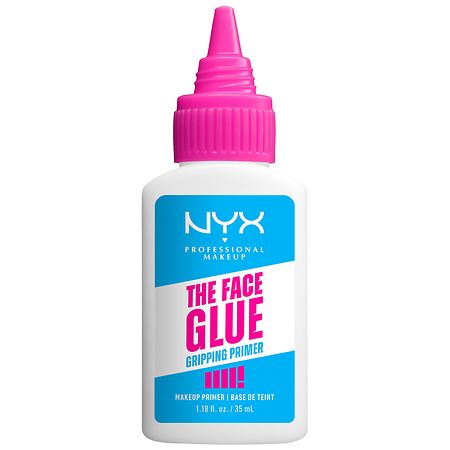


NYX Professional Makeup The Face Glue Face Primer - 1.18 fl oz: Vegan, Cream, Finish
Analysis updated August 2026 · How Scout scores
At a glance
Summary
This primer contains several beneficial ingredients like glycerin, sodium hyaluronate, and panthenol, which provide excellent hydration and skin-soothing properties. However, the presence of phenoxyethanol, a preservative that can cause irritation, slightly lowers its safety profile. The product is moderately processed, which also impacts its overall rating.
Key ingredients 29
Hydroxypropyltrimonium HyaluronateVery Good
Hydroxypropyltrimonium Hyaluronate is a modified form of hyaluronic acid that provides enhanced hydration. It helps in retaining moisture and improving skin texture. It is highly beneficial for all skin types.
Risks
There are minimal risks, though it may cause irritation in very sensitive skin.
Benefits
It provides enhanced hydration and improves skin texture.
PanthenolVery Good
Panthenol is a form of Vitamin B5 known for its moisturizing and soothing properties. It helps improve skin hydration and reduce inflammation. It is highly beneficial for skin health.
Risks
There are minimal risks, though it may cause irritation in very sensitive skin.
Benefits
It provides hydration and soothes irritated skin.
TocopherolVery Good
Tocopherol, also known as Vitamin E, is an antioxidant that helps protect the skin from environmental damage. It is known for its moisturizing and anti-aging properties. It is highly beneficial for skin health.
Risks
There are minimal risks, though it may cause irritation in very sensitive skin.
Benefits
It provides antioxidant protection and improves skin hydration.
GlycerinGood
Glycerin is a humectant that attracts moisture to the skin, helping to keep it hydrated. It is widely used in skincare for its moisturizing properties. It is considered safe and beneficial for most skin types.
Risks
There are minimal risks, though it may cause irritation in very sensitive skin.
Benefits
Glycerin helps maintain skin hydration and improves skin barrier function.
Opuntia Ficus-Indica Stem ExtractGood
Opuntia Ficus-Indica Stem Extract is known for its hydrating and soothing properties. It is rich in antioxidants and helps protect the skin from environmental stressors. It is considered beneficial for skin health.
Risks
There are minimal risks associated with this natural extract.
Benefits
It provides hydration and antioxidant protection to the skin.
Acer Saccharum Extract / Sugar Maple ExtractGood
Sugar Maple Extract is known for its exfoliating properties due to its natural alpha hydroxy acids. It helps in removing dead skin cells and improving skin texture. It is considered beneficial for skin renewal.
Risks
It may cause irritation in sensitive skin due to its exfoliating nature.
Benefits
It helps in skin exfoliation and improves skin texture.
Potassium PCAGood
Potassium PCA is a humectant that helps retain moisture in the skin. It is derived from amino acids and is beneficial for maintaining skin hydration. It is considered safe and effective for use in cosmetics.
Risks
There are minimal risks associated with this ingredient.
Benefits
It helps in maintaining skin hydration and improving skin texture.
Sodium HyaluronateGood
Sodium Hyaluronate is a form of hyaluronic acid known for its excellent hydrating properties. It helps retain moisture in the skin, making it plump and hydrated. It is highly beneficial for all skin types.
Risks
There are minimal risks, though it may cause irritation in very sensitive skin.
Benefits
It provides deep hydration and improves skin elasticity.
Magnesium PCAGood
Magnesium PCA is a humectant that helps retain moisture in the skin. It is beneficial for maintaining skin hydration and improving skin texture. It is considered safe and effective for use in cosmetics.
Risks
There are minimal risks associated with this ingredient.
Benefits
It helps in maintaining skin hydration and improving skin texture.
Polyglutamic AcidGood
Polyglutamic Acid is a hydrating agent that helps retain moisture in the skin. It is known for its ability to enhance skin hydration and improve elasticity. It is considered beneficial for skin health.
Risks
There are minimal risks associated with this ingredient.
Benefits
It provides hydration and improves skin elasticity.
Ascorbyl PalmitateGood
Ascorbyl Palmitate is a form of Vitamin C known for its antioxidant properties. It helps protect the skin from environmental damage and improve skin tone. It is considered beneficial for skin health.
Risks
There are minimal risks, though it may cause irritation in very sensitive skin.
Benefits
It provides antioxidant protection and improves skin tone.
Aqua / Water / EauNeutral
Water is a common solvent used in cosmetics to dissolve other ingredients. It helps in the application and absorption of the product. It does not provide any direct benefits or risks.
Risks
There are no known risks associated with water in cosmetics.
Benefits
Water helps in the even distribution of other ingredients.
PEG-150 DistearateNeutral
PEG-150 Distearate is an emulsifier that helps blend water and oil-based ingredients. It is commonly used in cosmetics for its stabilizing properties. It is generally considered safe for use in cosmetics.
Risks
There is a potential risk of contamination with ethylene oxide or 1,4-dioxane.
Benefits
It helps improve the texture and consistency of the product.
Butylene GlycolNeutral
Butylene Glycol is a solvent and conditioning agent that helps improve the texture of the product. It is commonly used in cosmetics for its ability to enhance penetration of other ingredients. It is generally considered safe for use.
Risks
It may cause irritation in sensitive skin types.
Benefits
It helps improve the spreadability and absorption of the product.
PVPNeutral
PVP is a film-forming agent that helps create a smooth finish on the skin. It is used in cosmetics for its ability to hold ingredients together. It is generally considered safe for use.
Risks
There are minimal risks, though it may cause irritation in sensitive individuals.
Benefits
It helps improve the texture and longevity of the product on the skin.
CarbomerNeutral
Carbomer is a thickening agent used to stabilize and control the viscosity of cosmetic products. It helps in creating a smooth and consistent texture. It is generally considered safe for use in cosmetics.
Risks
There are minimal risks, though it may cause irritation in sensitive individuals.
Benefits
It helps improve the texture and stability of the product.
IsododecaneNeutral
Isododecane is a solvent that helps in the even application of the product. It is used for its lightweight and non-greasy feel. It is generally considered safe for use in cosmetics.
Risks
There are minimal risks associated with this ingredient.
Benefits
It helps in providing a smooth and lightweight application.
TromethamineNeutral
Tromethamine is a pH adjuster used to maintain the stability of cosmetic formulations. It helps in ensuring the product remains effective over time. It is generally considered safe for use.
Risks
There are minimal risks, though it may cause irritation in sensitive skin.
Benefits
It helps maintain the stability and effectiveness of the product.
Aluminum HydroxideNeutral
Aluminum Hydroxide is used as a thickening agent and opacifier in cosmetics. It helps in improving the texture and appearance of the product. It is generally considered safe for use.
Risks
There are minimal risks associated with this ingredient.
Benefits
It helps improve the texture and opacity of the product.
Isopropyl Titanium TriisostearateNeutral
Isopropyl Titanium Triisostearate is used as a dispersing agent for pigments in cosmetics. It helps in providing an even application of color. It is generally considered safe for use.
Risks
There are minimal risks associated with this ingredient.
Benefits
It helps in providing an even application of pigments.
Caprylyl GlycolNeutral
Caprylyl Glycol is a conditioning agent that helps improve the texture of the product. It is also used as a preservative booster. It is generally considered safe for use in cosmetics.
Risks
There are minimal risks associated with this ingredient.
Benefits
It helps improve the texture and preservation of the product.
Trisodium Ethylenediamine DisuccinateNeutral
Trisodium Ethylenediamine Disuccinate is a chelating agent that helps stabilize cosmetic formulations. It binds metal ions to prevent degradation of the product. It is generally considered safe for use.
Risks
There are minimal risks associated with this ingredient.
Benefits
It helps stabilize and prolong the shelf life of the product.
Xanthan GumNeutral
Xanthan Gum is a thickening agent used to stabilize and improve the texture of cosmetic products. It helps in creating a smooth and consistent application. It is generally considered safe for use.
Risks
There are minimal risks, though it may cause irritation in sensitive individuals.
Benefits
It helps improve the texture and stability of the product.
EthylhexylglycerinNeutral
Ethylhexylglycerin is a conditioning agent and preservative booster used in cosmetics. It helps improve the texture and preservation of the product. It is generally considered safe for use.
Risks
There are minimal risks associated with this ingredient.
Benefits
It helps improve the texture and preservation of the product.
Polyglyceryl-4 IsostearateNeutral
Polyglyceryl-4 Isostearate is an emulsifier that helps blend water and oil-based ingredients. It is used for its stabilizing properties in cosmetics. It is generally considered safe for use.
Risks
There are minimal risks associated with this ingredient.
Benefits
It helps improve the texture and stability of the product.
OctyldodecanolNeutral
Octyldodecanol is an emollient that helps soften and smooth the skin. It is used for its moisturizing properties in cosmetics. It is generally considered safe for use.
Risks
There are minimal risks associated with this ingredient.
Benefits
It helps soften and smooth the skin.
CI 77891 / Titanium DioxideNeutral
Titanium Dioxide is a mineral used as a pigment and UV filter in cosmetics. It helps provide coverage and sun protection. It is generally considered safe for use.
Risks
There are minimal risks, though inhalation of its powder form can be harmful.
Benefits
It provides coverage and sun protection.
Potassium SorbateBad
Synthetic preservative — flagged in daily-use products.
Risks
There are minimal risks, though it may cause irritation in sensitive skin.
Benefits
It helps preserve the product and prevent microbial growth.
PhenoxyethanolBad
Phenoxyethanol is a preservative used to prevent microbial growth in cosmetics. It is effective but can be irritating to the skin and eyes. It is considered a moderate risk ingredient.
Risks
It may cause irritation and allergic reactions in sensitive individuals.
Benefits
It helps preserve the product and prevent microbial growth.
Get the full breakdown in the Scout appTake Scout shopping
Scan any product to see lab results, healthy alternatives, and your personalized analysis.
Download on theApp Store GET IT ONGoogle PlayAmazon pricing & content
Amazon price as of . Product prices and availability are accurate as of the date/time indicated and are subject to change. Any price and availability information displayed on Amazon.com at the time of purchase will apply to the purchase of this product.
CERTAIN CONTENT THAT APPEARS ON THIS SITE COMES FROM AMAZON. THIS CONTENT IS PROVIDED “AS IS” AND IS SUBJECT TO CHANGE OR REMOVAL AT ANY TIME.