
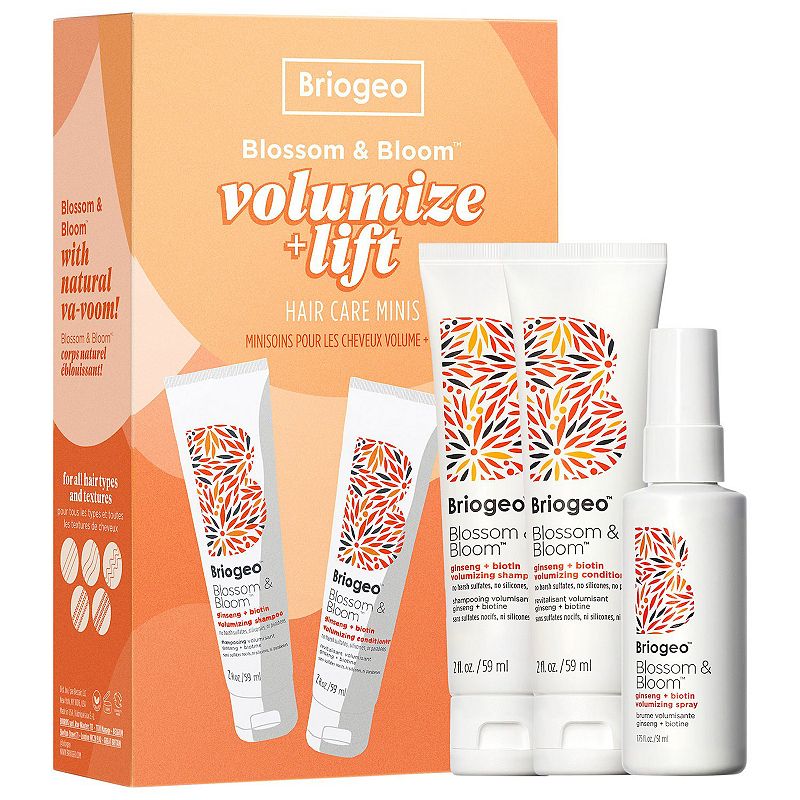


Briogeo Blossom & Bloom Volumize + Lift Travel Size Set at Nordstrom, Size 5.75 Oz
Analysis updated October 2026 · How Scout scores
At a glance
Summary
This hair care product contains beneficial ingredients like glycerin, biotin, and aloe vera, which provide hydration and nourishment. However, it also includes potentially irritating components such as sodium C14-16 olefin sulfonate and alcohol, which can be drying. The presence of fragrance adds a risk of irritation and allergic reactions, impacting the overall safety profile.
Key ingredients 26
PanthenolVery Good
Panthenol, also known as Provitamin B5, is a moisturizing agent that helps to improve skin and hair hydration. It is known for its soothing and anti-inflammatory properties. It is widely used in cosmetics for its ability to enhance skin barrier function.
Risks
There are no significant risks associated with panthenol when used in cosmetic formulations.
Benefits
Panthenol helps to improve skin and hair moisture retention, making it beneficial for dry or damaged hair.
Aloe Barbadensis Leaf JuiceVery Good
Aloe Vera is known for its soothing and moisturizing properties. It is widely used in cosmetics for its ability to hydrate and calm the skin. It is generally considered safe and beneficial.
Risks
There are no significant risks associated with Aloe Vera in cosmetic formulations.
Benefits
Aloe Vera helps to soothe and hydrate the skin, making it beneficial for dry or irritated skin.
Argania Spinosa Kernel OilVery Good
Argan Oil is a natural oil rich in fatty acids and antioxidants. It is used in cosmetics for its moisturizing and nourishing properties. It is generally considered safe and beneficial.
Risks
There are no significant risks associated with Argan Oil in cosmetic formulations.
Benefits
Argan Oil helps to moisturize and nourish the skin and hair, making it beneficial for dry or damaged hair.
Cocos Nucifera (Coconut) OilVery Good
Coconut Oil is a natural oil known for its moisturizing and nourishing properties. It is widely used in cosmetics for its ability to hydrate and protect the skin and hair. It is generally considered safe and beneficial.
Risks
There are no significant risks associated with Coconut Oil in cosmetic formulations.
Benefits
Coconut Oil helps to moisturize and protect the skin and hair, making it beneficial for dry or damaged hair.
Sodium Cocoyl IsethionateGood
Sodium Cocoyl Isethionate is a gentle surfactant derived from coconut oil, known for its mild cleansing properties. It produces a creamy lather and is less likely to irritate the skin compared to harsher surfactants. It is often used in formulations for sensitive skin.
Risks
There are minimal risks associated with this ingredient, though it may cause mild irritation in very sensitive individuals.
Benefits
It effectively cleanses while maintaining the skin's natural moisture balance, making it ideal for dry or sensitive skin.
GlycerinGood
Glycerin is a humectant that attracts moisture to the skin, helping to keep it hydrated. It is a common ingredient in skincare products due to its ability to improve skin barrier function. It is generally safe and non-irritating.
Risks
There are no significant risks associated with glycerin when used in cosmetic formulations.
Benefits
Glycerin helps to maintain skin hydration and improve skin texture, making it beneficial for dry skin.
BiotinGood
Biotin, also known as Vitamin B7, is a water-soluble vitamin that supports healthy hair and skin. It is often included in hair care products for its potential to strengthen hair and promote growth. It is generally considered safe and beneficial.
Risks
There are no significant risks associated with biotin in cosmetic formulations.
Benefits
Biotin may help to improve hair strength and reduce breakage, contributing to healthier hair.
Panax Ginseng Root ExtractGood
Panax Ginseng Root Extract is a botanical ingredient known for its antioxidant and anti-inflammatory properties. It is used in cosmetics to help protect the skin and hair from environmental stressors. It is generally considered safe and beneficial.
Risks
There are no significant risks associated with Panax Ginseng Root Extract in cosmetic formulations.
Benefits
It may help to improve skin and hair health by providing antioxidant protection and reducing inflammation.
Zingiber Officinale (Ginger) Root ExtractGood
Ginger Root Extract is known for its antioxidant and anti-inflammatory properties. It is used in cosmetics to help soothe and protect the skin and hair. It is generally considered safe and beneficial.
Risks
There are no significant risks associated with Ginger Root Extract in cosmetic formulations.
Benefits
It may help to improve skin and hair health by providing antioxidant protection and reducing inflammation.
Tocopheryl AcetateGood
Tocopheryl Acetate is a form of Vitamin E, known for its antioxidant properties. It is used in cosmetics to help protect the skin and hair from oxidative damage. It is generally considered safe and beneficial.
Risks
There are no significant risks associated with Tocopheryl Acetate in cosmetic formulations.
Benefits
It helps to protect the skin and hair from environmental damage, contributing to healthier skin and hair.
Water/Aqua/EauNeutral
Water is a universal solvent and is used as a base in many cosmetic formulations. It helps dissolve other ingredients and provides hydration. It is generally considered safe and non-irritating.
Risks
There are no significant risks associated with water in cosmetic formulations.
Benefits
Water helps to hydrate the skin and hair, making it a beneficial component in moisturizing products.
Lauramidopropyl BetaineNeutral
Lauramidopropyl Betaine is a mild surfactant used to enhance the foaming properties of cleansing products. It is derived from coconut oil and is considered less irritating than harsher surfactants. It is generally well-tolerated by most skin types.
Risks
In rare cases, it may cause mild irritation or allergic reactions in sensitive individuals.
Benefits
It helps to cleanse the skin and hair without stripping away natural oils, making it suitable for sensitive skin.
Cocamidopropyl HydroxysultaineNeutral
Cocamidopropyl Hydroxysultaine is a mild surfactant and foam booster derived from coconut oil. It is used to enhance the texture and feel of cleansing products. It is generally considered safe and non-irritating.
Risks
In rare cases, it may cause mild irritation or allergic reactions in sensitive individuals.
Benefits
It helps to improve the lather and cleansing ability of products without being harsh on the skin.
MaltodextrinNeutral
Maltodextrin is a polysaccharide used as a binding agent and texture enhancer in cosmetics. It is generally considered safe and non-irritating. It is often used to improve the consistency of formulations.
Risks
There are no significant risks associated with maltodextrin in cosmetic formulations.
Benefits
It helps to stabilize and thicken products, improving their application and feel.
Citrus Aurantium Dulcis (Orange) Peel OilNeutral
Orange Peel Oil is used in cosmetics for its fragrance and potential antioxidant properties. It is generally considered safe, but can be irritating to sensitive skin. It is often used to add a pleasant scent to products.
Risks
It may cause irritation or allergic reactions in sensitive individuals, especially when exposed to sunlight.
Benefits
It provides a natural fragrance and may offer antioxidant benefits to the skin and hair.
Citrus Paradisi (Grapefruit) Peel OilNeutral
Grapefruit Peel Oil is used in cosmetics for its fragrance and potential antioxidant properties. It is generally considered safe, but can be irritating to sensitive skin. It is often used to add a pleasant scent to products.
Risks
It may cause irritation or allergic reactions in sensitive individuals, especially when exposed to sunlight.
Benefits
It provides a natural fragrance and may offer antioxidant benefits to the skin and hair.
Soyamidopropylamine OxideNeutral
Soyamidopropylamine Oxide is a surfactant used to enhance the foaming and cleansing properties of products. It is generally considered safe and non-irritating. It is often used in formulations for its mildness.
Risks
In rare cases, it may cause mild irritation or allergic reactions in sensitive individuals.
Benefits
It helps to improve the lather and cleansing ability of products without being harsh on the skin.
Polyquaternium-7Neutral
Polyquaternium-7 is a conditioning agent used to improve the texture and feel of hair care products. It is generally considered safe and non-irritating. It is often used to enhance the smoothness and manageability of hair.
Risks
There are no significant risks associated with Polyquaternium-7 in cosmetic formulations.
Benefits
It helps to condition and detangle hair, making it easier to manage and style.
Polyquaternium-71Neutral
Polyquaternium-71 is a conditioning agent used to improve the texture and feel of hair care products. It is generally considered safe and non-irritating. It is often used to enhance the smoothness and manageability of hair.
Risks
There are no significant risks associated with Polyquaternium-71 in cosmetic formulations.
Benefits
It helps to condition and detangle hair, making it easier to manage and style.
Citric AcidNeutral
Citric Acid is used in cosmetics to adjust the pH of formulations. It is generally considered safe and non-irritating when used in appropriate concentrations. It is often used to enhance the stability and effectiveness of products.
Risks
In high concentrations, it may cause irritation or sensitivity, especially in sensitive skin.
Benefits
It helps to maintain the stability and effectiveness of formulations by adjusting the pH.
AlcoholNeutral
Standard formulation ingredient — neither beneficial nor harmful at typical use.
Risks
It may cause dryness, irritation, or sensitivity, especially in dry or sensitive skin types.
Benefits
It helps to enhance the penetration of active ingredients and preserve the formulation.
Dehydroacetic AcidNeutral
Dehydroacetic Acid is a preservative used to prevent the growth of microorganisms in cosmetic formulations. It is generally considered safe and non-irritating. It is often used to enhance the shelf life of products.
Risks
There are no significant risks associated with Dehydroacetic Acid in cosmetic formulations.
Benefits
It helps to preserve the formulation and prevent microbial contamination, ensuring product safety.
Sodium C14-16 Olefin SulfonateBad
Sodium C14-16 Olefin Sulfonate is a surfactant used for its cleansing and foaming properties. It can be harsh and may strip the skin of natural oils. It is considered more irritating than milder surfactants.
Risks
It may cause dryness, irritation, or allergic reactions, especially in sensitive skin types.
Benefits
It provides effective cleansing and foaming, which can be beneficial in removing dirt and oil.
Benzyl AlcoholBad
Processed additive flagged under Scout's ingredient doctrine.
Risks
In high concentrations, it may cause irritation or sensitivity, especially in sensitive skin.
Benefits
It helps to preserve the formulation and enhance the penetration of active ingredients.
LimoneneBad
Processed additive flagged under Scout's ingredient doctrine.
Risks
It may cause irritation or allergic reactions, especially in sensitive individuals.
Benefits
It provides a natural citrus scent and may offer antioxidant benefits.
Fragrance (Parfum)Very Bad
Fragrance is used in cosmetics to add scent to products. It can be irritating and is a common cause of allergic reactions. It is often used to enhance the sensory experience of products.
Risks
It may cause irritation, allergic reactions, or sensitivity, especially in sensitive skin.
Benefits
It provides a pleasant scent to products, enhancing the user experience.
Get the full breakdown in the Scout appTake Scout shopping
Scan any product to see lab results, healthy alternatives, and your personalized analysis.
Download on theApp Store GET IT ONGoogle Play