
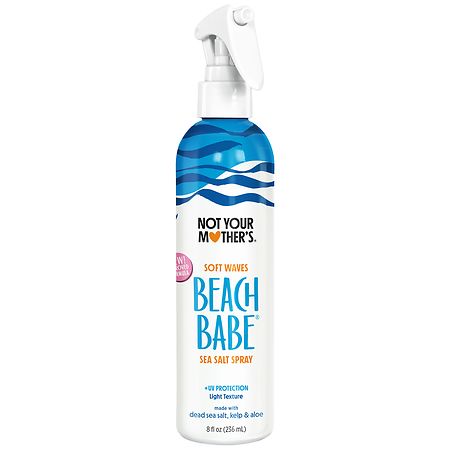


Not Your Mother s Beach Babe Soft Waves Sea Salt Spray with UV Protection 8 fl oz
Analysis updated October 2026 · How Scout scores
At a glance
Summary
This hair care product contains beneficial ingredients like kelp and sunflower seed extracts, which provide nourishment and protection to the hair. However, the presence of synthetic fragrance and coumarin, both of which can cause skin sensitivity and allergic reactions, detracts from its overall safety profile. Additionally, the inclusion of several synthetic compounds indicates a moderate level of processing, which impacts the product's rating.
Key ingredients 14
Sea Salt (Maris Sal) (Sel Marin)Good
Beneficial ingredient — whole-food or functional value in this product class.
Risks
Excessive use may lead to dryness and brittleness in hair.
Benefits
Provides texture and volume to hair, creating a beachy wave effect.
Macrocystis Pyrifera (Kelp) ExtractGood
Kelp extract is rich in vitamins and minerals, providing nourishment to hair and skin. It is known for its moisturizing and strengthening properties. It is generally well-tolerated and beneficial in hair care products.
Risks
There are minimal risks associated with kelp extract in cosmetics.
Benefits
Provides nourishment and strengthens hair, improving overall hair health.
Helianthus Annuus (Sunflower) Seed ExtractGood
Sunflower seed extract is rich in fatty acids and antioxidants, which help moisturize and protect hair. It is beneficial for maintaining hair health and preventing damage. It is generally considered safe and effective in hair care formulations.
Risks
There are minimal risks associated with sunflower seed extract in cosmetics.
Benefits
Moisturizes and protects hair, enhancing shine and softness.
Water (Aqua) (Eau)Neutral
Water is a common solvent used in cosmetic formulations. It helps dissolve other ingredients and provides a base for the product. It is generally considered safe and non-irritating.
Risks
There are no significant risks associated with water in cosmetic products.
Benefits
Water helps in the even distribution of other ingredients and provides hydration.
Polysorbate 20Neutral
Polysorbate 20 is an emulsifier that helps mix oil and water-based ingredients. It is generally considered safe for use in cosmetics. However, it is a synthetic compound and may cause irritation in sensitive individuals.
Risks
Potential for skin irritation in sensitive individuals.
Benefits
Helps stabilize formulations by emulsifying oil and water components.
Dimethicone PEG-8 MeadowfoamateNeutral
Dimethicone PEG-8 Meadowfoamate is a silicone-based conditioning agent. It helps improve hair texture and manageability. While generally safe, silicones can build up on hair over time.
Risks
Potential for build-up on hair with prolonged use.
Benefits
Improves hair texture and manageability, making it easier to style.
Butylene GlycolNeutral
Butylene glycol is a common solvent and conditioning agent in cosmetics. It helps improve the texture and spreadability of products. It is generally considered safe, though it may cause irritation in sensitive skin.
Risks
Possible skin irritation in sensitive individuals.
Benefits
Enhances product texture and spreadability, improving user experience.
Citric AcidNeutral
Citric acid is used to adjust the pH of cosmetic products. It helps maintain product stability and effectiveness. It is generally safe, though it can cause irritation in sensitive skin.
Risks
Potential for skin irritation in sensitive individuals.
Benefits
Helps maintain product pH, ensuring stability and effectiveness.
Propylene GlycolBad
Processed additive flagged under Scout's ingredient doctrine.
Risks
Potential for skin irritation, especially in sensitive individuals.
Benefits
Helps retain moisture, improving hydration and product feel.
Benzyl AlcoholBad
Processed additive flagged under Scout's ingredient doctrine.
Risks
Possible skin irritation, particularly in sensitive individuals.
Benefits
Acts as a preservative, extending product shelf life and stability.
PhenoxyethanolBad
Processed additive flagged under Scout's ingredient doctrine.
Risks
Possible skin irritation, especially in sensitive individuals.
Benefits
Prevents microbial growth, enhancing product safety and longevity.
Sodium BenzoateBad
Synthetic preservative that can form benzene in the presence of vitamin C.
Risks
Potential for skin irritation in sensitive individuals.
Benefits
Prevents microbial growth, ensuring product safety and longevity.
CoumarinBad
Coumarin is a fragrance ingredient that can cause allergic reactions in sensitive individuals. It is often criticized for its potential to cause skin sensitivity. While it adds a pleasant scent, its allergenic potential is a concern.
Risks
Potential for allergic reactions and skin irritation.
Benefits
Adds a pleasant scent to cosmetic products.
Fragrance (Parfum)Very Bad
Fragrance is used to impart scent to cosmetic products. It is a common allergen and can cause irritation or allergic reactions in sensitive individuals. It is often criticized for its potential to cause skin sensitivity.
Risks
High potential for skin irritation and allergic reactions.
Benefits
Provides a pleasant scent, enhancing user experience.
Get the full breakdown in the Scout appTake Scout shopping
Scan any product to see lab results, healthy alternatives, and your personalized analysis.
Download on theApp Store GET IT ONGoogle PlayAmazon pricing & content
Amazon price as of . Product prices and availability are accurate as of the date/time indicated and are subject to change. Any price and availability information displayed on Amazon.com at the time of purchase will apply to the purchase of this product.
CERTAIN CONTENT THAT APPEARS ON THIS SITE COMES FROM AMAZON. THIS CONTENT IS PROVIDED “AS IS” AND IS SUBJECT TO CHANGE OR REMOVAL AT ANY TIME.