
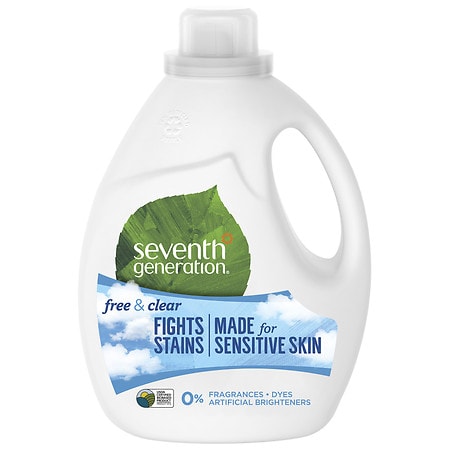
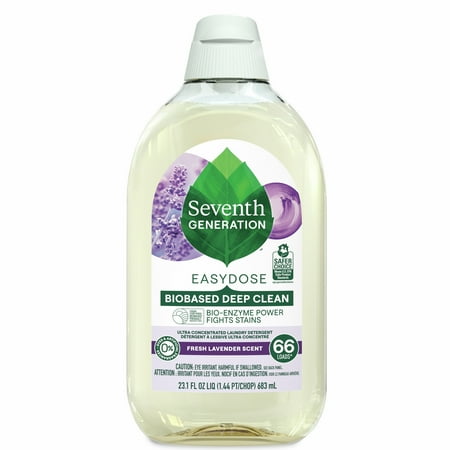
Seventh Generation Liquid Laundry Detergent Biodegradable Free & Clear 100 oz
Summary
This laundry detergent is fragrance-free and contains biodegradable ingredients, which are beneficial for both indoor air quality and environmental impact. It avoids harsh surfactants like sodium lauryl sulfate and instead uses plant-derived alternatives, contributing to its high safety and eco-friendliness. The product's processing level is moderate, but the clean ingredient profile supports a strong rating.
At a glance
Key ingredients 11
Water
Water is used as a solvent to dissolve other ingredients and facilitate their interaction. It helps in forming the liquid base of the detergent. Water is essential for the product's consistency and effectiveness.
Risks
There are no significant risks associated with water in this context.
Benefits
Water is a safe and natural ingredient that poses no harm to users or the environment.
Laureth-6
Laureth-6 is a surfactant used to help remove dirt and oils from fabrics. It is derived from ethoxylated alcohols and is milder than sodium lauryl sulfate. It contributes to the cleaning power of the detergent.
Risks
There is a potential risk of contamination with 1,4-dioxane, a byproduct of ethoxylation, which is a possible human carcinogen.
Benefits
Laureth-6 is effective in cleaning and is generally less irritating than harsher surfactants like SLS.
Sodium Citrate
Sodium citrate is used as a water softener and pH adjuster in detergents. It helps to enhance the cleaning efficiency by binding with metal ions in water. This ingredient is biodegradable and environmentally friendly.
Risks
There are minimal risks associated with sodium citrate in cleaning products.
Benefits
Sodium citrate is a safe, plant-derived ingredient that improves cleaning performance and is environmentally benign.
Sodium Lauryl Sulfate
Sodium lauryl sulfate (SLS) is a surfactant that helps to remove dirt and grease. It is known for its strong cleaning power and foaming ability. However, it is a harsh chemical that can irritate skin and eyes.
Risks
SLS is a known skin irritant and can cause dryness and irritation with prolonged exposure.
Benefits
While effective in cleaning, the harshness of SLS often outweighs its benefits in terms of safety.
Glycerin
Glycerin is used as a humectant and stabilizer in detergents. It helps to maintain moisture and improve the texture of the product. Glycerin is derived from natural sources and is biodegradable.
Risks
There are no significant risks associated with glycerin in this context.
Benefits
Glycerin is a safe, plant-derived ingredient that helps to stabilize the product and is environmentally friendly.
Boric Acid
Boric acid is used as a pH buffer and preservative in detergents. It helps to maintain the stability and effectiveness of the product. Boric acid is effective in controlling microbial growth.
Risks
Boric acid can be toxic if ingested in large quantities and may cause irritation with prolonged skin contact.
Benefits
In small amounts, boric acid helps to preserve the product and maintain its effectiveness.
Sodium Chloride
Sodium chloride is used as a thickening agent in detergents. It helps to adjust the viscosity of the product. Sodium chloride is a common and safe ingredient.
Risks
There are no significant risks associated with sodium chloride in this context.
Benefits
Sodium chloride is a natural and safe ingredient that helps to improve the product's texture.
Oleic Acid
Oleic acid is used as a surfactant and emulsifier in detergents. It helps to break down oils and grease, enhancing cleaning performance. Oleic acid is derived from natural sources and is biodegradable.
Risks
There are minimal risks associated with oleic acid in cleaning products.
Benefits
Oleic acid is a safe, plant-derived ingredient that improves cleaning efficiency and is environmentally friendly.
Sodium Hydroxide
Sodium hydroxide is used as a pH adjuster in detergents. It helps to maintain the alkalinity necessary for effective cleaning. Sodium hydroxide is a strong base and must be handled with care.
Risks
Sodium hydroxide can cause skin and eye irritation and should be used with caution.
Benefits
In controlled amounts, sodium hydroxide is effective in enhancing the cleaning power of detergents.
Calcium Chloride
Calcium chloride is used as a stabilizer and thickening agent in detergents. It helps to maintain the consistency and stability of the product. Calcium chloride is a common and safe ingredient.
Risks
There are no significant risks associated with calcium chloride in this context.
Benefits
Calcium chloride is a safe ingredient that helps to improve the product's texture and stability.
Protease
Protease is an enzyme used to break down protein-based stains in detergents. It enhances the cleaning power by targeting specific types of stains. Protease is biodegradable and derived from natural sources.
Risks
There are minimal risks associated with protease in cleaning products.
Benefits
Protease is a safe, plant-derived enzyme that significantly improves stain removal and is environmentally friendly.
Processing
Processed Foods
Get the full breakdown in the Scout app
Scan any product to see lab results, healthy alternatives, and your personalized analysis.
Download on theApp Store