
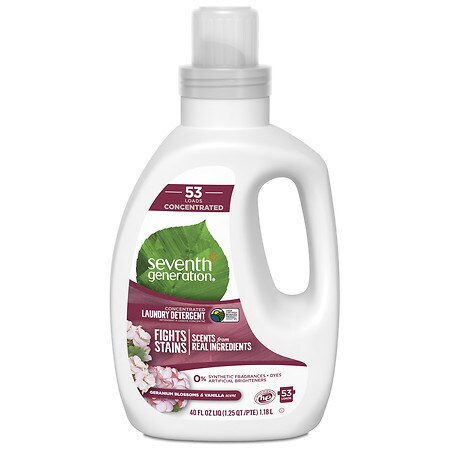



Seventh Generation Concentrated Laundry Detergent, Geranium Blossom & Vanilla, 40 oz, Pack of 2 (106 Loads), 40 Fl Oz (Pack of 2)
Summary
This laundry detergent is formulated with environmentally friendly and biodegradable ingredients such as sodium citrate and glucoside-based surfactants, which are derived from natural sources like sugar and coconut oil. These components contribute to its gentle cleansing properties and suitability for sensitive skin. The product avoids harmful chemicals like phosphates and synthetic fragrances, making it a safer choice for both users and the environment, although it is still a processed product.
At a glance
Key ingredients 13
WaterNeutral
Water is a universal solvent used to dissolve other ingredients and facilitate their application. It is essential for the formulation of liquid detergents. It does not contribute to the cleaning power but is necessary for the product's consistency.
Risks
There are no significant risks associated with water in this context.
Benefits
Water helps to evenly distribute the detergent ingredients during washing.
Sodium Lauryl SulfateNeutral
Sodium Lauryl Sulfate is a surfactant that helps to remove dirt and grease by breaking down the surface tension of water. It is commonly used in cleaning products for its effective cleaning properties. However, it can be irritating to the skin in high concentrations.
Risks
Potential skin irritation, especially for sensitive skin types.
Benefits
Effective in removing oils and dirt from fabrics.
Cocamidopropyl BetaineNeutral
Cocamidopropyl Betaine is a mild surfactant derived from coconut oil, used to enhance the foaming and cleaning properties of detergents. It is often used to reduce the harshness of other surfactants. It is generally considered safe but can cause allergic reactions in some individuals.
Risks
May cause allergic reactions or skin irritation in sensitive individuals.
Benefits
Provides mildness and improves the texture of the detergent.
Sodium CitrateGood
Sodium Citrate is used as a water softener in detergents, helping to prevent mineral deposits on fabrics. It is a biodegradable and environmentally friendly alternative to phosphates. It enhances the effectiveness of surfactants by binding to metal ions.
Risks
There are minimal risks associated with sodium citrate in this application.
Benefits
Improves cleaning efficiency and is environmentally friendly.
Sodium CarbonateNeutral
Sodium Carbonate, also known as washing soda, is used to increase the alkalinity of the detergent, which helps in breaking down acidic stains. It is a common ingredient in laundry detergents for its cleaning and water-softening properties. It can be irritating to the skin and eyes in concentrated forms.
Risks
Can cause skin and eye irritation if not handled properly.
Benefits
Enhances cleaning power by adjusting pH levels.
Sodium ChlorideNeutral
Sodium Chloride, or table salt, is used to adjust the viscosity of the detergent. It is a common additive in liquid detergents to ensure the right consistency. It does not contribute to the cleaning action but is important for product stability.
Risks
Generally safe with no significant risks in this context.
Benefits
Helps maintain the desired thickness of the detergent.
Caprylyl/Decyl GlucosideGood
Caprylyl/Decyl Glucoside is a mild, non-ionic surfactant derived from sugar and fatty alcohols. It is used for its gentle cleansing properties and is biodegradable. It is suitable for sensitive skin and environmentally friendly.
Risks
There are minimal risks associated with this ingredient.
Benefits
Provides gentle cleansing and is eco-friendly.
Decyl GlucosideGood
Decyl Glucoside is a mild surfactant derived from glucose and coconut oil. It is known for its gentle cleansing properties and is biodegradable. It is often used in products for sensitive skin due to its mildness.
Risks
Generally considered safe with minimal risks.
Benefits
Offers gentle cleansing and is environmentally friendly.
AmylaseNeutral
Amylase is an enzyme used in detergents to break down starch-based stains. It enhances the cleaning power of the detergent by targeting specific types of stains. It is effective in small quantities and biodegradable.
Risks
May cause allergic reactions in some individuals.
Benefits
Improves stain removal efficiency, especially for starches.
Fragrance (Essential Oils)Neutral
Fragrance from essential oils is used to impart a pleasant scent to the detergent. Essential oils are natural and can provide aromatherapeutic benefits. However, they can still cause allergic reactions in sensitive individuals.
Risks
Potential for allergic reactions or skin irritation.
Benefits
Provides a natural scent and potential aromatherapy benefits.
Citric AcidNeutral
Citric Acid is used to adjust the pH of the detergent and enhance its cleaning power. It is a natural ingredient that helps in breaking down mineral deposits. It is biodegradable and generally safe for use.
Risks
Minimal risks, though it can cause mild irritation in concentrated forms.
Benefits
Improves cleaning efficiency and is environmentally friendly.
Sodium BenzoateNeutral
Sodium Benzoate is a preservative used to prevent microbial growth in the detergent. It is commonly used in both food and personal care products. While generally recognized as safe, it can cause irritation in some individuals.
Risks
Potential for skin irritation or allergic reactions.
Benefits
Extends the shelf life of the product by preventing microbial growth.
Potassium SorbateNeutral
Potassium Sorbate is a preservative used to inhibit the growth of mold and yeast in the detergent. It is effective in small amounts and widely used in various products. It is generally considered safe but can cause irritation in sensitive individuals.
Risks
May cause skin irritation or allergic reactions.
Benefits
Helps maintain product stability by preventing microbial growth.
Processing
Processed Foods
Get the full breakdown in the Scout app
Scan any product to see lab results, healthy alternatives, and your personalized analysis.
Download on theApp Store