
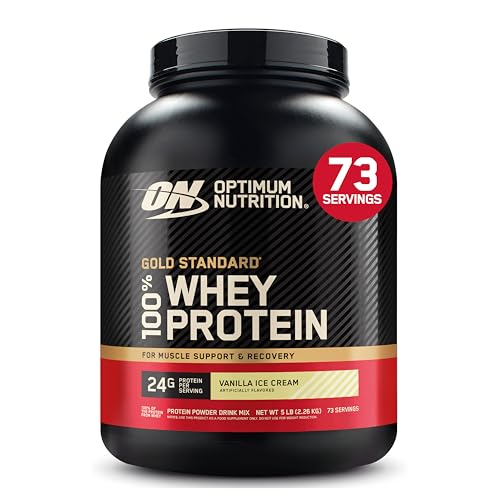
Optimum Nutrition Gold Standard 100% Whey Protein Powder Vanilla Ice Cream 5 lb 73 Servings
Summary
This protein powder contains high-quality protein sources like whey protein isolate and concentrate, which are beneficial for muscle repair and growth. However, it includes artificial sweeteners such as sucralose and acesulfame potassium, as well as artificial flavors, which raise concerns about long-term health effects. The presence of multiple additives and the use of artificial ingredients contribute to a higher level of processing, impacting the overall score.
At a glance
Key ingredients 12
Whey Protein IsolateVery Good
Whey Protein Isolate is a high-quality protein source with a complete amino acid profile, making it ideal for muscle repair and growth. It is processed to remove most fats and lactose, resulting in a high protein content. Compared to other protein sources, it is rapidly absorbed and utilized by the body.
Benefits
Rich in essential amino acids, it supports muscle recovery and growth.
Whey Protein ConcentrateGood
Whey Protein Concentrate is a high-quality protein that contains a range of essential amino acids. It is less processed than isolate, retaining more beneficial nutrients like immunoglobulins. While it contains more fats and lactose than isolate, it still provides excellent nutritional value.
Risks
May cause digestive issues in individuals with lactose intolerance.
Benefits
Supports muscle growth and recovery with a rich amino acid profile.
Whey PeptidesGood
Whey Peptides are pre-digested forms of whey protein, allowing for faster absorption and utilization by the body. They are beneficial for quick muscle recovery post-exercise. The hydrolyzed form reduces potential allergenicity compared to whole proteins.
Benefits
Enhances muscle recovery due to rapid absorption.
Natural FlavorBad
Natural Flavor is a catch-all term that can include a variety of substances, some of which may not be disclosed. It lacks transparency and can include processed ingredients. The lack of specificity makes it difficult to assess the health impact accurately.
Risks
Potential for undisclosed additives or allergens.
Artificial FlavorVery Bad
Artificial Flavor is used to mimic natural flavors but is synthetically produced, raising concerns about chemical additives. These flavors can contribute to a highly processed product profile. Long-term health impacts of consuming artificial flavors are not fully understood.
Risks
May contain synthetic chemicals with unknown long-term health effects.
LecithinNeutral
Lecithin is used as an emulsifier to improve texture and mixability in products. It is generally considered safe and is derived from natural sources like soy or sunflower. While it aids in product stability, it does not provide significant nutritional benefits.
Benefits
Improves product texture and mixability.
Cellulose GumNeutral
Cellulose Gum is a thickening agent derived from plant fibers, used to stabilize and thicken products. It is considered safe for consumption and is widely used in the food industry. While it enhances texture, it does not offer nutritional benefits.
Benefits
Enhances product texture and stability.
Xanthan GumNeutral
Xanthan Gum is a polysaccharide used as a thickener and stabilizer in food products. It is produced through fermentation and is generally recognized as safe. While it improves texture, it does not contribute nutritional value.
Benefits
Improves texture and stability of the product.
SaltNeutral
Salt is used to enhance flavor and preserve food products. While necessary for bodily functions, excessive intake can lead to health issues such as hypertension. In moderation, it is a common and safe ingredient.
Risks
Excessive consumption may lead to hypertension and cardiovascular issues.
Benefits
Enhances flavor and acts as a preservative.
SucraloseBad
Sucralose is an artificial sweetener used to provide sweetness without calories. It is chemically altered to be non-caloric, raising concerns about its long-term health effects. While it helps reduce sugar intake, its safety profile is debated.
Risks
Potential long-term health effects and gut microbiome impact are concerns.
Benefits
Provides sweetness without adding calories.
Acesulfame PotassiumBad
Acesulfame Potassium is an artificial sweetener used to enhance sweetness without calories. It is often combined with other sweeteners to improve taste. Concerns exist about its safety and potential metabolic effects.
Risks
Potential metabolic effects and safety concerns with long-term use.
Benefits
Enhances sweetness without contributing calories.
LactaseNeutral
Lactase is an enzyme added to help digest lactose, making the product more suitable for lactose-intolerant individuals. It aids in breaking down lactose into simpler sugars. While beneficial for digestion, it does not provide nutritional value.
Benefits
Aids in lactose digestion for those with intolerance.
Processing
Ultra-Processed Foods
Get the full breakdown in the Scout app
Scan any product to see lab results, healthy alternatives, and your personalized analysis.
Download on theApp Store