
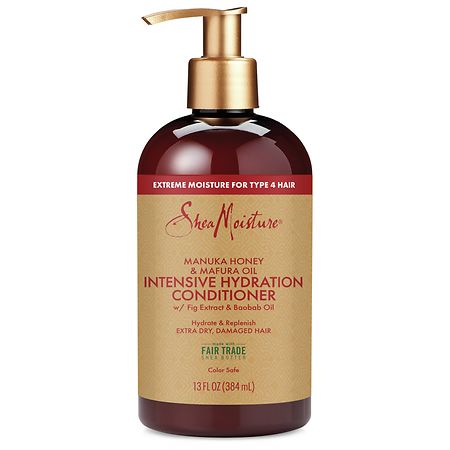
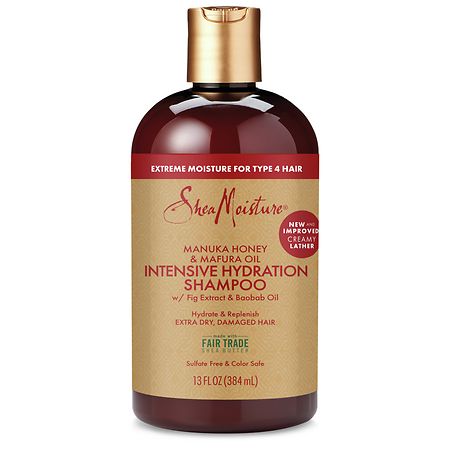


SheaMoisture Manuka Honey & Mafura Hair Oil Intensive Hydration Conditioner - 13 fl oz: Moisturizing for Dry, Coarse Textured Hair, Paraben-Free
SheaMoistureAnalysis updated September 2026 · How Scout scores
At a glance
Summary
This conditioner is formulated with beneficial natural ingredients such as shea butter, coconut oil, and jojoba oil, which provide excellent moisturizing and conditioning properties for dry hair. It is free from parabens and silicones, which are often associated with negative health impacts. However, the presence of synthetic fragrance, which can cause irritation for some individuals, slightly impacts its overall ingredient safety.
Key ingredients 24
Trichilia Emetica (Mafura) Seed ButterVery Good
Mafura Seed Butter is a natural emollient rich in fatty acids. It helps to moisturize and nourish dry hair. It is beneficial for improving hair texture and reducing frizz.
Risks
There are minimal risks associated with Mafura Seed Butter, though it may cause mild irritation in sensitive individuals.
Benefits
It deeply moisturizes and conditions the hair, improving manageability and shine.
Cocos Nucifera (Coconut) OilVery Good
Coconut Oil is a natural oil known for its moisturizing and conditioning properties. It penetrates the hair shaft to provide deep hydration. It is highly beneficial for dry and damaged hair.
Risks
There are minimal risks associated with Coconut Oil, though it may cause buildup if used excessively.
Benefits
It provides deep conditioning and helps to reduce protein loss in hair.
Butyrospermum Parkii (Shea) ButterVery Good
Shea Butter is a natural fat extracted from the nuts of the shea tree. It is rich in vitamins and fatty acids, providing excellent moisturizing properties. It is beneficial for softening and conditioning the hair.
Risks
There are minimal risks associated with Shea Butter, though it may cause buildup if used excessively.
Benefits
It deeply moisturizes and nourishes the hair, improving elasticity and shine.
Simmondsia Chinensis (Jojoba) Seed OilVery Good
Jojoba Oil is a natural oil that closely resembles the natural oils of the scalp. It helps to moisturize and condition the hair without leaving a greasy residue. It is beneficial for improving hair texture and reducing frizz.
Risks
There are minimal risks associated with Jojoba Oil, though it may cause buildup if used excessively.
Benefits
It provides lightweight conditioning and helps to balance scalp oil production.
PanthenolGood
Panthenol is a form of Vitamin B5 that acts as a humectant. It helps to retain moisture in the hair, improving its elasticity and shine. It is beneficial for strengthening and conditioning the hair.
Risks
There are minimal risks associated with Panthenol, though it may cause mild irritation in sensitive individuals.
Benefits
It enhances moisture retention and improves hair strength and shine.
Glycerin (Vegetable)Good
Glycerin is a humectant that attracts moisture to the hair. It helps to keep the hair hydrated and soft. It is beneficial for improving hair texture and reducing dryness.
Risks
There are minimal risks associated with Glycerin, though it may cause buildup if used excessively.
Benefits
It enhances moisture retention and improves hair softness and manageability.
Adansonia Digitata Seed OilGood
Baobab Seed Oil is rich in vitamins and fatty acids, providing excellent moisturizing properties. It helps to nourish and condition the hair. It is beneficial for improving hair elasticity and shine.
Risks
There are minimal risks associated with Baobab Seed Oil, though it may cause buildup if used excessively.
Benefits
It deeply nourishes and conditions the hair, improving manageability and shine.
Hydrolyzed Rice ProteinGood
Hydrolyzed Rice Protein is a plant-derived protein that helps to strengthen and volumize the hair. It improves hair elasticity and reduces breakage. It is beneficial for enhancing hair texture and body.
Risks
There are minimal risks associated with Hydrolyzed Rice Protein, though it may cause buildup if used excessively.
Benefits
It strengthens the hair and improves its volume and texture.
HoneyGood
Honey is a natural humectant that attracts and retains moisture in the hair. It helps to soften and condition the hair. It is beneficial for improving hair texture and reducing dryness.
Risks
There are minimal risks associated with Honey, though it may cause buildup if used excessively.
Benefits
It enhances moisture retention and improves hair softness and manageability.
Ficus Carica (Fig) Fruit ExtractGood
Fig Fruit Extract is rich in vitamins and antioxidants, providing nourishing and conditioning properties. It helps to improve hair texture and shine. It is beneficial for enhancing hair health and appearance.
Risks
There are minimal risks associated with Fig Fruit Extract, though it may cause mild irritation in sensitive individuals.
Benefits
It nourishes and conditions the hair, improving its health and shine.
Aloe Barbadensis Leaf JuiceGood
Aloe Vera Juice is known for its soothing and moisturizing properties. It helps to hydrate and condition the hair, reducing dryness and irritation. It is beneficial for improving hair texture and scalp health.
Risks
There are minimal risks associated with Aloe Vera Juice, though it may cause mild irritation in sensitive individuals.
Benefits
It provides soothing hydration and improves scalp health and hair texture.
TocopherolGood
Tocopherol, also known as Vitamin E, is an antioxidant that helps to protect the hair from environmental damage. It provides conditioning benefits and improves hair health. It is beneficial for enhancing hair shine and strength.
Risks
There are minimal risks associated with Tocopherol, though it may cause mild irritation in sensitive individuals.
Benefits
It protects the hair from damage and improves its health and shine.
Tocopheryl AcetateGood
Tocopheryl Acetate is a stable form of Vitamin E that provides antioxidant benefits. It helps to protect the hair from environmental damage and improve its health. It is beneficial for enhancing hair shine and strength.
Risks
There are minimal risks associated with Tocopheryl Acetate, though it may cause mild irritation in sensitive individuals.
Benefits
It protects the hair from damage and improves its health and shine.
Hydrolyzed Vegetable Protein PG-Propyl SilanetriolGood
This ingredient is a protein-silicone complex that helps to strengthen and protect the hair. It improves hair elasticity and reduces breakage. It is beneficial for enhancing hair texture and resilience.
Risks
There are minimal risks associated with this ingredient, though it may cause buildup if used excessively.
Benefits
It strengthens the hair and improves its texture and resilience.
WaterNeutral
Water is a common solvent used in cosmetic formulations. It helps to dissolve other ingredients and provides a base for the product. It does not have any direct benefits or risks associated with its use in hair care.
Risks
There are no significant risks associated with water in hair care products.
Benefits
Water acts as a carrier for other beneficial ingredients in the formulation.
Stearyl AlcoholNeutral
Stearyl Alcohol is a fatty alcohol used as an emollient and thickener. It helps to soften and smooth the hair. It is generally considered safe and non-irritating.
Risks
There are minimal risks associated with Stearyl Alcohol, though it may cause mild irritation in sensitive individuals.
Benefits
It provides conditioning benefits and helps to improve the texture of the hair.
Cetyl AlcoholNeutral
Standard formulation ingredient — neither beneficial nor harmful at typical use.
Risks
There are minimal risks associated with Cetyl Alcohol, though it may cause mild irritation in sensitive individuals.
Benefits
It provides conditioning benefits and helps to improve the texture of the hair.
Behentrimonium ChlorideNeutral
Behentrimonium Chloride is a conditioning agent that helps to detangle and smooth the hair. It is effective in reducing static and frizz. It is generally considered safe for use in hair care products.
Risks
There are minimal risks associated with Behentrimonium Chloride, though it may cause mild irritation in sensitive individuals.
Benefits
It improves hair manageability and reduces static and frizz.
Diisopropyl EtherNeutral
Diisopropyl Ether is used as a solvent and viscosity decreasing agent. It helps to improve the texture and spreadability of the product. It is generally considered safe for use in cosmetics.
Risks
There are minimal risks associated with Diisopropyl Ether, though it may cause mild irritation in sensitive individuals.
Benefits
It improves the texture and application of the product.
Glycine Soja (Soybean) OilNeutral
Soybean Oil is a natural oil that provides moisturizing and conditioning properties. It helps to improve hair texture and manageability. It is generally considered safe for use in hair care products.
Risks
There are minimal risks associated with Soybean Oil, though it may cause buildup if used excessively.
Benefits
It provides lightweight conditioning and improves hair manageability.
HydroxyethylcelluloseNeutral
Hydroxyethylcellulose is a thickening agent used to improve the texture and stability of the product. It helps to enhance the spreadability and application of the conditioner. It is generally considered safe for use in cosmetics.
Risks
There are minimal risks associated with Hydroxyethylcellulose, though it may cause mild irritation in sensitive individuals.
Benefits
It improves the texture and application of the product.
Caprylyl GlycolNeutral
Caprylyl Glycol is a conditioning agent and preservative that helps to improve the texture and stability of the product. It provides moisturizing benefits and enhances product longevity. It is generally considered safe for use in cosmetics.
Risks
There are minimal risks associated with Caprylyl Glycol, though it may cause mild irritation in sensitive individuals.
Benefits
It provides moisturizing benefits and enhances product stability.
Caprylhydroxamic AcidNeutral
Caprylhydroxamic Acid is a preservative used to enhance the shelf life of the product. It helps to prevent microbial growth and maintain product safety. It is generally considered safe for use in cosmetics.
Risks
There are minimal risks associated with Caprylhydroxamic Acid, though it may cause mild irritation in sensitive individuals.
Benefits
It enhances product safety and longevity by preventing microbial growth.
FragranceVery Bad
Fragrance is often a mixture of various chemicals used to impart scent. It can cause allergic reactions and irritation in some individuals. The exact composition is usually undisclosed, leading to concerns about potential harmful effects.
Risks
Fragrance can cause skin irritation and allergic reactions, especially in sensitive individuals.
Benefits
It provides a pleasant scent to the product, enhancing user experience.
Processing
Processed Foods
Get the full breakdown in the Scout appTake Scout shopping
Scan any product to see lab results, healthy alternatives, and your personalized analysis.
Download on theApp Store GET IT ONGoogle PlayAmazon pricing & content
Amazon price as of . Product prices and availability are accurate as of the date/time indicated and are subject to change. Any price and availability information displayed on Amazon.com at the time of purchase will apply to the purchase of this product.
CERTAIN CONTENT THAT APPEARS ON THIS SITE COMES FROM AMAZON. THIS CONTENT IS PROVIDED “AS IS” AND IS SUBJECT TO CHANGE OR REMOVAL AT ANY TIME.